

If you’ve been looking into slackpacking in South Africa, you’ve probably come across what can be a confusing mix of language that’s used to describe hiking trail styles. Some trails call themselves slackpacks, others are guided lodge-to-lodge walks, and some are still traditional backpacking routes with all the effort that comes with carrying everything you need on your back.
So, what exactly is slackpacking? And why has it become one of the most popular ways to experience multi-day hiking in South Africa comfortably?
What is slackpacking?
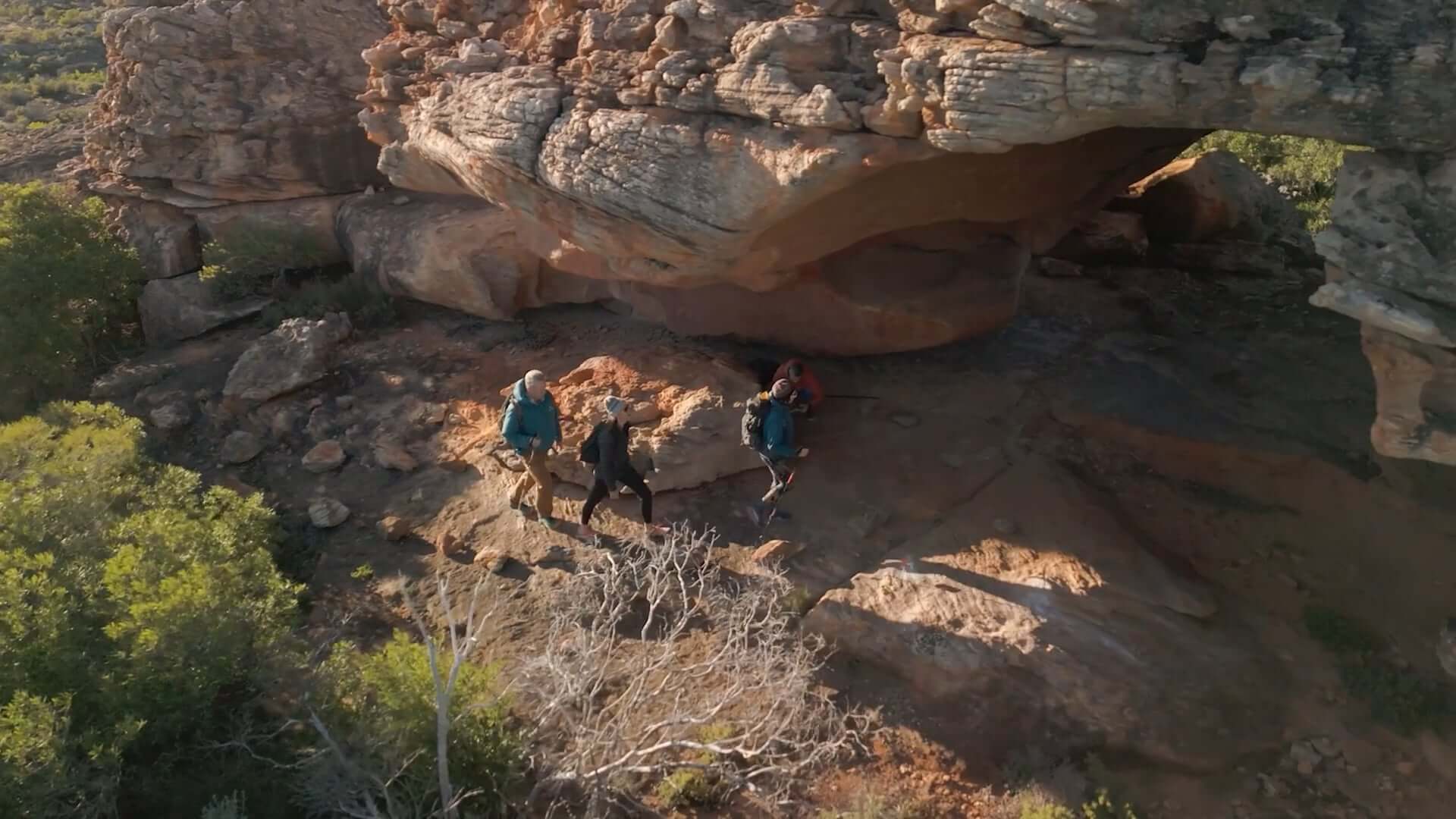
At its simplest, slackpacking means walking a multi-day trail while carrying only what you need for the day. On the trail itself, you walk with a lightweight daypack carrying the essentials: water, snacks, sunscreen, a raincoat, a camera – and little more. So, instead of lugging a heavy backpack filled with clothing, food, sleeping gear and supplies, you’re free to enjoy the route you hike, whilst your main luggage is transferred ahead to your next overnight stop.
That one difference changes the entire experience. The lack of bulky items means that you have more time – and energy – to focus on the landscape, have longer conversations, and stop for photographs. And then at the end of each day, you’ve got enough energy to enjoy your evening in the company of fellow hikers, instead of recovering from carrying a heavy load all day.
Backpacking vs slackpacking
For those who seek it out, traditional backpacking remains a fantastic adventure, but it is more physically demanding all round.
With backpacking, hikers carry everything yourself: clothing, food, sleeping bag, ground sheet, tent and often cooking gear. The reward is complete independence, but the trade-off is a much heavier pack and a more physically demanding hike.
By lightening the load, slackpacking strips away much of that burden.
Backpacking
- You carry all your gear
- More physically demanding
- Greater self-sufficiency
- Usually much simpler / more basic accommodation
Slackpacking
- You only carry a daypack
- Your luggage, food and drinks are moved for you
- More comfortable overnight stays
- Better suited to mixed-ability groups
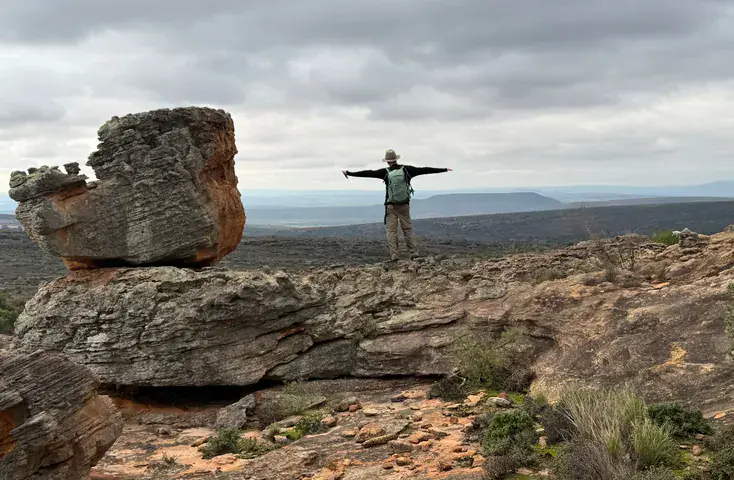
For many people looking to experience the outdoors without roughing it out, slackpacking is the sweet spot between wilderness adventure and comfort.
Slackpacking vs guided village-to-village walks
Another common source of confusion is the difference between slackpacking and guided lodge-to-lodge or village-to-village hiking.
On a village walk, hikers typically move between lodges, guesthouses or local communities. A guide often accompanies the group and accommodation is usually integrated into the experience. You could say these are more defined by destination than journey.
Slackpacking is different because the focus remains firmly on the trail itself. Because routes are often more remote, the hikes involved are much more immersive. With the overnight logistics designed around the day’s route through nature, rather than moving between settlements, slackpacking is very much more about the journey, and typically in more wild/natural environments.
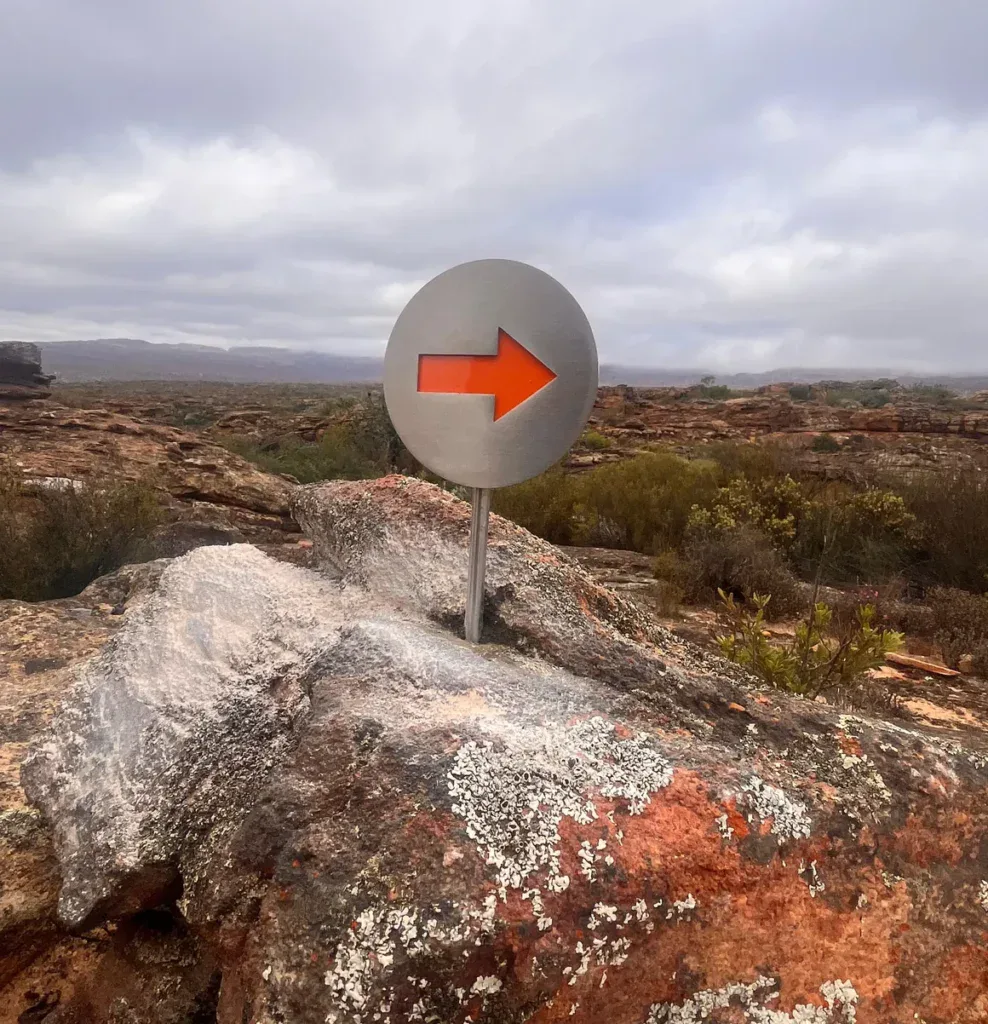
Some slackpack trails can be guided, while others are completely self-guided with clear trail markers placed along the route.
Why slackpacking in South Africa is ideal for groups
Slackpacking is arguably the easiest way to organise a hiking trip for friends, families or hiking clubs. Because nobody is carrying a weighty expedition pack, differences in fitness levels become less significant. This enables people to walk at their own pace, enjoy the scenery – and still end the day together. It can also enable fitter hikers to walk faster and cover more distance in day should they wish.
The evening experience is often a major attraction too. Instead of having to set up camp and cook the evening meal from scratch, hikers arrive at comfortable accommodation where they’re able to shower, relax and share stories around a dining table or comfy lounge. On some trails, including The Cederberg Trail‘s guided and catered option, meals are prepared for hikers, allowing groups to focus entirely on the experience rather than any camp logistics.
For many groups, the slackpacking combination of adventure by day and comfort by night makes the experience far more enjoyable and immersive than either backpacking or day hikes.
Slackpacking Trails in South Africa: a comparison
Below, we look over some of the well-known multi-day hiking trails in South Africa, comparing their differing offers and styles, and introduce our own trail: The Cederberg Trail.
The Whale Trail: Coastal comfort and planning ahead
The state-owned Whale Trail in the De Hoop Nature Reserve is one of South Africa’s best-known slackpack experiences.
Expect dramatic coastline, fynbos, wildlife sightings and ocean views throughout a carefully managed multi-day journey. Accommodation is comfortable and purpose-built for hikers, while baggage transfers help keep packs light.
The trail has earned a strong reputation thanks to its scenery and accessibility, but demand is consistently high. Booking well in advance is usually essential.
Best for:
- Coastal scenery
- Wildlife viewing
- Comfortable overnight facilities
- Groups planning ahead
- Western Cape-based hikers
The Otter Trail: South Africa’s iconic coastal hike
The Otter Trail isn’t traditionally marketed as a slackpacking experience, but it deserves mention because many hikers compare other South African multi-day trails to it. Managed by South African National Parks (SANParks), the trail has traditionally been a self-sufficient hiking experience, although private operators now offer optional slackpacking arrangements.
Taking five days and four nights to cover approximately 45 km along the Garden Route coastline, the Otter Trail is known for its river crossings, rugged terrain and spectacular sea views. Accommodation is in rustic huts rather than luxury lodges, and while private operators can arrange for food and equipment to be transported to overnight stops, this is not a standard SANParks service.
For many outdoor enthusiasts, it’s a bucket-list hike. However, even with the option of carrying a lighter pack, its rugged terrain and basic accommodation make it a considerably different experience from dedicated slackpack trails. Those prioritising greater comfort and convenience may find the latter a better fit.
Best for:
- Experienced hikers
- Classic South African hiking heritage
- Rugged coastal adventure
- Western Cape and Eastern Cape hikers
The Leopard Trail: Mountain wilderness with a lighter pack
The Leopard Trail is an approximately 63 km, four-day, three-night slackpacking hike in the Baviaanskloof World Heritage Site Wilderness Reserve, with bags and food transported between overnight stops. The trail is a partnership involving government, the local community and a family business.
Expect remote mountain scenery and comfortable hiking huts with shared cooking facilities. You carry only a daypack, but catering, bedding and towels are not included in the standard booking.
This is still a substantial hike rather than an easy stroll. The longest day covers 22 km, making it better suited to groups with good hiking fitness who want wilderness immersion without a heavy overnight pack.
Best for:
- Remote mountain scenery
- Fit hiking groups
- Luggage-supported adventure
- Shared hut evenings
- Garden Route and Eastern Cape hikers
The Fynbos Trail: Floral discovery and forest escapes
The Fynbos Trail is a three-day slackpacking route near Gansbaai in the Overberg, exploring the Walker Bay landscape in the heart of the Cape Floral Kingdom. The trail varies from 25 km to 29 km depending on the option, is privately operated, and offers guided and catered, as well as self-guided and self-catered options.
Expect richly varied fynbos, pockets of indigenous forest and ocean views, with comfortable accommodation and luggage transfers between overnight stops. The guided, catered option adds local nature knowledge and home-cooked meals to the experience.
For groups who prefer more independence, a self-guided, uncatered option is also available. The emphasis is on discovering the landscape’s smaller details rather than simply ticking off distance, making this a distinctive choice for nature-focused hikers.
Best for:
- Fynbos and forest scenery
- Learning about local ecology
- Shorter multi-day escapes
- Guided or independent walking
- Western Cape and Overberg hikers
The Pondo Trail: Coastal wilderness and guided comfort
The Pondo Trail is a four-night, fully guided and catered journey along the Pondoland coastline on South Africa’s Wild Coast. The trail length can be from 45 km to 68 km depending on chosen start and end points, and is privately operated.
Expect coastal paths, hidden waterfalls and distinctive plants and birdlife, with guides sharing local knowledge and stories of shipwrecks and Mpondo culture. Luggage is transported between overnight stops, leaving hikers free to explore with light packs.
The emphasis is on a carefully hosted experience rather than simply covering distance, with conservation and support for local communities central to the approach.
Best for:
- Remote coastal scenery
- Local culture and nature
- Fully guided, catered walking
- Conservation-minded travel
- KwaZulu-Natal and Eastern Cape hikers
The Baviaans Canyon Trail: dramatic kloofs and mountain adventure
The Baviaans Canyon Trail is a five-day, four-night slackpacking hike in the Baviaanskloof World Heritage Site Wilderness Reserve, combining rugged mountain walking with dramatic canyon landscapes. Operated as a partnership between a private company, government and local communities, this trail is approximately 72 km long.
Expect high ridgelines, broad wilderness, canyons and ravines. Bags and food are transferred between overnight camps, where shared cooking spaces, hot showers and two-person rooms add comfort to the adventure.
Lighter packs do not make this an easy route: good hiking fitness is essential. The standard package includes accommodation before and after the hike, but excludes catering, bedding and towels, so groups still need to plan their overnight essentials.
Best for:
- Dramatic canyon scenery
- Fit, adventurous groups
- Longer wilderness escapes
- Comfortable overnight camps
- Garden Route and Eastern Cape hikers
How to choose the right slackpacking trail in South Africa
The best trail depends on what matters most to your group. If it’s ocean views and established favourites you’re after, the Whale Trail and Wild Coast routes are hard to beat. And if you’re looking for a more demanding classic adventure, the Otter Trail remains iconic. But if it’s mountain wilderness, unique landscapes and a greater sense of exclusivity that appeal, the Cederberg deserves a closer look.
First, consider distance: A significant consideration in choosing the right trail is its proximity to where most of your group is based. For example, the Pondo Trail is generally closer for KwaZulu-Natal and Eastern Cape hikers, while The Cederberg Trail is very well-positioned for Western Cape hikers, particularly those travelling from the Cape Town area. Choosing closer to home can reduce travel time and costs.
Then compare the full budget: State-run, self-catered trails typically offer a lower-cost starting point than high-end private, fully guided and catered packages, but this is a useful rule of thumb – not a guarantee that every public trail is cheaper than every private one. Compare current quotes on a like-for-like basis: cost per hiking day, meals, luggage transfers, conservation fees, bedding, group minimums and transport. A lower trail fee can quickly be offset by flights, car hire or extra nights en route.
When it comes to slackpacking in South Africa, the most important question isn’t how far you’ll walk: it’s how you want to feel at the end of each day.
Do you want to arrive tired with a heavy pack still on your shoulders, and still have to set up camp and cook? Or do you want to arrive, shower, get comfy with friends and kick back to watch the stars come out?
The Cederberg Trail: a year-round bookable self-guided Cederberg experience
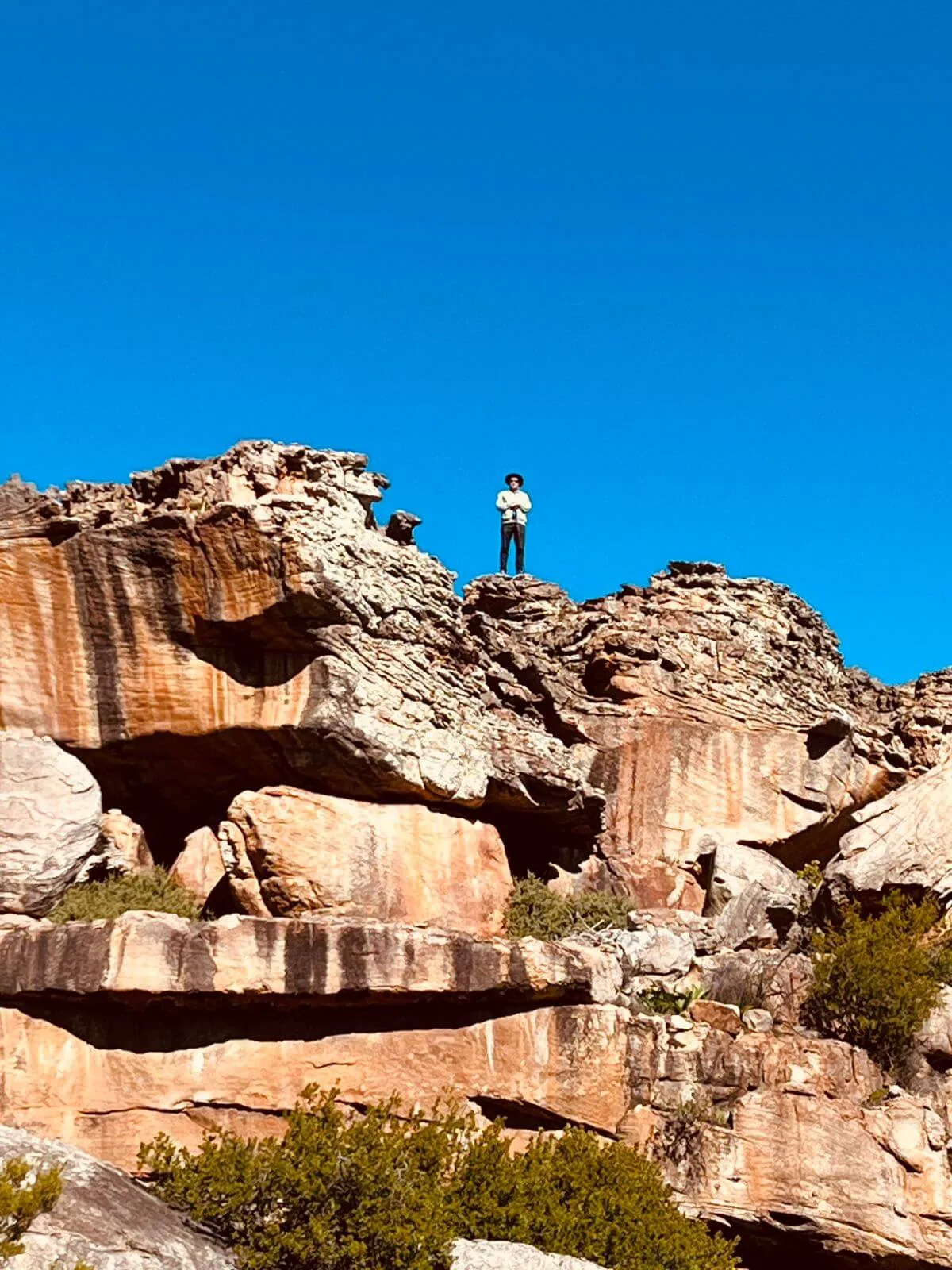
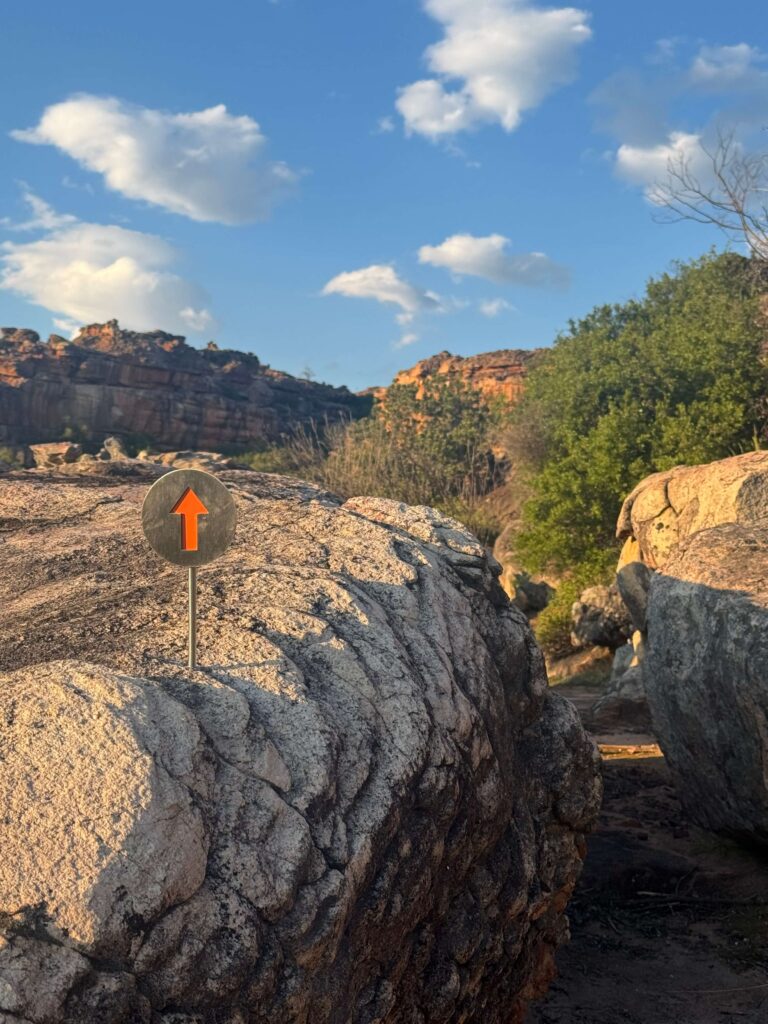
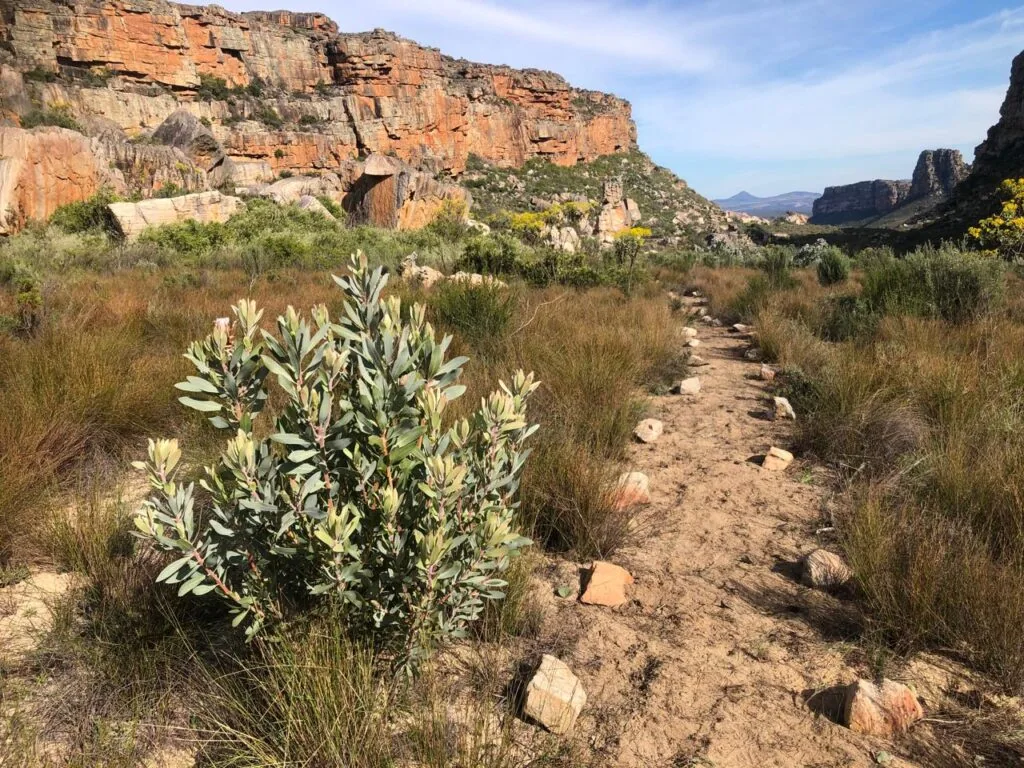
Located within the private Klipopmekaar wilderness of the northern Cederberg, the privately-operated trail follows a purpose-built and clearly marked 50 km route (with shorter 43 km option) through landscapes of incredible sandstone formations, fynbos, waterfalls and San rock art. Hikers carry only a daypack while luggage and cooler boxes are transferred ahead between each overnight site.
The Cederberg Trail is a unique offering, as it’s the first self-guided Cederberg slackpacking trail bookable all year round, and is designed around private groups, making it ideal for trail hikers in the Western Cape. Accommodation consists of private PODs with fresh linen, en-suite bathrooms and hot showers, alongside communal dining and lounge spaces designed for groups to relax together after each day’s walk. Self-guided and guided options are available.
On this trail, group sizes can range from 2 to 12 hikers. Groups can choose between a self-guided, self-catered experience and a guided, catered experience. Self-guided groups enjoy the freedom of managing their own meals and pace, while guided groups are accompanied by an experienced guide who shares local knowledge along the route. On the guided and catered option (available from 2027), meals are prepared for the group and kitchen clean-up is taken care of, allowing hikers to focus entirely on the trail and the surrounding wilderness. More info on the guided and catered option is available here.
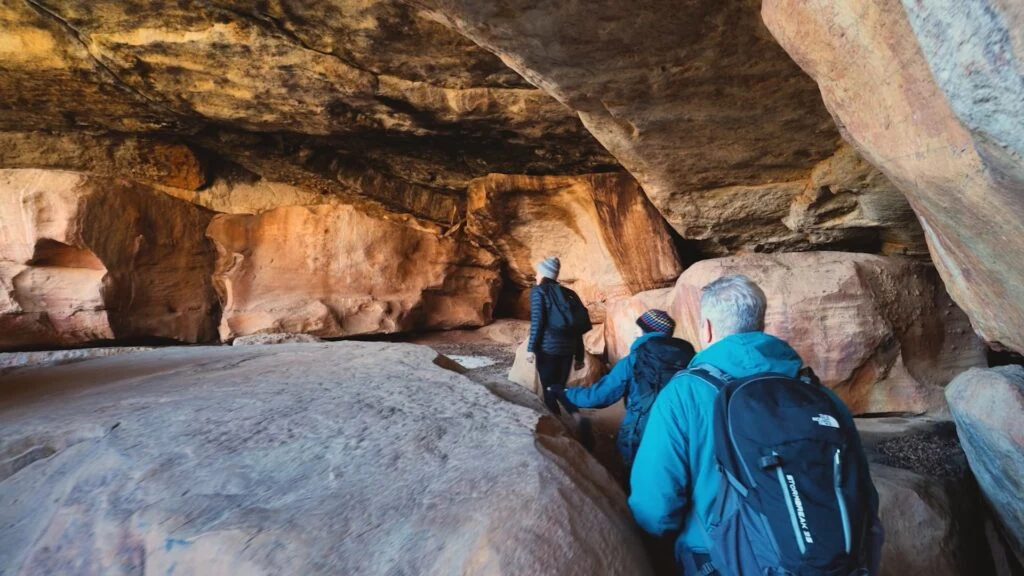
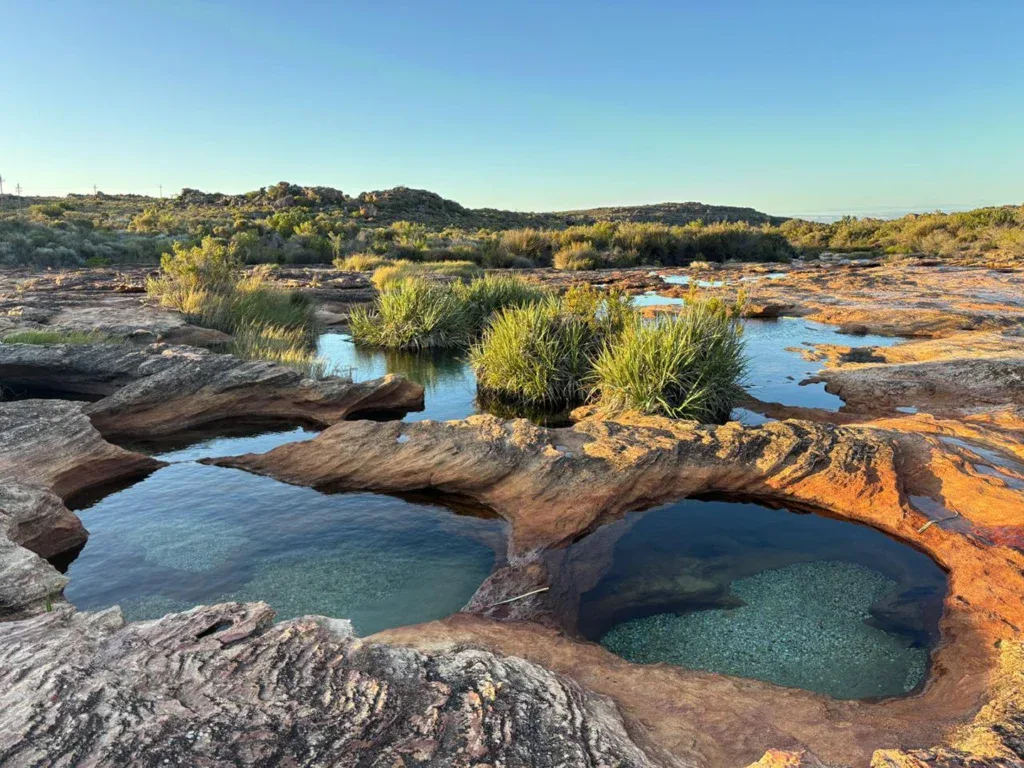
By day you’ll experience incredible eroded sandstone rock formations, abundant indigenous flora & fauna, San paintings – and waterfalls and rock pools when the rivers run from July to November. By night you’ll view spectacularly starry skies, while enjoying beautifully designed communal kitchens, dining and lounge spaces, and retiring to the comfort of your private POD for two with ensuite hot shower, and basin and toilet.
As the first self-guided, multi-day, year-round-bookable, high end slackpacking trail in the Cederberg, it’s an immersive nature experience that offers the rare privilege of accessing a part of the Cederberg that has never been experienced by hikers – until now. For those who prefer even greater comfort, the trail’s guided and catered option combines the freedom of wilderness hiking with the convenience of having both guiding and meals taken care of throughout the journey.
With a landscape characterised by radical rock formations, hidden valleys and spectacular waterfalls and rock pools, the trail provides access to a rarely seen private part of the Cederberg. As The Cederberg Trail is ideal for groups of friends that are looking to enjoy a rare taste of wilderness, bookings usually consist of groups of minimum 8 and a maximum of 12 people. Bookings from as few as two guests are welcomed, but guests should be aware that all private bookings are charged at the minimum group rate of eight guests.
If you want a private group, a marked trail and a hot shower and comfortable sleep each night, take a look at dates for The Cederberg Trail.
