

The Cederberg Trail is a multi-day walk through the mountainous Klipopmekaar Wilderness, designed to be manageable for active people who prepare properly.
The full route is 50 km over four days and three nights. Shortcut options reduce the total to 43 km. Your bags are transferred, the path is clearly marked, and you sleep in comfortable PODs, but you still need reasonable fitness, steady feet and respect for Cederberg weather.
Is The Cederberg Trail difficult?
It is moderately strenuous. It is not extreme, but it’s not a casual stroll either. It suits hikers who can spend several hours on their feet, walk in heat or cold, and keep a steady pace with a group.
If you already walk, run, cycle, play sport or hike on weekends, you’re likely prepared. If you’re starting from a low base, give yourself time to get trail-fit before you arrive.
Daily distances (full trail):
- Day 1: ~10 km (shortcut option ~8 km)
- Day 2: ~11 km
- Day 3: ~18 km (shortcut option ~13 km) — the longest and hardest day
- Day 4: ~11 km
Day 3 is the big day. The optional Noordkrans Peak loop adds distance and elevation; the shortcut removes roughly 4.5 km and the more strenuous climb while still giving you a rewarding day.
What makes a slackpack trail easier than a traditional backpack?
Slackpacking removes the heaviest burden: a fully loaded backpack. You walk with a daypack while your main luggage, cooler boxes and food are moved ahead to the overnight camps by the trail team. That makes a significant difference for less experienced multi-day hikers — knees, shoulders and energy levels all benefit.
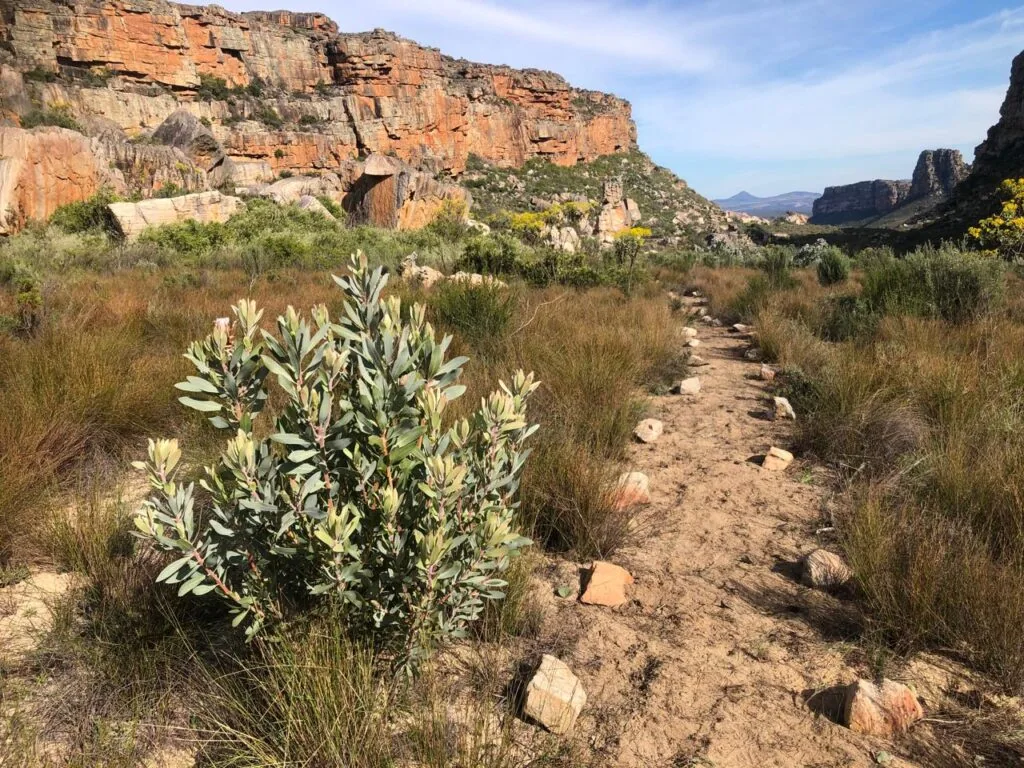
The trail is purpose-built and very clearly marked with direction markers, kilometre markers and points of interest, so navigation stress is minimal. You are not trying to invent a route with a map and compass.
The PODs help recovery from the day’s exertions by providing you with a proper bed, fresh linen, private en-suite bathroom (hot shower, basin and toilet). Combined with the very comfortable communal kitchen, lounge and dining area, this means you can sleep well, eat well and reset. You can choose the self-guided and self-catered option, or book the guided and catered option (additional cost) where a qualified guide leads your private group and meals are prepared for you.
What doesn’t change when slackpacking
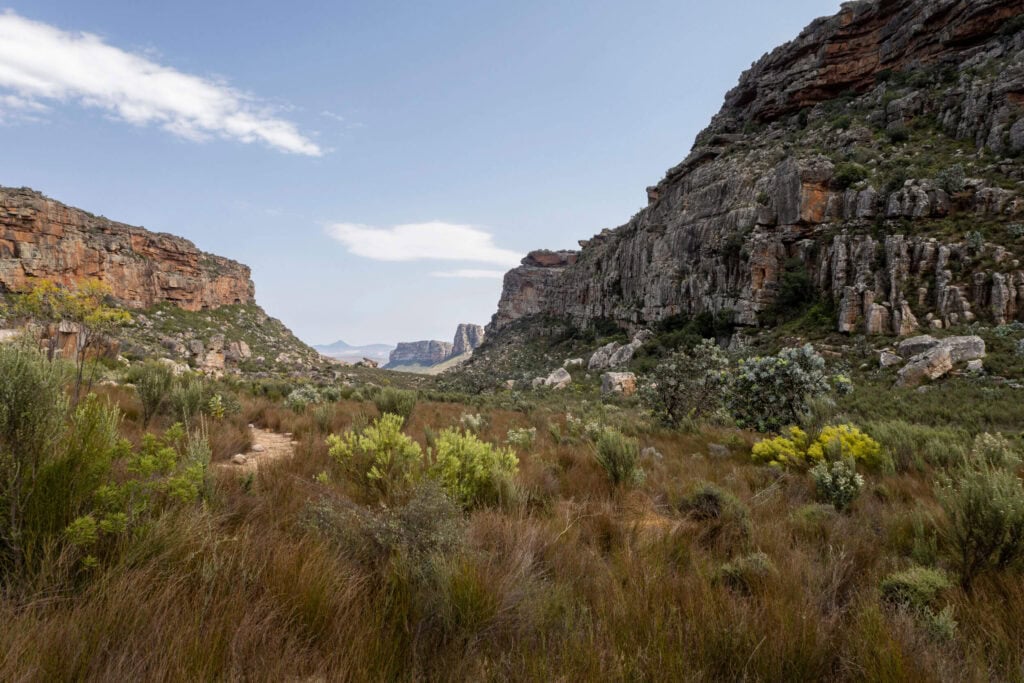
Slackpacking doesn’t change the distance, the mountainous terrain, the heat, the wind, the cold nights or the tired feet. A marked path is still a path through the rugged Cederberg.
You need to be comfortable walking for several hours, sometimes in exposed conditions. Good grip on your shoes, enough water, and sensible pace and break management still matter. The trail team can smooth the logistics, but nobody can walk the kilometres for you.
Who is The Cederberg Trail best for?
It’s a good fit for active friends, families with teenagers, walking clubs, fit first-time multi-day hikers and mixed groups who want comfort without losing the sense of achievement. Hikers aged 10 to 70 are welcome (unless otherwise agreed in writing). Age matters less than fitness, reasonable hiking experience, and a spirit of adventure.
A fit 65-year-old who walks hills every weekend may find it easier than a 25-year-old who hasn’t worn hiking shoes in five years. The trail tests your preparation more than your age.
Can first-time multi-day hikers do it?
Yes, if they already walk regularly and prepare. The format removes overnight discomfort and heavy-pack strain, which makes it a strong first multi-day hike. First-time does not mean untrained — arrive with broken-in shoes and some hill practice under your belt.
The psychological side matters too. Multi-day hiking settles into a rhythm of active days and relaxed evenings. Day two and day three feel different from a single Saturday hike. Many people find that the rhythm — walk, arrive, eat, rest, repeat — becomes the best part of the experience, especially with no phone signal or distractions.
What about children and teenagers?
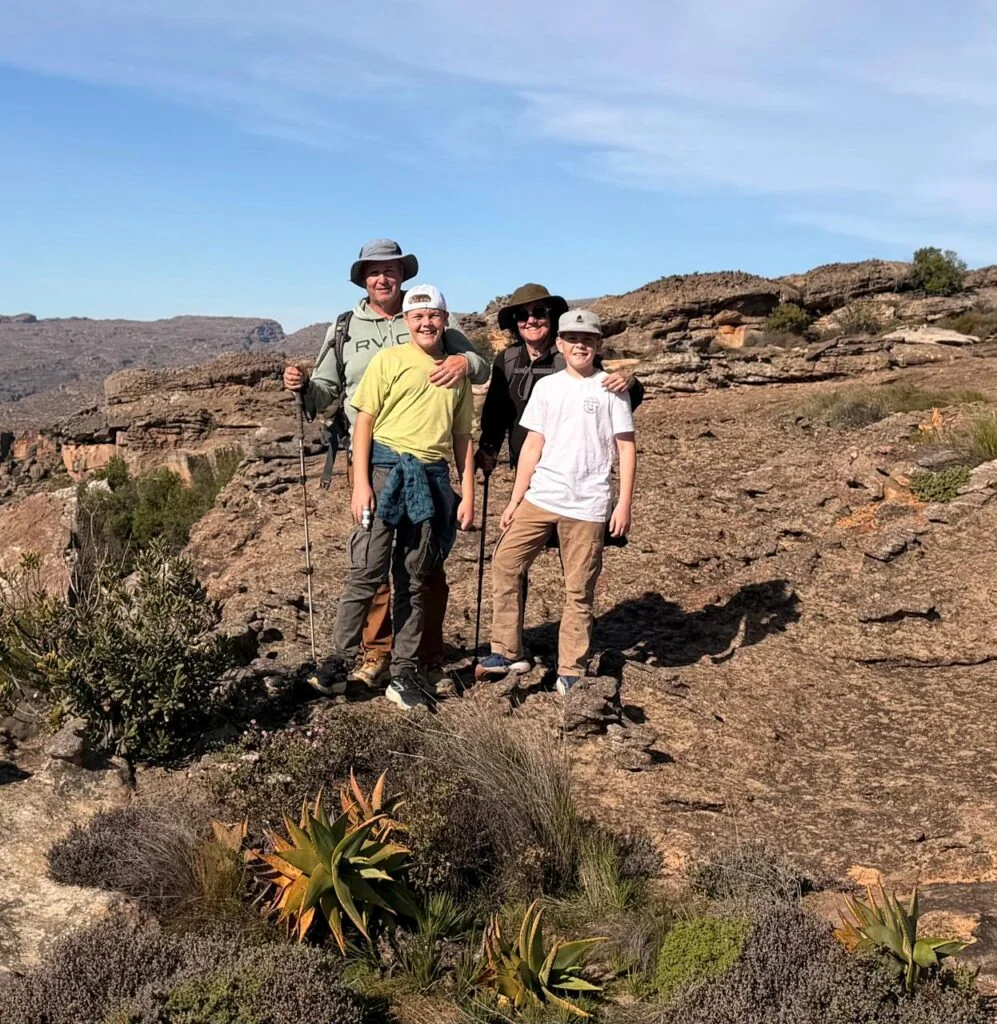
Hikers aged 10 to 70 are welcome. Children must be accompanied by their own parents or guardians, who sign the indemnity forms on their behalf.
Active teenagers who enjoy the outdoors can thrive, especially when they know what to expect. Talk them through the longer walking days, limited signal, shared meals and early starts. Involving them in planning (choosing snacks, looking after a small part of the trip) helps make the experience their own.
On a family hike, let the slowest walker set the pace. The aim is to arrive together with everyone feeling well, not to reach the PODs first.
Important practical requirements
- All hikers must be able to swim (required for wet-season river crossings, with water levels below the knee, and overnight camp pools).
- There is no true cliff-edge walking. More exposed sections around Noordkrans Peak can be avoided, or the Day 3 shortcut can be taken.
- Carry enough water — at least 2–3 litres per person per day (more in hot weather). On Days 3 and 4 you must fill up at camp in the morning.
- Comfortable, well-broken-in trail shoes or hiking boots are essential.

A simple 6-week preparation plan
If you’re not a regular hiker, a little preparation builds confidence, gets your body used to longer days and makes sure your footwear is comfortable. The aim is to arrive ready to enjoy the scenery and the company rather than worrying about your legs.
Weeks 1–2: Walk three times a week. Keep two walks short and one longer. Wear the shoes you plan to use on the trail.
Weeks 3–4: Add hills or stairs. Walk with a lightly loaded daypack. Practise drinking regularly and eating small snacks before you feel empty.
Weeks 5–6: Do one longer weekend walk on uneven ground. Test socks, shoes, pack fit, sun hat and layers. If something rubs, fix it before the trail.
This plan is not about becoming an athlete. It is about making the trail enjoyable. Preparation turns a day’s mountain walking into a good tired.
Group difficulty: the real thing to manage
The hardest part of a group hike is often not the steepest hill — it is pace, expectations and honesty. Before booking, ask everyone the simple questions: How far have you walked recently? Are your shoes broken in? Are you comfortable with heat? Would you prefer the self-guided and self-catered option, or the guided and catered option? Who is nervous?
It’s better to have those conversations before committing rather than halfway up a hot slope. Good groups move at a pace that lets everyone finish the day feeling well.
So, should your group book?
If your group is active, willing to prepare and excited by a proper mountain walk with overnight comfort, The Cederberg Trail is likely a good fit. If the group wants a luxury stay with short strolls, it will not be the right match. The beauty of the trail comes from walking through the landscape, not just sleeping in it.
Read the itinerary, check the latest trail info and be honest about the slowest walker. If the answer still feels like yes, book the week and start getting prepared — and excited.
