

The joy of slackpacking is that you don’t need to carry your whole life on your back. On The Cederberg Trail, your main bags are moved ahead to the overnight PODs, so you walk with a practical daypack instead of a heavy hiking pack. That makes the trail better for groups, families and less experienced multi-day hikers. If you’re thinking about what to pack for a Cederberg slackpack, the summary is to bring what you need, leave the rest behind, and you’ll enjoy the walk far more.
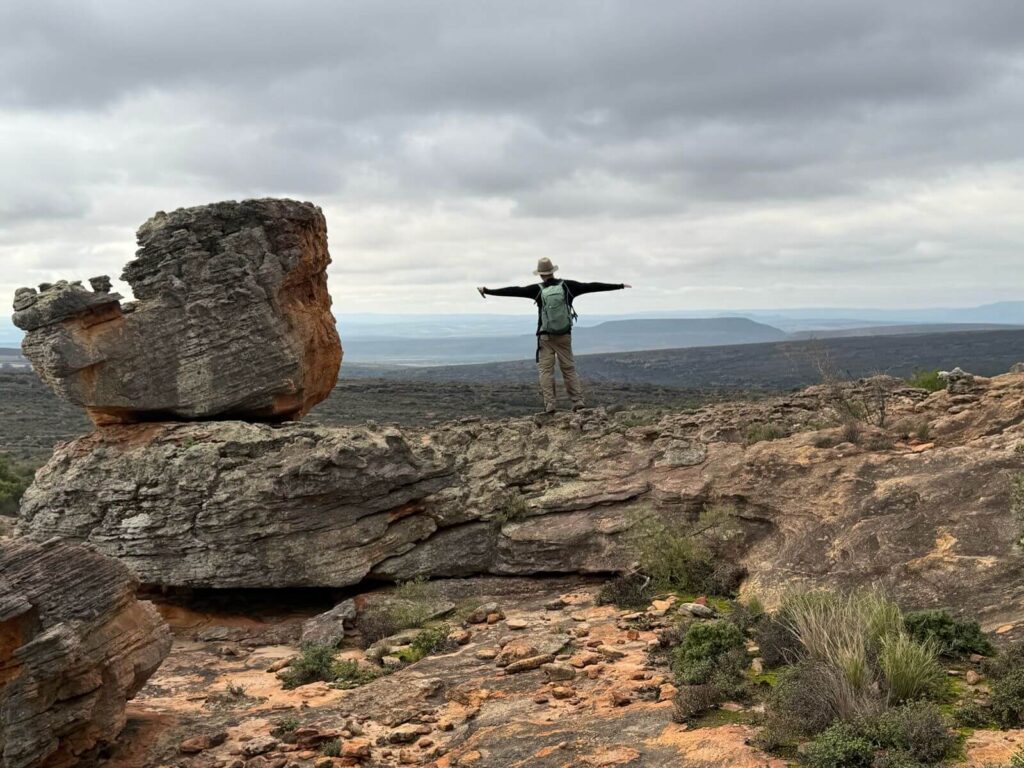
What should you pack for a Cederberg slackpack?
For our four-day, three-night Cederberg slackpack – which consists of the full route at approximately 50 km, or 43 km with the two gentler shortcuts – you pack for walking light during the day and sleeping comfortably at night. Your daypack carries water, sun protection, snacks, a warm or waterproof layer, a basic first-aid kit and the small things you need while walking. Your transferred duffel holds spare clothes, toiletries, camp shoes and evening layers.
You can choose the self-guided and self-catered option which is currently open for booking – or the guided and catered option, which launches in 2027. If you’re self-guiding and self-catering, bring your own food and drinks and transfer them into the trail’s supplied 90-litre cooler boxes (one per two people) and 35-litre dry boxes (one per two people) at the Visitors Centre before setting off. These travel with your duffel bags between camps. No personal coolers or extra bags are transported.
What stays in your daypack?
When you pack for a Cederberg slackpack, your daypack is the bag that matters most during your walking day. Keep it comfortable, balanced and simple. A 20–35 litre pack is usually enough, depending on the season and how much water you carry. Don’t overfill it just because it’s “only a daypack” — a bag that feels fine at the car can feel irritating after hours on rocky ground.
- A trail map which is provided to each hiker during the briefing. Your group will also receive one trail guidebook which will be a useful and very informative resource.
- Water bottles or hydration bladder: 2–3 litres minimum, 4 litres when the weather forecast is hot.
- Lunch and snacks for the day (plan leftovers from dinner where practical).
- Wide-brimmed sun hat, sunglasses and high-SPF sunscreen.
- Light rain shell or wind layer (essential in winter and when weather forecast indicates cool or wet weather)
- Warm layer for stops, cold wind or late arrivals at camps.
- Basic personal first-aid kit, blister care and any personal medication.
- Phone (for photos), maybe a power bank.
- Head torch — essential if you’re delayed or for walking between POD and communal areas after dark.
- Small dry bag or zip-lock bag for phone, keys and paper notes.
- Swimming costume and small quick-dry towel (or kikoi/sarong) in wetter season (July–November, when rivers are most likely flowing).
- Hiking poles if you like them (many do on the rocky ground, they are also great for descending paths).
- Optional light shoes or sandals for river crossings – or cross barefoot if you’re comfortable with that.
- Toilet paper and a zip-lock bag for used paper (to dispose of properly at camp).
- Rehydration sachets on hot days.
- Optional: binoculars (great for birdwatching, fauna, rock formations and taking in the middle-distance sights of the trail).
What goes into your transferred duffel?
Your soft duffel bag (maximum 90 litres, one per person, nothing strapped on the outside) is moved ahead each day. It holds the things you want at the POD but don’t need while walking. Hard suitcases and extra loose bags are not transported. A practical tip used by hikers is to pack each day’s walking clothes into separate stuff sacks. It makes grabbing what you need from the duffel fast and keeps clean clothes separate from dirty ones.
- Well-broken-in trail running shoes or light hiking boots (Gore-Tex or waterproof preferred). Do not start in brand-new shoes. Trail runners that can get wet are preferred on many SA slackpacking routes.
- Spare pair of trainers or running shoes.
- Four pairs of walking socks and underwear (extra pairs are handy for changing at mid-day if feet get wet).
- Two pairs of shorts or tights, plus one pair of long pants.
- Four light T-shirts or collared shirts.
- Light fleece and a warm hiking jacket (wind- and waterproof preferred).
- Rain jacket (and rain pants if rain is forecast).
- Pyjamas or sleepwear.
- Camp shoes, slides or sandals.
- Towel or sarong / kikoi (towels are not provided). A quick-drying towel or sarong / kikoi is ideal.
- Toiletries (biodegradable shampoo and soap preferred), sunscreen, mosquito repellent.
- Personal medication, contact lenses, small medical kit (painkillers, antiseptic, antihistamine, extra blister plasters).
- Your own phone charger (PODs and communal areas have 220v 2-prong and 3-prong plug points; no USB or USB-C connections). Charging cables and power bank.
- Book or Kindle for reading in the afternoons and evenings (Kindles can be charged at the camps). Each overnight camp has some board games and chess. If you love specific games (bananagram, bridge, poker, etc.), be sure to bring what you and your friends will enjoy.
- Dry bag or plastic bag for dirty or wet clothes.
- Beanie and extra warm layer for cold evenings (especially May to August).
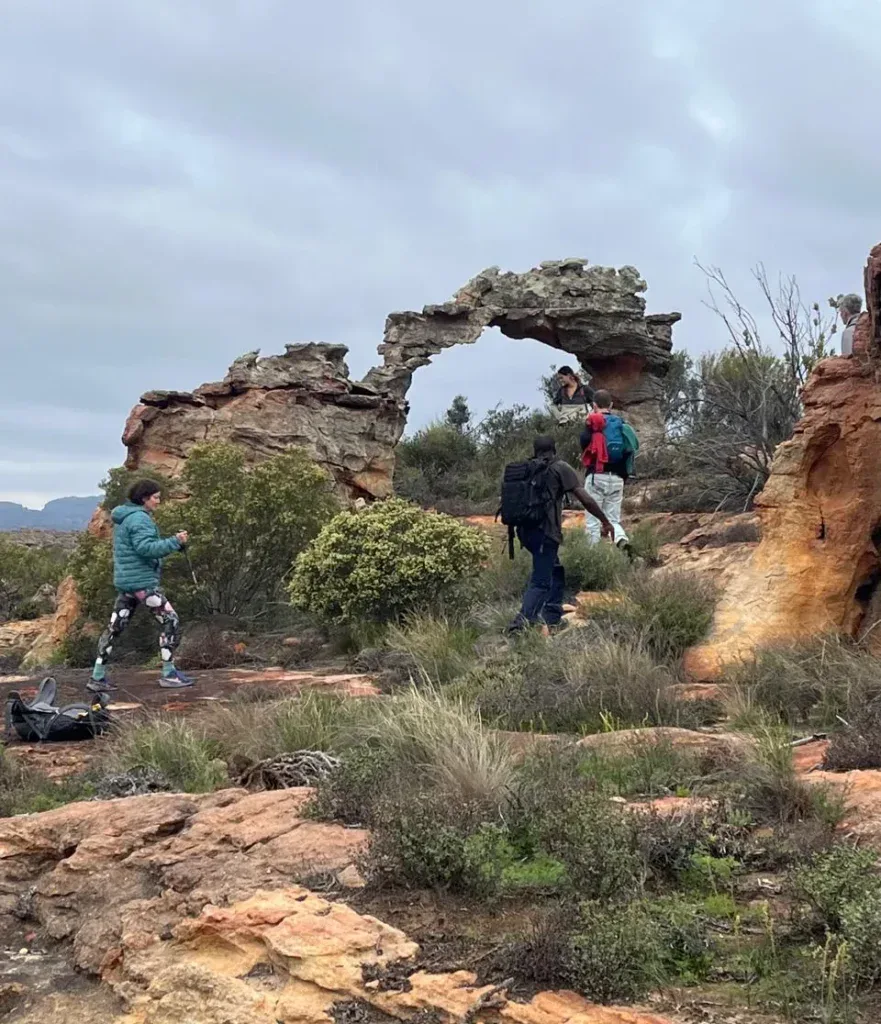
The cooler boxes and dry boxes: food, drinks and group planning
If you’re walking self-guided and self-catered, a little planning makes the cooler system work for everyone. At the Visitors Centre on Day 1 you repack your food and drinks into the trail’s supplied boxes: one 90-litre cooler per two people (for fresh, frozen and cold items) and one 35-litre dry box per two people (for ambient food and drinks). These travel with your duffels. Ice (one 2 kg bag per night) and firewood (20 pieces per night) are provided; extra ice and wood can be ordered at the briefing.
Think through breakfasts, lunches, dinners, snacks and drinks before shopping. Prefer to leave the cooking to someone else? For self-catering groups, make dinner a shared occasion: three teams can each take charge of shopping for, cooking and clearing one evening meal. Each camp has a fully equipped communal kitchen with gas stove and oven, standing fridge and freezer, microwave, toaster, braai, all cookware, crockery and cutlery too.
Keep breakfasts and lunches flexible. Pack lunch food that sits comfortably in a daypack like wraps, rolls, nuts, biltong, fruit, fruit bars, and something salty. Glass bottles are not recommended on the rough farm roads between camps (they can travel if very carefully packed and re-packed daily). Alcohol is welcome but should be kept to sensible amounts to avoid dehydration.
What’s the ideal footwear?
Wear broken-in shoes which are in reasonable condition and with good grip. Trail shoes or light hiking boots both work, as long as you’re used to walking in them. The Cederberg is rocky underfoot, and a full day on stone can punish soft soles and new shoes. We don’t advise brand-new boots or shoes — wear them in first, preferably on hills. Bring blister plasters (someone in the group will need them). A spare pair of trainers is useful for evenings or if your main shoes get wet. Many hikers prefer trail runners that can handle getting wet and bring optional light shoes specifically for river crossings.
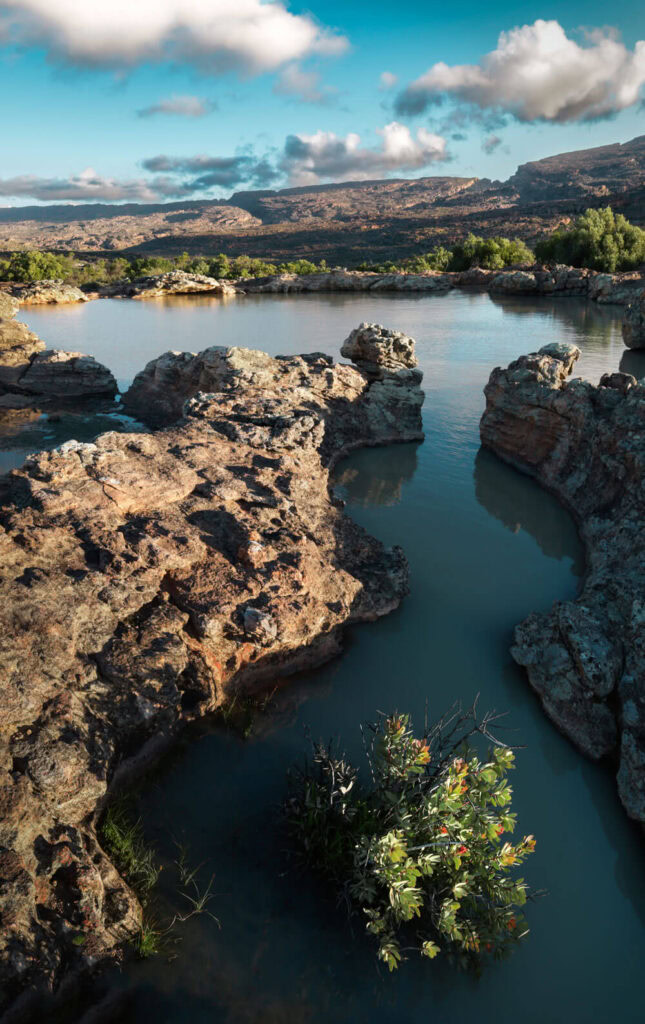
Water-season packing: July to November
The winter rains typically fall between June and August, and these bring our rivers, waterfalls and rock pools alive from July to November. Swimming is one of the highlights of the trail on day one and two when the water is running. Pack a costume, quick-dry towel, warm post-swim layer and a dry bag for wet kit.
Nights can still be chilly (around 5–15 °C) in winter (May to August), so bring a warm jacket, beanie and dry socks. All hikers must be able to swim — river crossings can reach below-knee depth when the rivers are flowing, and every camp has a natural swimming pool. In addition to your rain gear, gaiters can be useful if rain is forecast for your trail.
Summer packing: heat, sun and early starts
Summer (December to May, but can be quite hot in October and November too) in the northern Cederberg is hot and dry. Pack for sun and water management: wide-brimmed hat, high-SPF sunscreen, breathable long sleeves, sunglasses and extra drinking capacity (4 litres on hot days) are essentials.
Electrolytes or rehydration sachets help, especially if you sweat heavily. Start early so you can reach camp by lunchtime or early afternoon and relax in the later afternoon heat. Even when the seasonal rivers are dry, the camp pools at all three overnight camps are available all year round.
The Magic Box — an invitation
You’re invited to pack a Magic Box. Not a real box, unless you want one. It’s something of yours to share with your friends when the moment feels right: a song, a poem, a page from a book, a joke, a trick, a story, a toast, a bit of theatre, or a silence you know how to hold.
Your share can be funny or serious, polished or sideways. Two minutes on a rock at lunch, after dark around the campfire, or perhaps at a waterfall – wherever the day opens a gap. Nobody has to do this — that’s the point. But when someone in the group does, the trail stops being only scenery and also becomes an experience you co-create for the joy of others. The spirit of the Magic Box comes from the creative, participatory side of AfrikaBurn, which has deep roots at Klipopmekaar.
What to leave in the car
Leave town clothes, hard luggage, extra shoes you won’t wear, laptop bags, valuables you don’t need, hairdryers (not permitted as the camps run on off-grid solar), and anything that belongs to the drive rather than the trail.
If you’re unsure whether an item should come walking, ask: “Will I use this during the day, or at the POD?” If the answer is no, it can stay behind.
A simple packing checklist
- Wear: broken-in shoes, hiking socks, walking clothes, hat.
- Daypack (20–35 L): 2–4 litres of water, lunch, snacks, warm layer, rain shell, sun protection, first aid, phone, head torch, toilet paper + zip-lock bag, walking poles (optional).
- Transferred duffel (max 90 L, soft): evening clothes, toiletries (biodegradable), spare socks, warm jacket, pyjamas, camp shoes, towel/sarong, charging items, and a beanie. Consider packing daily outfits in separate bags.
- Cooler & dry boxes (self-catering): group meals, drinks, breakfast, lunch supplies, snacks. Confirm quantities with the trail’s system (90 L cooler + 35 L dry box per two people).
- Seasonal: costume + quick-dry towel for swimming season; extra water capacity and electrolytes for summer.
- Magic Box: something small to share (optional).
With this information you have what you need to pack well for a multi-day Cederberg Trail hike. Take a look at dates, check the latest trail info and FAQs on the website, and secure a booking that suits your group. The mountains, the PODs, the rock pools and the quiet will do the rest.
