

Booking a multi-day hike for a group sounds simple until the WhatsApp group starts doing what WhatsApp groups do best: half-decisions, maybes, screenshots, voice notes and one person asking about dates three weeks after everyone else has moved on.
Sound familiar? There’s an easier way to way to book a multi-day hike for a group: make the big decisions early by asking the big questions. For example – who’ll take on the organising role/s? How many in the group are committed, and what’s a reasonable fitness level? Would guided or catered or self-guided and self-catered work for everyone. And how would the money be handled? Once these questions are clear, booking becomes much smoother and everyone can look forward to preparing for the experience.
For South African groups, especially friends and families travelling from Cape Town, Johannesburg or Durban, a good multi-day slackpacking hike needs more than scenery. It needs simple logistics, clear numbers, comfortable overnights and one booking that holds the trip for everyone in the group.
The Cederberg Trail is a useful example: a 4-day, 3-night, 50 km slackpacking trail for private groups usually consisting of 8 – 12 guests. Bookings from as few as two guests are welcomed, but all private bookings are charged at the minimum group rate of eight guests. The trail is suitable for active hikers between the ages of 10 and 70, with a self-guided, self-catered option or a guided and catered option available at an additional cost. Luggage is transported ahead of each group between the three overnight sites, the route is clearly marked – and your group books the trail as one party.
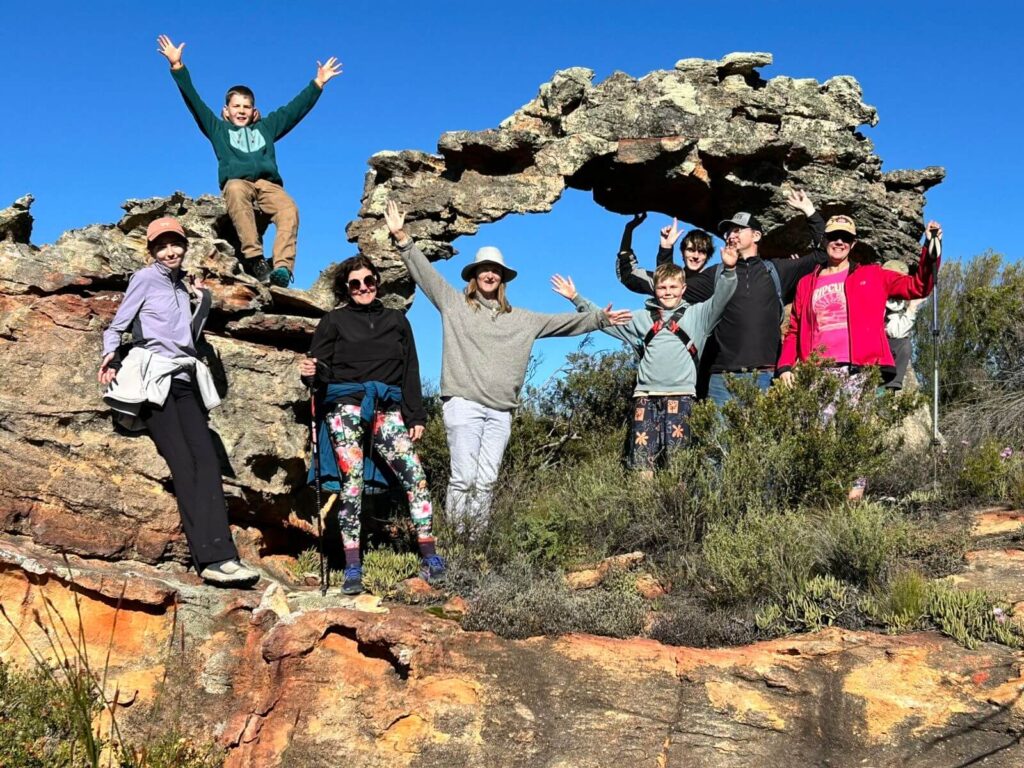
To book a multi-day hike well, plan ahead
One of the best ways to get a group hiking trip off the ground is to start planning much further ahead than you might think necessary. Friends and family often have busy calendars, with work, holidays and other commitments filling up the coming weeks and months. Give everyone six to 12 months’ notice – or even up to two years for a bigger trip – and you’ll have a much better chance of getting everyone signed up. Once the dates are agreed and the hike is booked, it becomes an established commitment that people can organise their other plans around, rather than something they’re trying to squeeze into an already busy schedule. It also gives everyone time to budget and save for the trip, making it easier for the whole group to commit.
Start with the organiser, not the route
For a group hike to work smoothly, the organising needs one person – the ‘champion’ – who is willing to make the boring decisions. Not bossy, just clear on the key elements.
This person makes a potential reservation, then gathers names, then confirms the booking and payment, and sends the planning and packing notes to the group. If nobody owns that role, the idea stays an idea – or a revolving discussion that never moves beyond a WhatsApp group.
For families, the champion is often the parent, aunt, uncle or grandparent who first suggested the trip. For friends, it is usually the person who already knows that ‘keen’ doesn’t necessarily translate to ‘paid and booked’.
For groups of friends the champion is often the prime mover and motivator who acts as the champion, sparking ideas and making things happen.
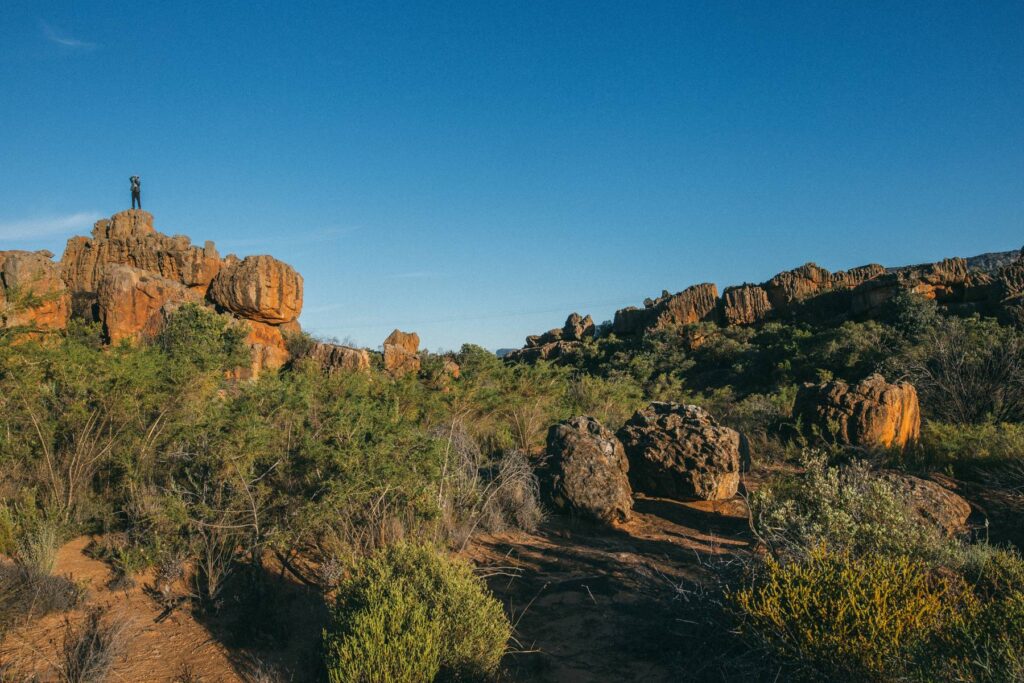
How many people should you invite?
Invite slightly more people than your ideal number – because there will always be a level of dropout – but don’t build the trip around maybes. Multi-day hiking works best when the group is small enough to move at a similar rhythm and big enough to feel festive at the long table after dark.
On The Cederberg Trail, bookings usually consist of groups of a minimum of 8 and a maximum of 12 people. Bookings from as few as two guests are welcomed, but all private bookings are charged at the minimum group rate of eight guests.That makes it practical for two couples, a family group, a birthday or anniversary walk, a hiking club crew or a friends’ trip where people want the wilderness to themselves.
Once you reach your confirmed number, stop expanding the group. Late additions can be lovely, but they can also restart every decision: like selecting optimal dates, food, beds, vehicles, costs and pace.
Be honest about age and fitness
A group hike is only as enjoyable as the least prepared person feels. That doesn’t mean everyone must be an athlete – but it does mean everyone should know what they’re signing up for.
Before you book a multi-day hike, ask the simple questions: Can everyone walk for several hours on uneven ground? Has everyone done a proper day hike before? Are the teenagers genuinely keen, or just being volunteered? Are older hikers active and comfortable with rocky terrain?
The Cederberg Trail suits active people aged 10 – 70. And it‘s a slackpack – not a stroll around a wine farm. The marked route and luggage transfer remove a lot of stress, but the walking is still mountain walking: stone underfoot, weather, heat at certain times of year, and full days outside. Being clear about the reality is key to ensuring everyone is on board and can make the most of it.
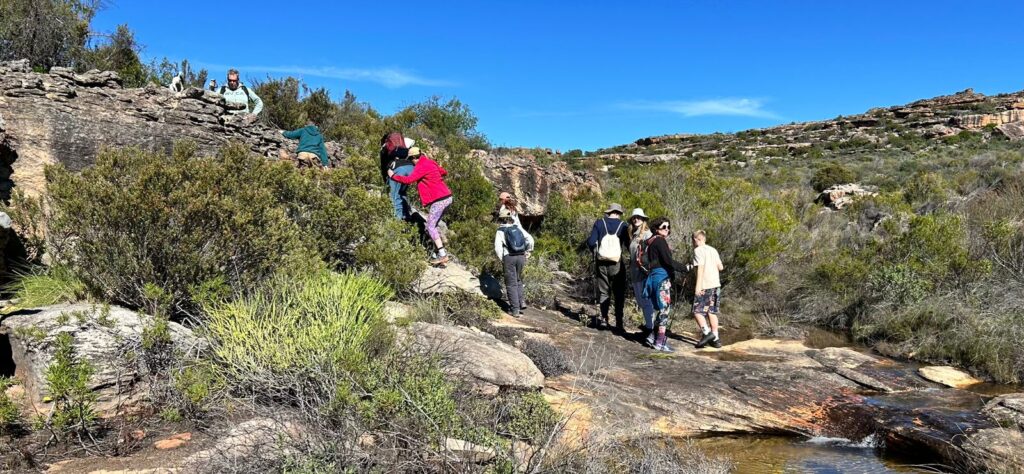
Self-guided and self-catered – or guided and catered?
Some groups like independence. They want to walk at their own pace, cook together, carry the map notes and enjoy the feeling of finding their way. Others want a guide, with local context and catering folded into the experience.
Neither style is better: they’re just different ways of enjoying your slackpacking trail experience.
For confident groups happy to plan food, prepare group meals for each other, manage the day and make decisions together, self-guided works really well. A key issue is that guided and catered adds quite a bit of cost. Self-guided and catered is a better option if group members have a tighter budget.
For groups who want to be looked after, or who are bringing mixed experience levels and would rather not manage every detail themselves, guided would work best. With the guided and catered option a qualified/experienced guide leads your private group, shares local wilderness knowledge and explains points of interest, while meals are prepared for you and the kitchen is cleaned afterwards. You can choose from a list of guides and their menus.
On The Cederberg Trail, both options use the same marked trail and the same overnight PODs. The trail is purpose-built and clearly marked for self-guided groups walking together. Each hiker receives a map, and each group receives a trail guidebook; map-reading skills are not required. Separate accommodation is available for guides at each overnight camp. The choice is about how much support your group wants around the walking.
Decide how food will work
If you’ve ever undertaken a group hike before, you’ll know how important food is. It can make or break the experience, so a little planning goes a long way.
For the self-guided, self-catered option: Rather than having everyone fend for themselves at dinner, why not share the cooking? A fun approach is to divide the group into three teams, with each taking responsibility for preparing and clearing up after one evening meal. It gives everyone a chance to try something different, and often brings out a little friendly competition as each team tries to create the best dinner on the trail.
For breakfast and lunch, it’s usually easier for everyone to take care of their own food. Couples or pairs sharing a POD or cooler box can shop and prepare together, helping to divide up the shopping. There may even be some clever repurposing of leftovers from the previous evening’s dinner to make a tasty trail lunch. Another useful tip is to prepare some meals at home before you leave and bring them along, ready to heat up at the end of the day. This can save time and effort, particularly when you don’t want to spend your evening cooking from scratch after a long day of hiking. Each overnight stop on The Cederberg Trail has a fully appointed kitchen, so if the spirit takes you, you can prepare gourmet meals and impress your fellow hikers.
Slackpacking helps because you don’t have to carry everything on your back all day. On The Cederberg Trail, your luggage and cooler boxes are transferred ahead to each overnight spot. This means your group can eat well each day and evening, without lugging heavy backpacks through the day.
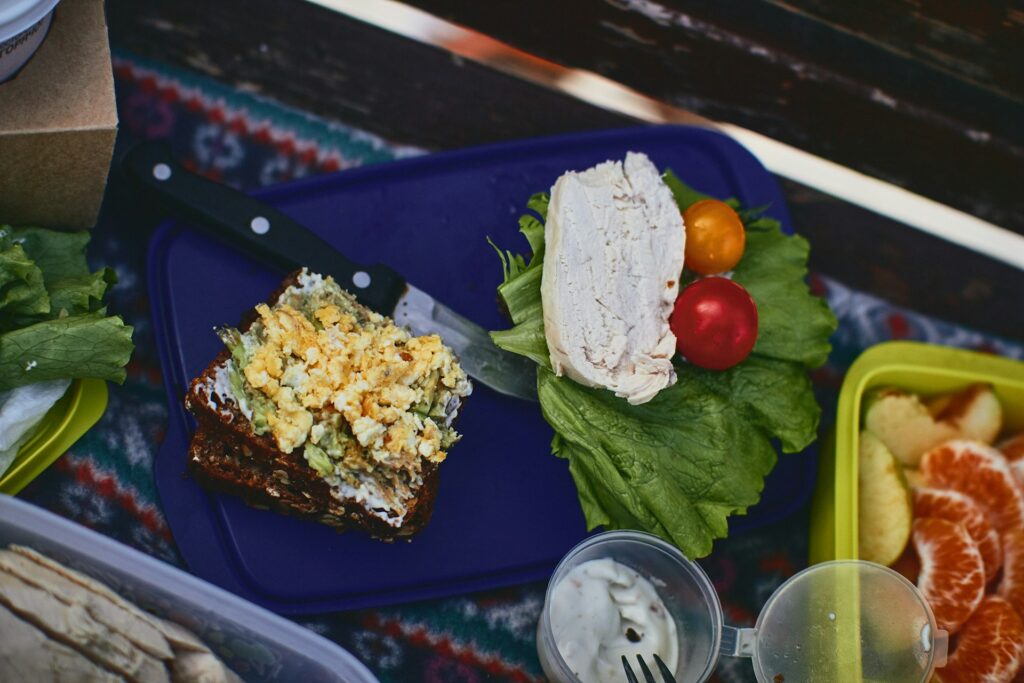
Don’t overcomplicate lunches. The best trail food is food people can comfortably eat while sitting on a rock in the wind, taking in the beauty of the Cederberg wilderness. And in the evening if you fancy a drink, the luggage transfer ensures guests can pack a bottle of wine, some beer, or ingredients for a G&T. If ice is required, this is supplied at each overnight POD and more can be purchased if needed.
Talk about money before anyone pays
If things are left vague in this area, money can get awkward. So before you book, be clear to the group about what the trip includes or excludes, when payment is due, and what happens if someone pulls out. At this stage of planning, it’s also worth weighing up whether self-guided and self-catered, or guided and catered, is the right fit for your group budget. The former is the affordable choice – the latter for those with a higher budget.
Use one clear message. Include the cost per person, transport plan, food estimate, deposit deadline and balance deadline. If one person is paying the trail invoice, don’t make them chase ten people for weeks.
For group bookings, one booking for the whole party is far cleaner than a bunch of separate conversations. It gives the organiser one date, one set of terms and one place to check details. On The Cederberg Trail, budget for a minimum group charge of eight guests even if only two to seven guests are travelling; the maximum is 12 guests, plus a guide if you book the guided and catered option.
Pick dates that suit the group, not everyone’s fantasy season
There’s no perfect date for a group – there is only a date that enough committed people can make.
In the Cederberg, think about what your group wants from the season. July to November is the water season, with swimming and waterfalls possible depending on rainfall. Summer brings heat, long light, drier stone and big night skies. Depending on the time of year, the feel of the trail changes as the landscape warms up or flourishes after rains.
If you have first-time multi-day hikers, families with teens or mixed fitness levels, choose dates that make the walking easier. For those looking to include kids over the age of 10, it makes sense to plan your hike around school holidays. This makes it easier for friends with children to join and gives younger hikers the chance to enjoy an inspiring wilderness experience together. Planning well in advance also means you can take advantage of public holiday long weekends, making it easier for everyone to find a date that works.

An 8-step checklist for booking your group hike
- Name the champion. This is likely yourself – the one reading this article – so thatone person owns the booking keeps everyone informed.
- Check availability and secure a date. Look at the available dates and identify one that works for your group. The champion can provisionally reserve a date, giving the group two weeks to confirm and pay the deposit.
- Find a date that works. If you haven’t settled on a date, share the available options with the group and agree on the most suitable one.
- Float the idea. Send one clear message with the trail, suggested date options, and who it’s for.
- Confirm the real group. Replace “keen” with “yes, I’m in”.
- Check the basics. Group size, ages, fitness, guided and catered or self-guided and self-catered, and travel distance.
- Agree on money. Share deposit, balance, food and transport expectations upfront.
- Send one final brief. Packing list, directions, arrival plan, formulate a food plan together,emergency details and what happens on day one.
What makes a group hike easier to book?
The easiest group hikes have fixed boundaries. Clear distances. Clear sleeping arrangements. Clear booking terms. Clear arrival instructions. Clear expectations about what is included.
This is where a purpose-built slackpacking trail helps. Your group still gets the wilderness, the shared effort and the feeling of being properly away – but the heavy logistics are reduced. Bags and cooler boxes move, the overnight sites are waiting, and the walking has a known shape.
The Cederberg Trail adds another layer for group bookers: private wilderness, marked path, en-suite PODs, hot showers, communal kitchens, long tables and space for a private group, usually 8–12 guests, to feel like the trip belongs to them. Bookings from as few as two guests are welcomed, but all private bookings are charged at the minimum group rate of eight guests.
When should you book?
Once you’ve made a reservation and your group comes together and commits to the proposed dates. Don’t wait for every possible person to decide – book when you have the core group, the date and the payment plan. If the trip depends on the slowest reply, it may never happen.
For birthdays, school holidays, long weekends and family gatherings, start earlier than you think. Groups need time to arrange leave, flights, lifts, food roles and for fitness preparation.
If your group already knows it wants a 4-day South African slackpack with good beds, great mountain scenery and one booking for everyone, you’re ready to move from chat to calendar.
On The Cederberg Trail,one booking holds the week for your whole group. Check the available dates, and make your reservation to get the ball rolling.
