Trail Info – 4-day Cederberg slackpacking hike
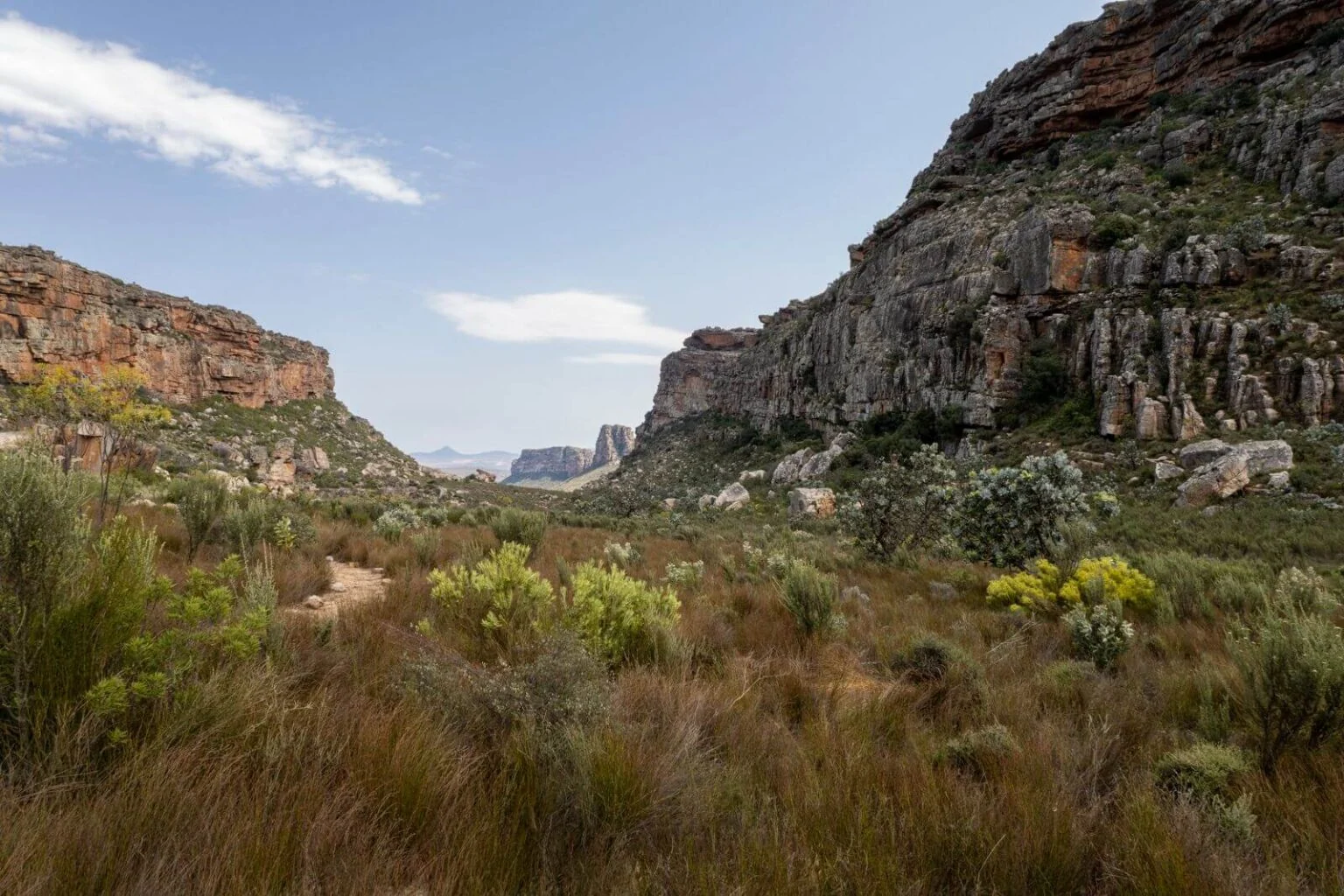
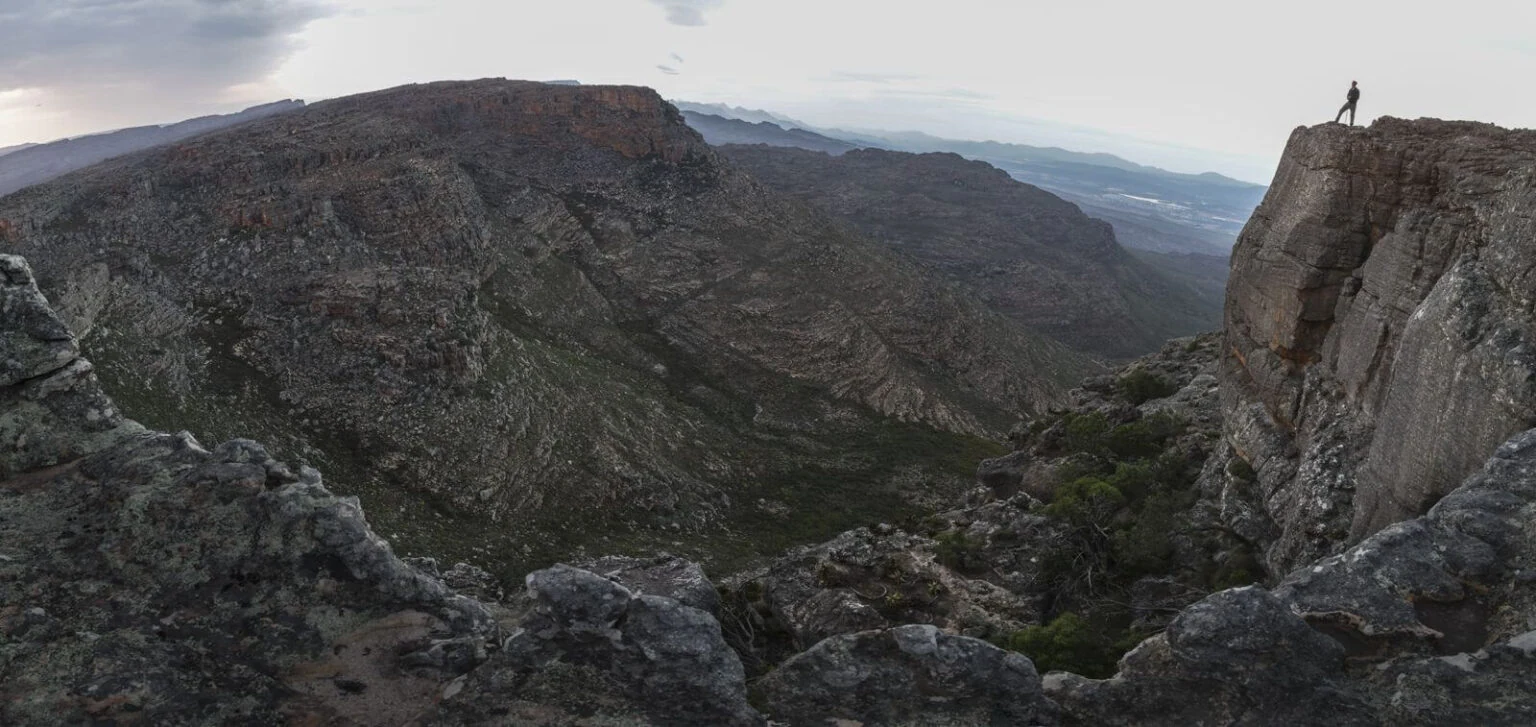
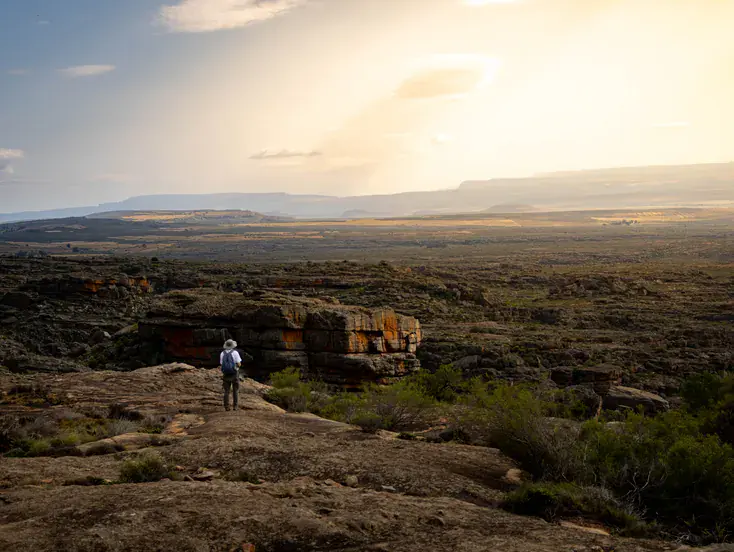
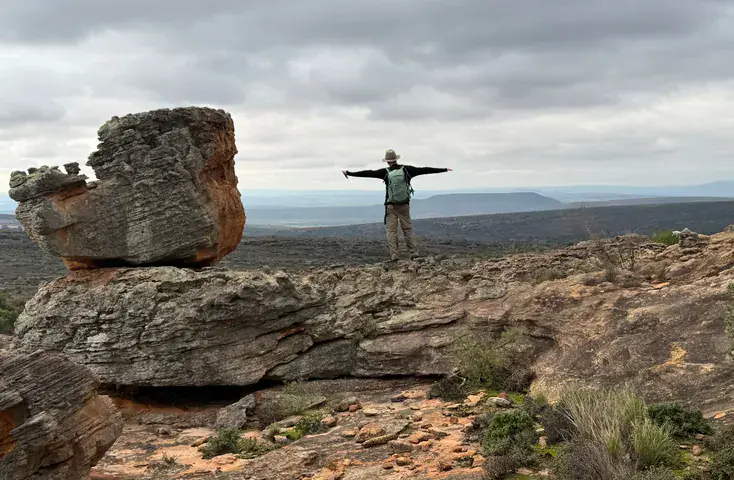
Come and walk four days through the private Klipopmekaar wilderness — a quiet, isolated part of the northern Cederberg mountains that was closed to the public and hikers until now
4 Days
4 days, 3 nights
slackpacking
50 km
43 km with
shortcuts
8–12 Hikers
Options for 2 – 7
hikers available
10–70
ages welcome
3 camps
6 private
PODs at each
From R6,250
per person,
plus VAT
Quick overview
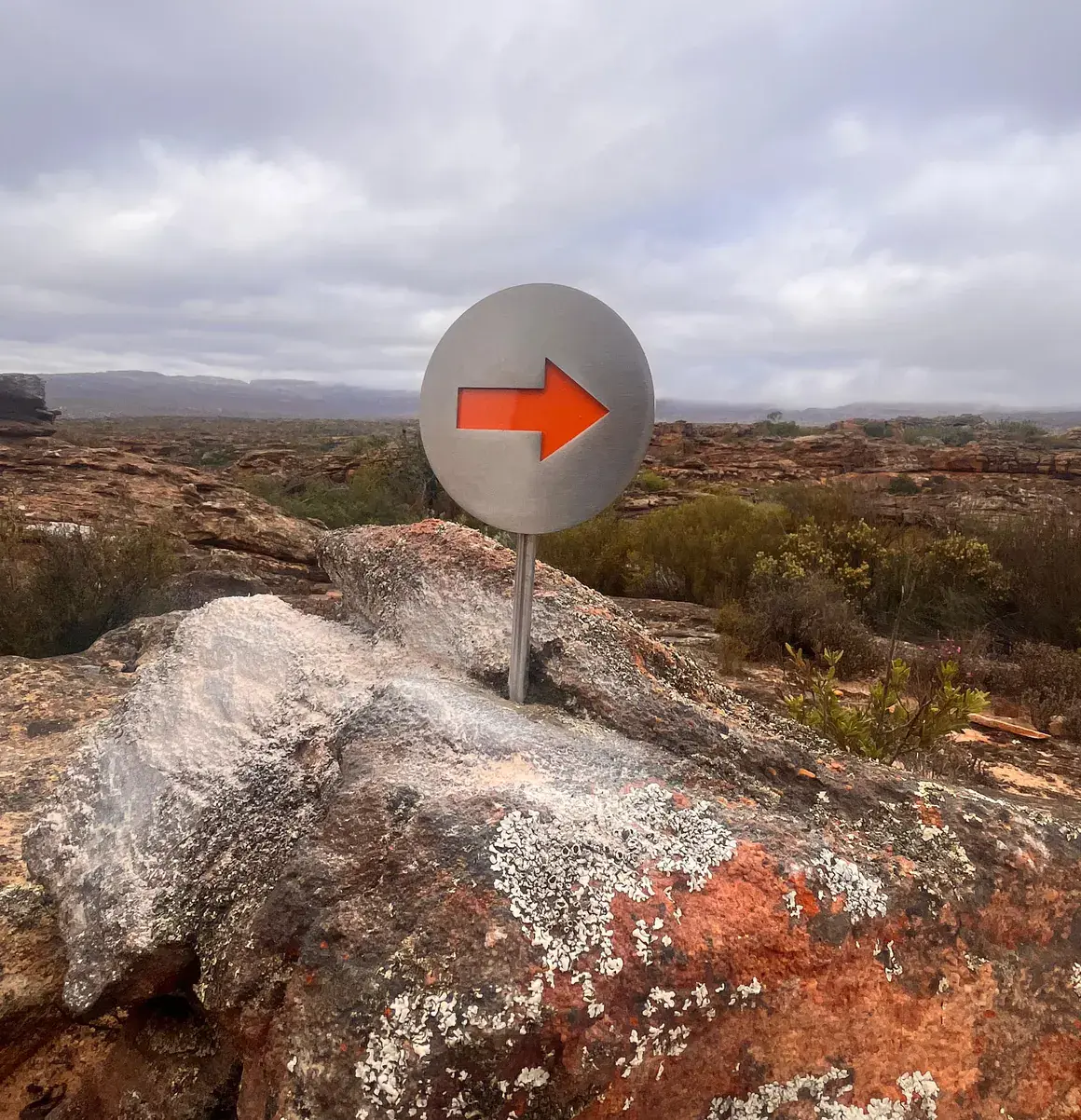
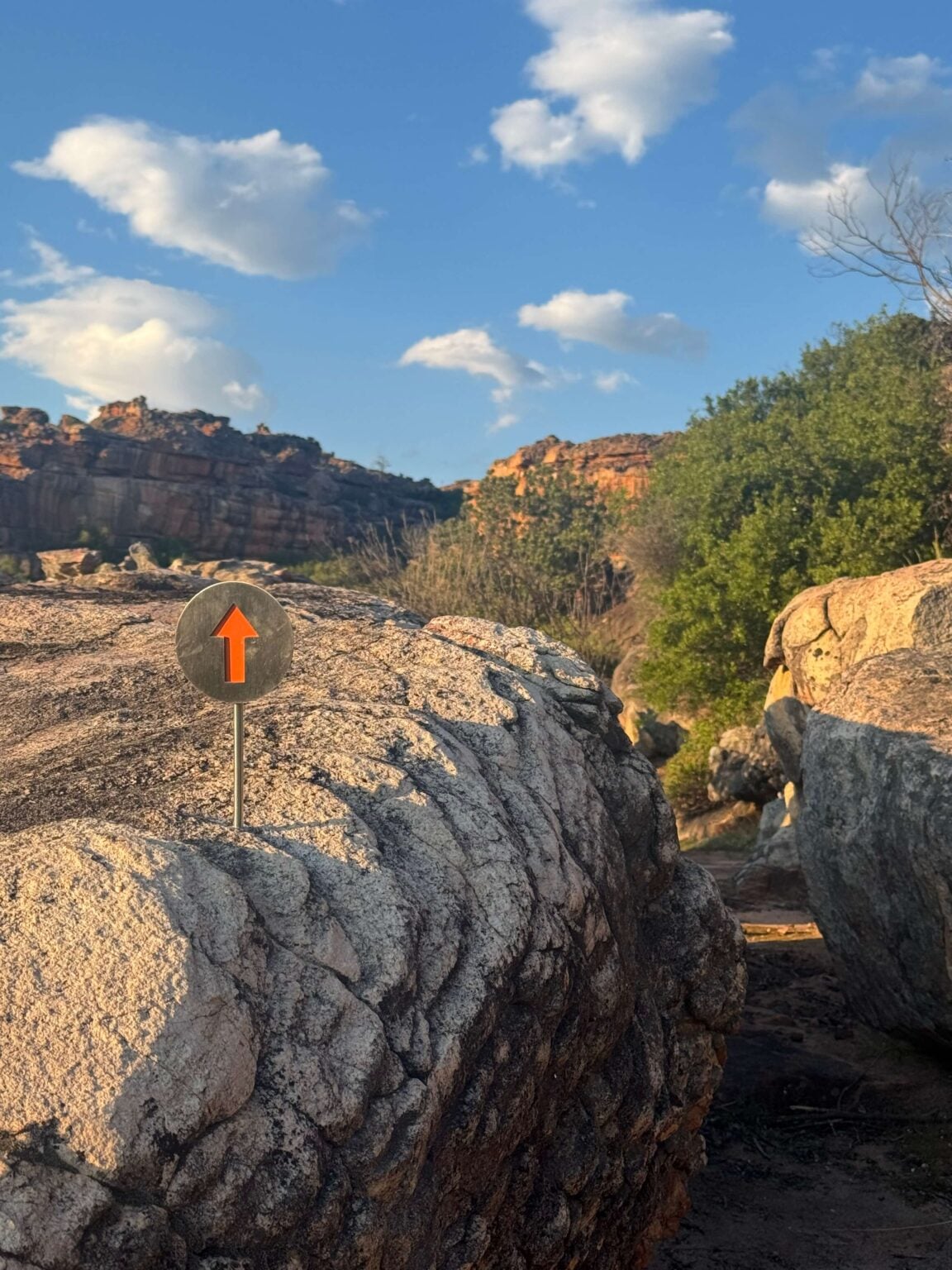
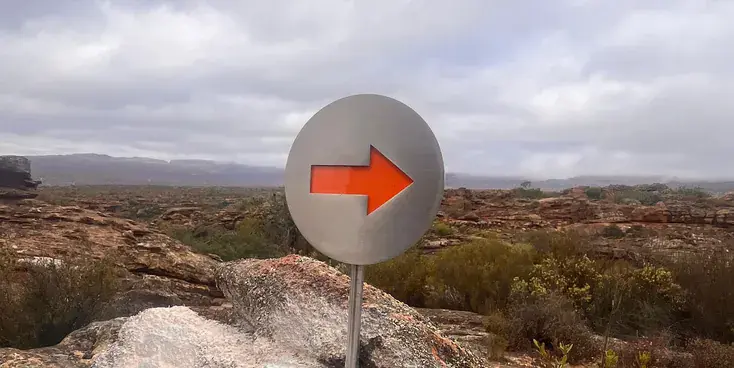
- The Cederberg Trail is a 4-day, 3-night slackpacking hiking trail. The path is purpose-built for self-guided hikers and very clearly marked.
- Slackpacking, done properly: You only carry a daypack. Your group’s personal duffel bags, cooler boxes and food boxes are transported ahead daily to your three overnight camps: Hole in the Roof, Die Bassie, and Dragon’s Lair.
- It is a moderately strenuous hiking trail — built for people who already love a good day on their feet. Fitter hiking groups will enjoy the full 50km trail. There are also two shortcut routes that can be taken, reducing the trail distance to 43km.
-
One private group of 8 to 12 friends and/or family starts per day. A champion booker (or group leader) books and coordinates the hike for everyone in the group.
Smaller groups of 2-7 hikers may also book the trail, but at the minimum rate applicable to a group of 8 hikers. Thus the per person cost is higher. - You can either walk self-guided and self-catered option and cook/clean for yourselves. Alternatively, you can book the guided and catered option if you would rather be looked after.
Quick Links
Bookings
How to book your group
How To Book
Bookings can only be made directly at this website. Sorry, we don’t take phone or email bookings, but will gladly answer your questions.
Choosing Dates
Choose your start date and the number of hikers in your group, from a minimum of 8 up to a maximum 12 people. Your three-night itinerary will automatically be scheduled from there.
Small Group (2-7 hikers)
Should you have a group of fewer than 8 people, you may also book the trail. However, your smaller group must be willing to pay the minimum group rate (cost) for 8 people. In other words, you may book a group size of 2 to 7 people, but the minimum rate (cost) for 8 people will apply.
Booking Exclusivity
We start only one group per day, so each day on your trail, and your upcoming overnight camp, is exclusively yours for the duration of your hike.
Champion Booker / Leader
Every group needs a Champion Booker / Leader — the person who makes the reservation, gathers the group, and manages the booking on behalf of the group.
Briefing
Your group will attend the pre-hike briefing together, start and walk the trail together.
Pricing
Pricing for 2027 and 2028 Hikes
July 2027 to October 2027
R7, 250
per person, plus VAT
For example, total for group of 8 hikers = R58,000 + VAT (@ 15%)
November 2027 to May 2028
R6, 250
per person, plus VAT
For example, total for group of 8 hikers = R50,000 + VAT (@ 15%)
June 2028 to November 2028
R8, 500
per person, plus VAT
For example, total for group of 8 hikers = R68,000 +VAT (@ 15%)
Booking & payment terms & conditions, and our cancellation policy are on the Booking page.
Self-guided vs. Guided
Two ways to walk
most common • most affordable
Self-guided and self-catered
Your friends/family, your pace, your own group’s favourite menus and dishes.
- Walk the very well marked and easy to navigate trail as a private group together.
- At the Visitors Centre you pack your own food and drinks into our coolers and dry boxes, which we then transport onwards for you from camp to camp.
- Make the camps and kitchens entirely yours each night preparing meals as you wish.
- You are requested to please clean up your dishes and kitchens before departure each morning.
We’ll look after you
Guided and catered
A qualified/experienced guide leads your private group on your booked trail.
- Guides will also share their Cederberg wilderness knowledge with you, and explain key points of interest along the trail.
- Your meals are prepared for you and kitchen cleaned afterwards.
- You’ll be able to choose from a list of guides and their menus and spend your trail being well looked after.
- Separate accommodation is available for the guides at each night’s camps.
Launching 2027
Day-by-day
Hiking schedule day-by-day
The full trail is about 50 km. Two gentler shortcuts exist (which reduce full trail length to 43 km) if your group would rather walk at a slower pace; and/or doesn’t feel fit enough to tackle the high Noordkrans peak loop on Day 3.
Day 1 • 10km • 4 Hours Walk
Visitors Centre to Hole in the Roof
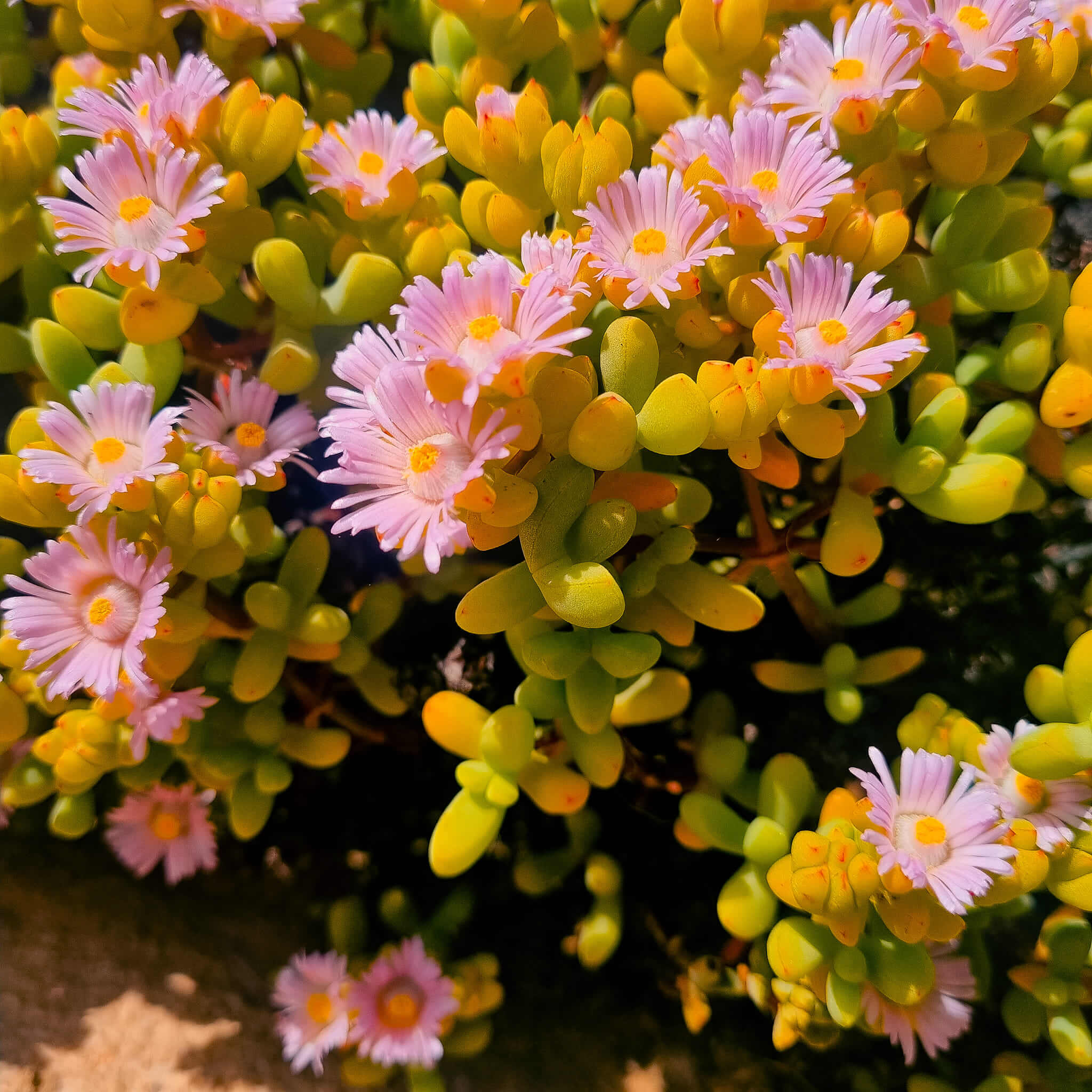
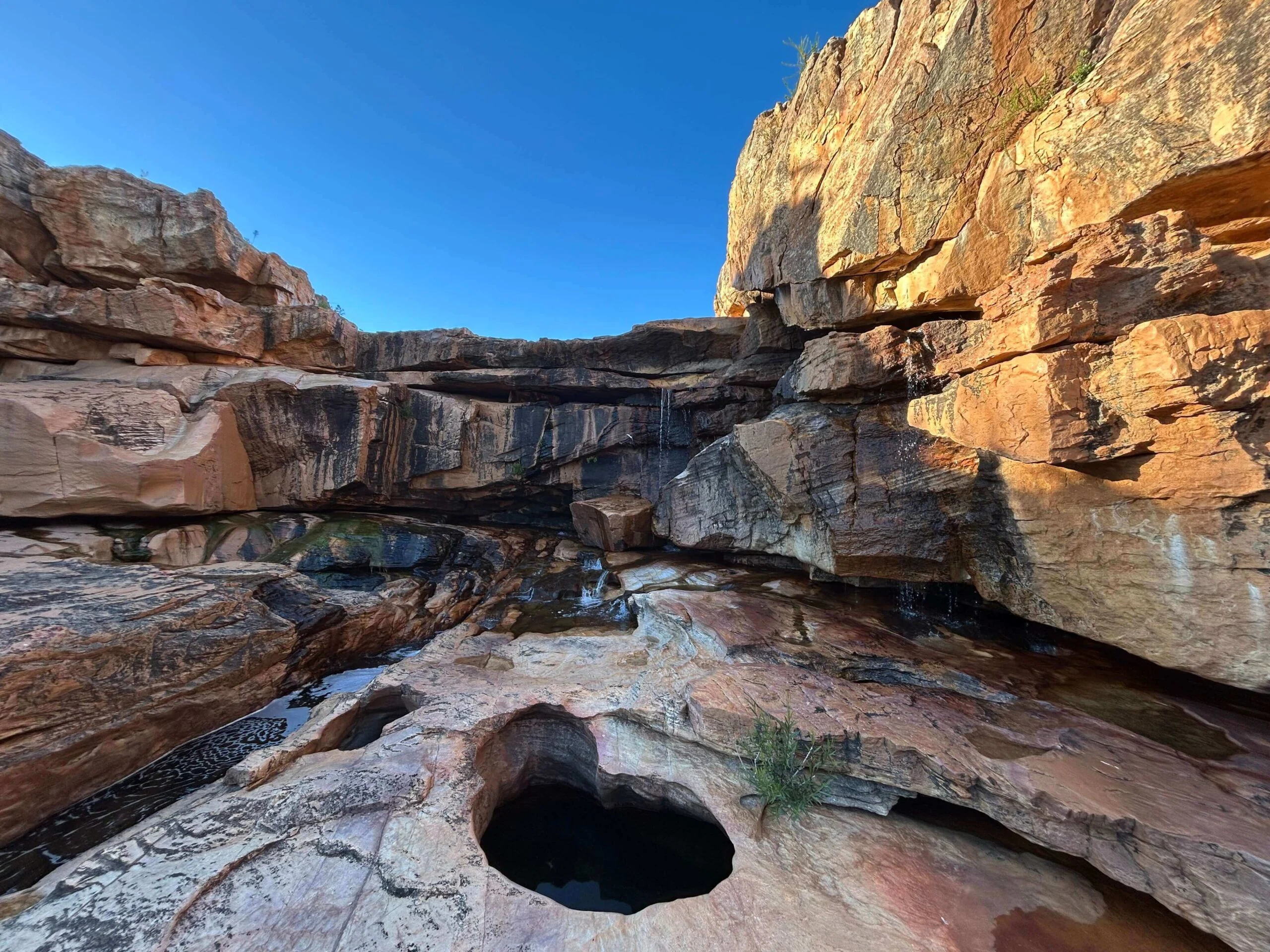
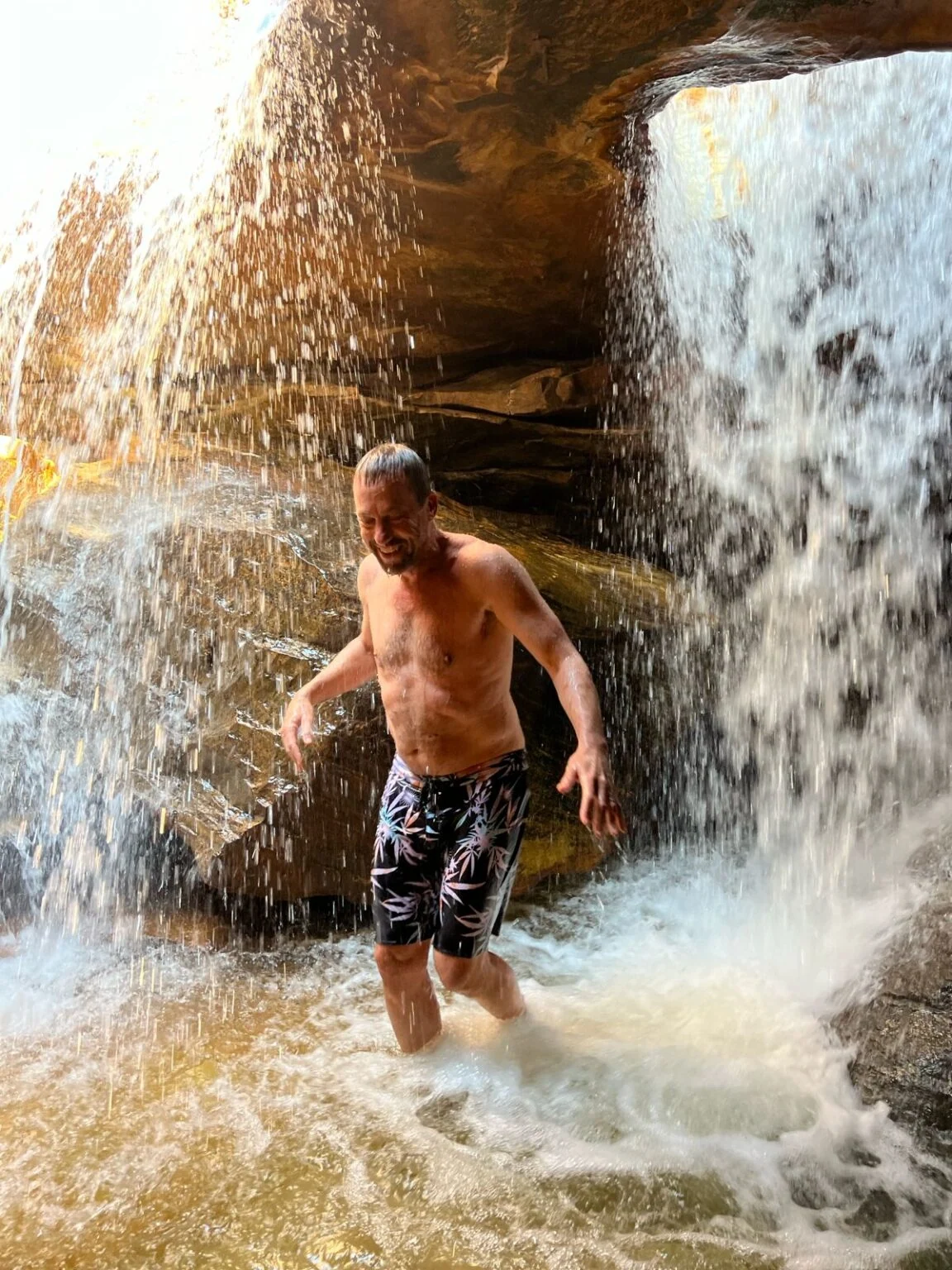
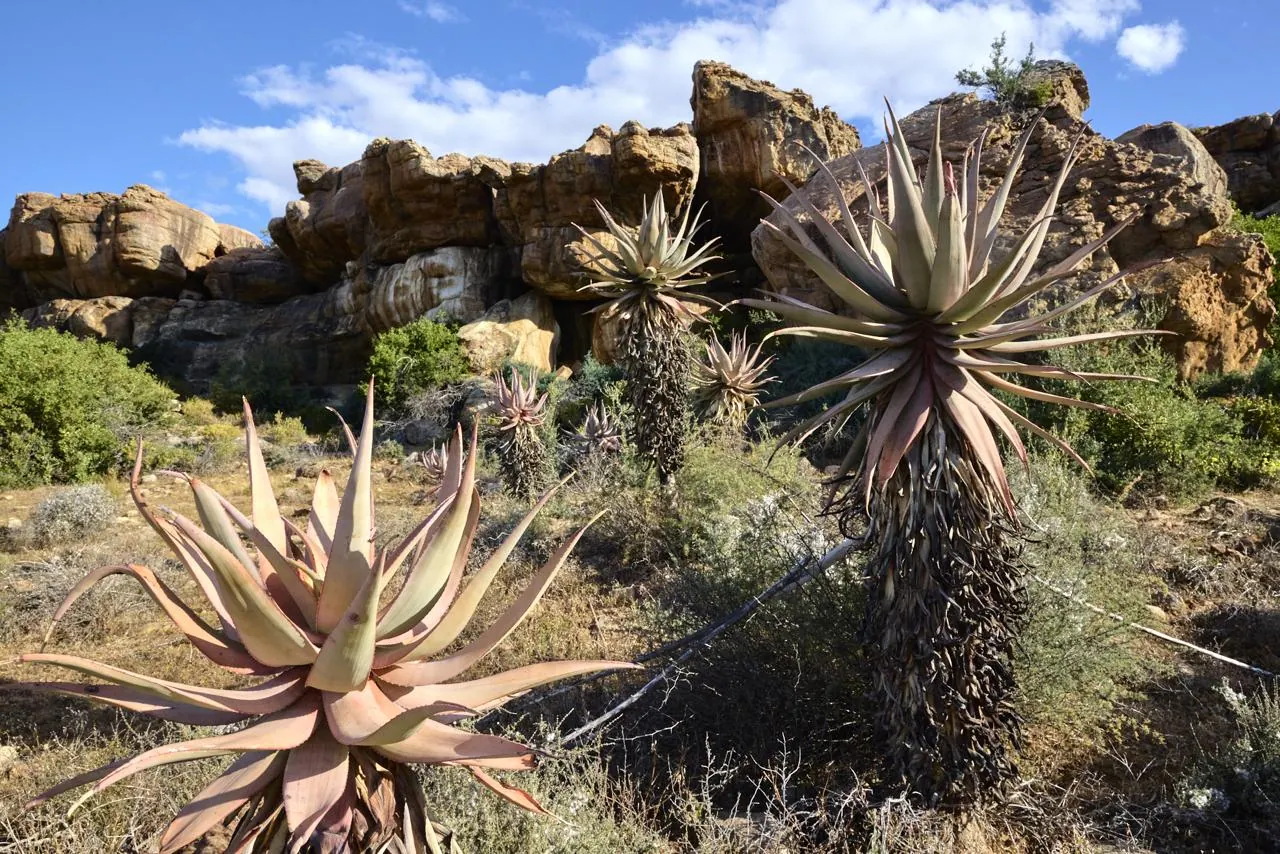
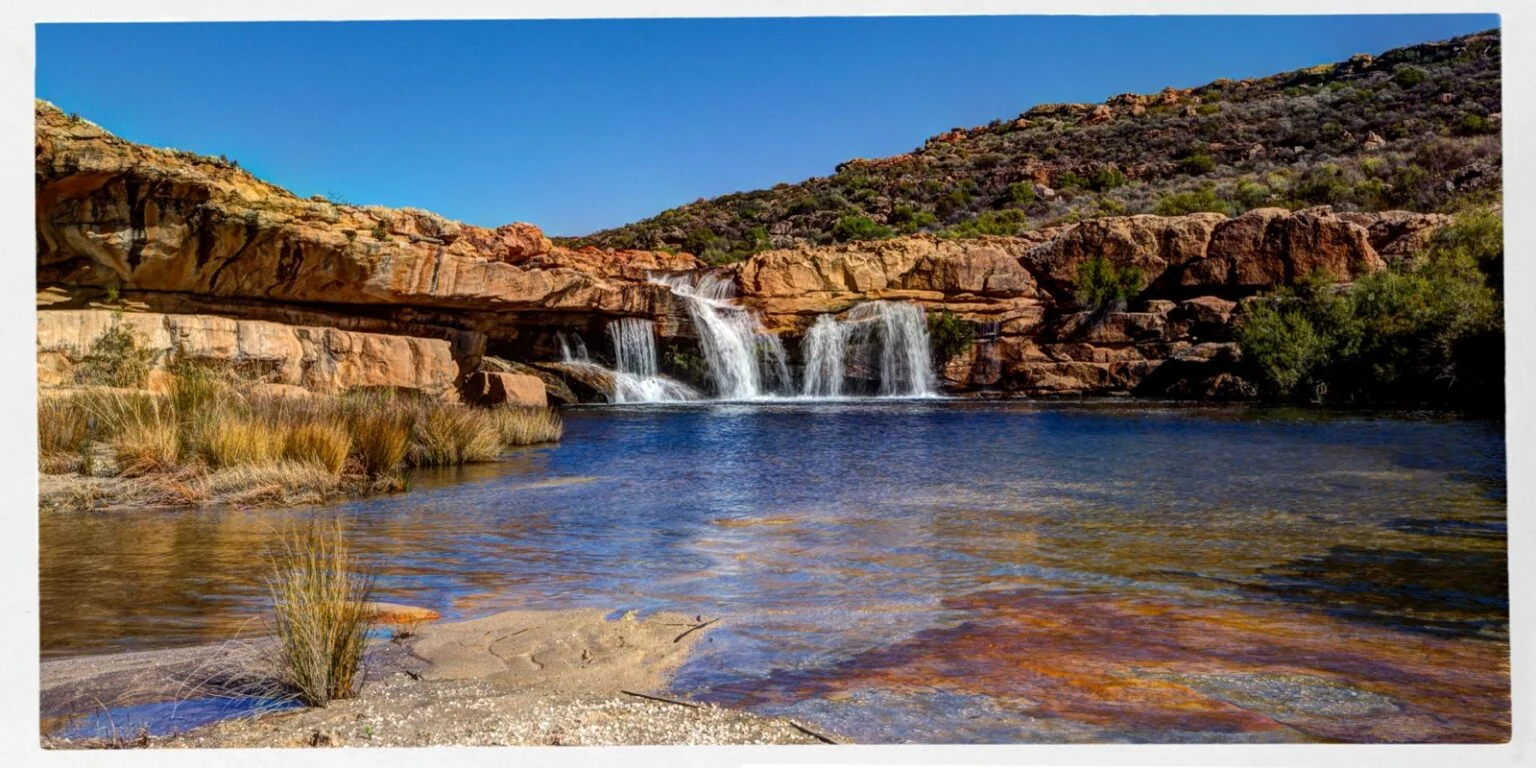
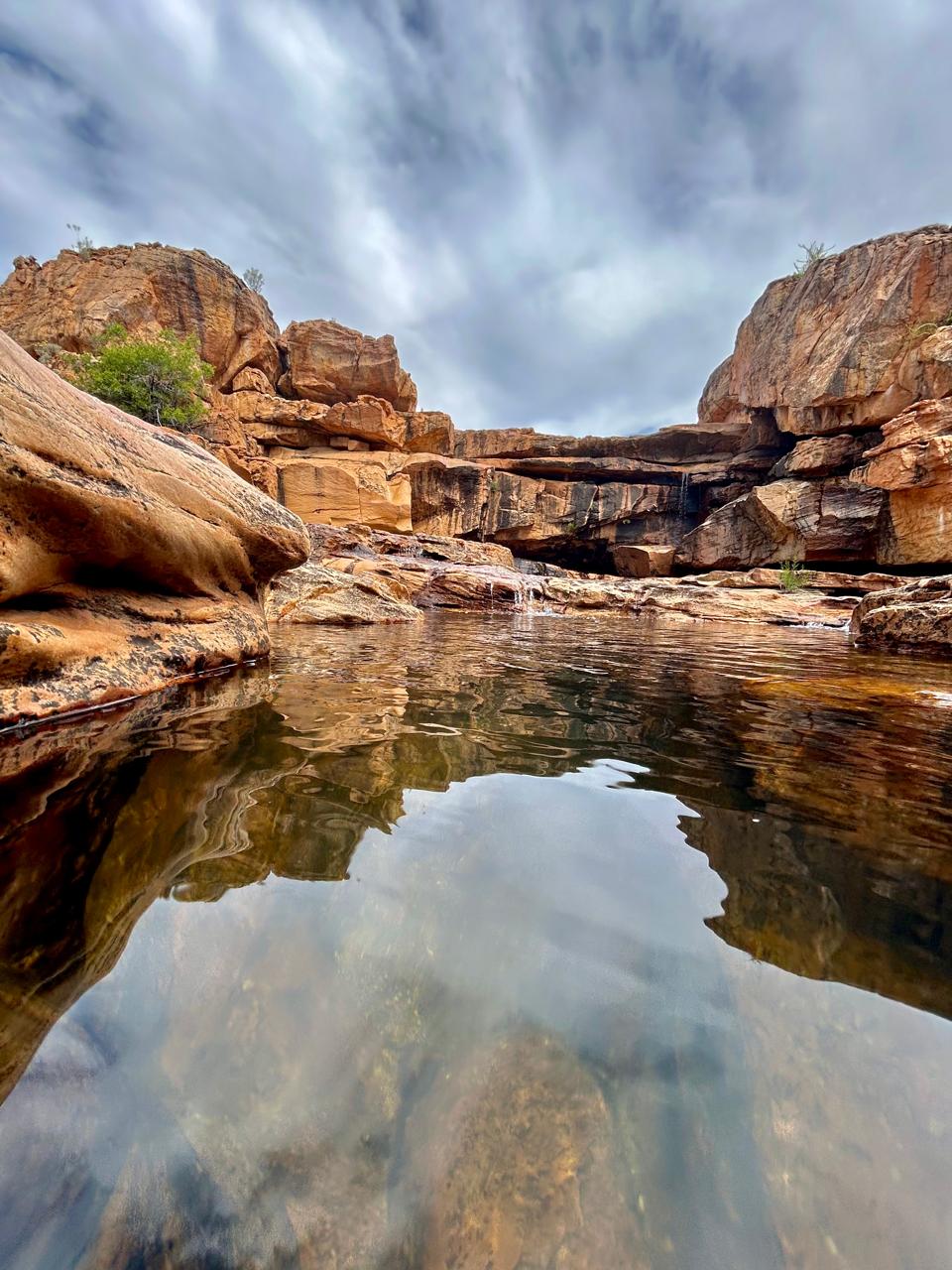
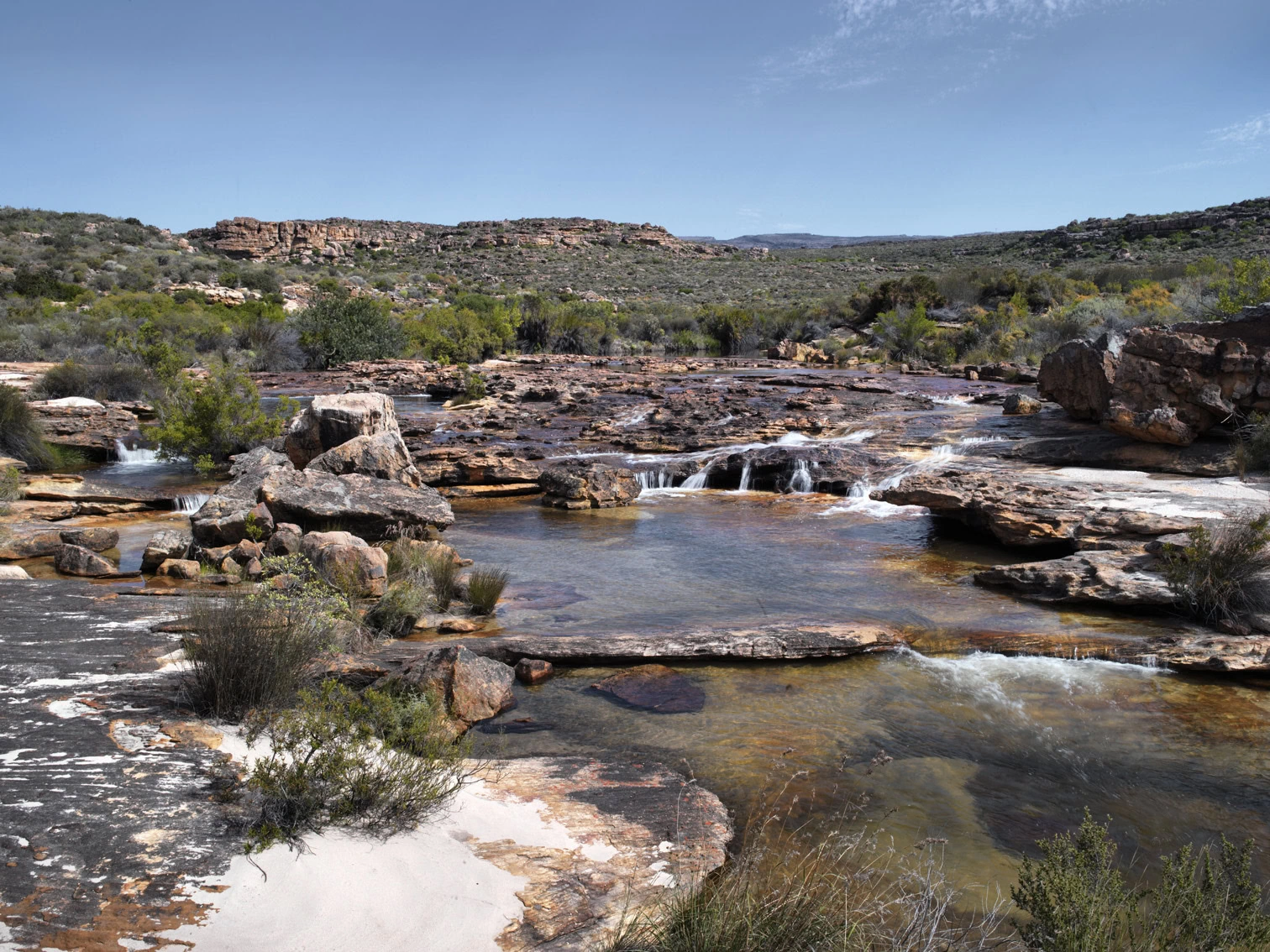
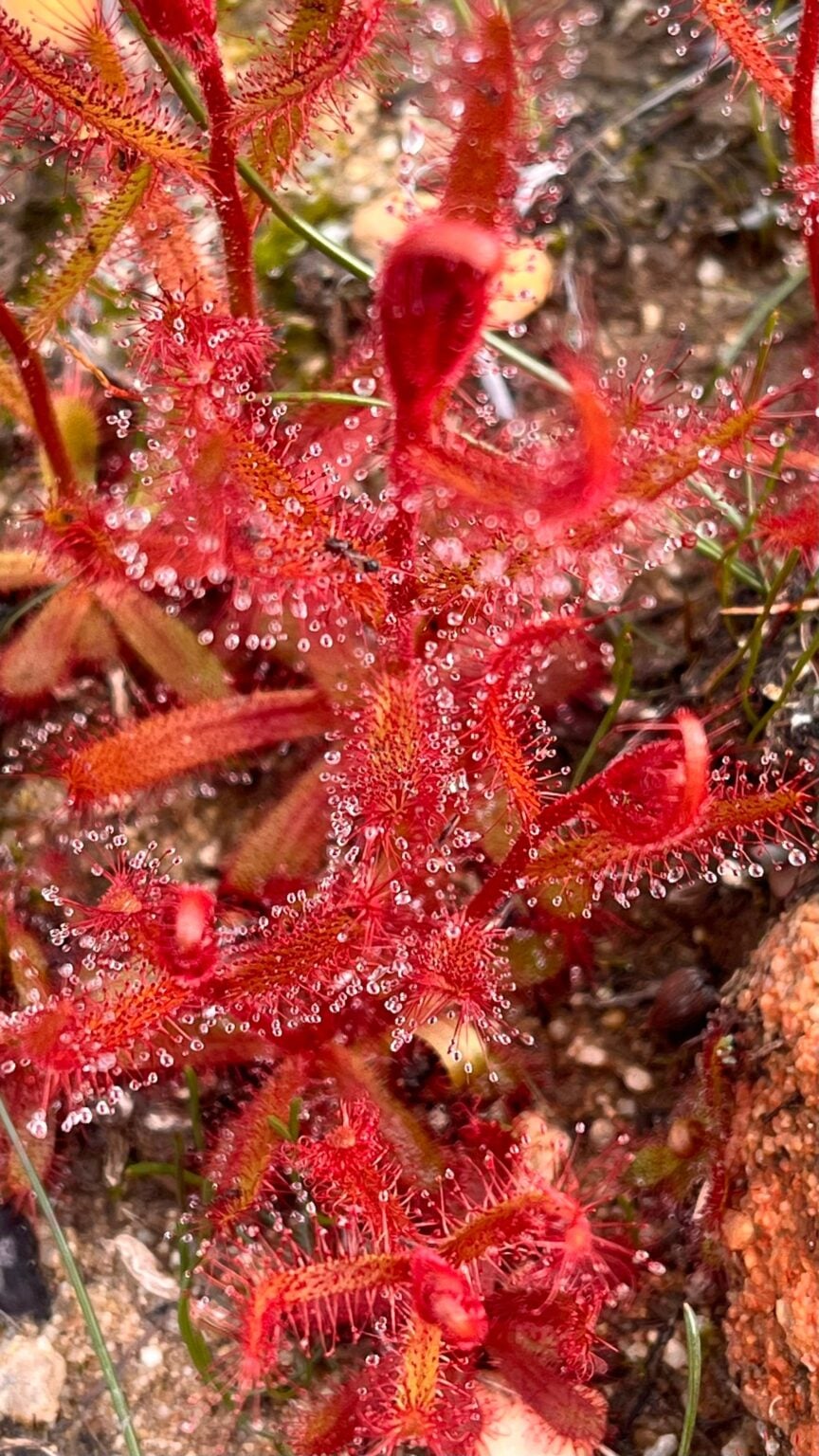
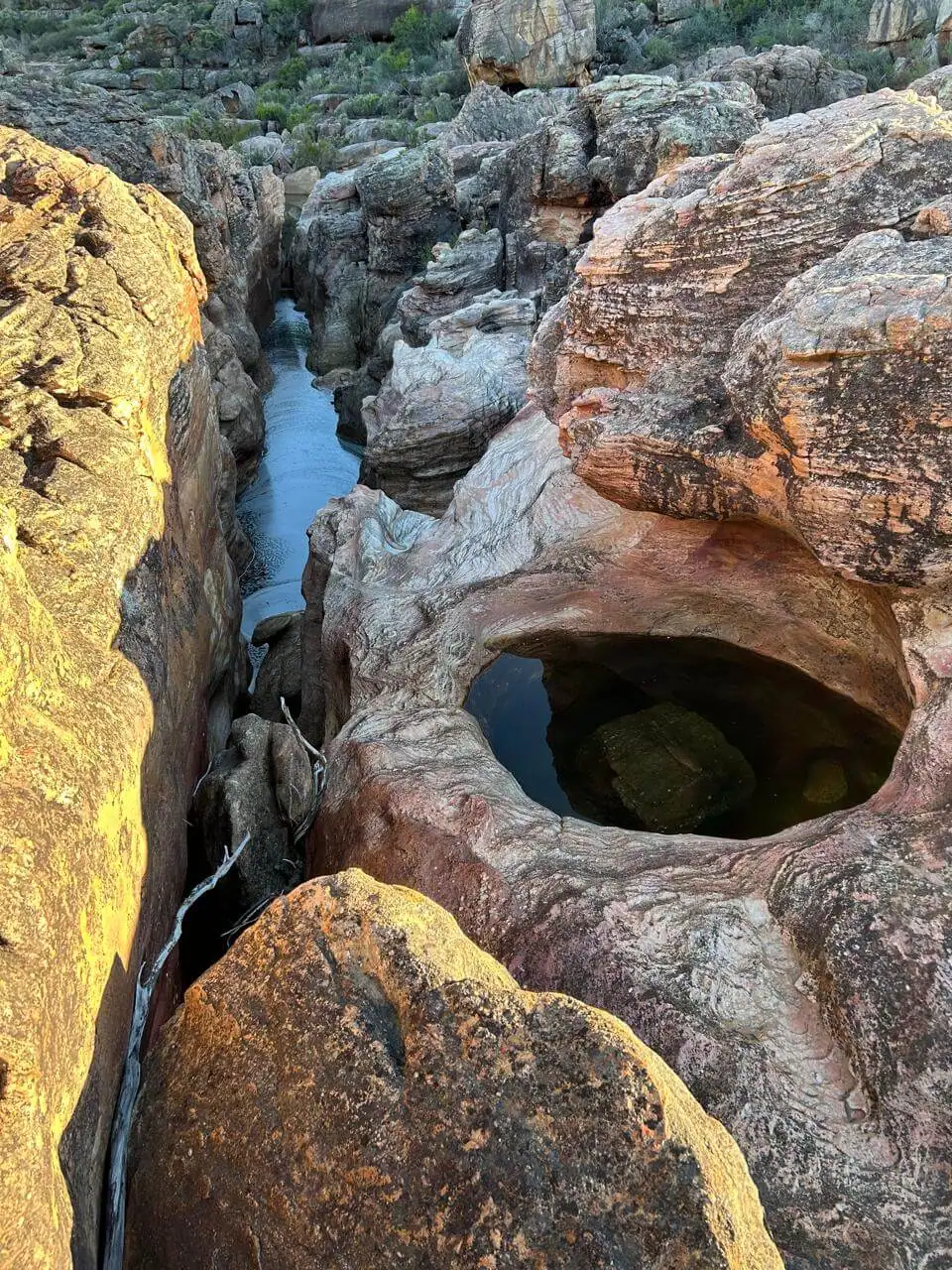
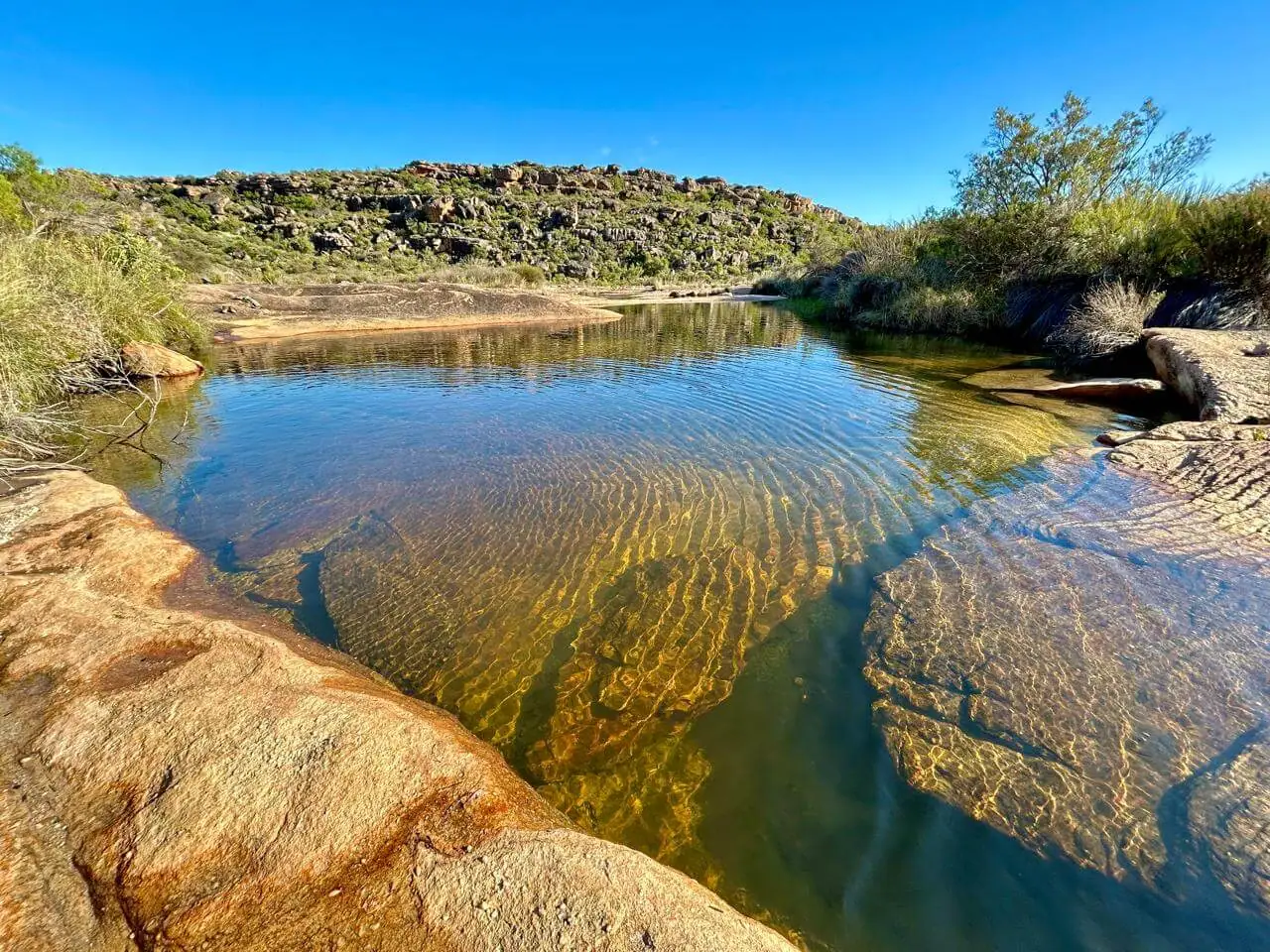
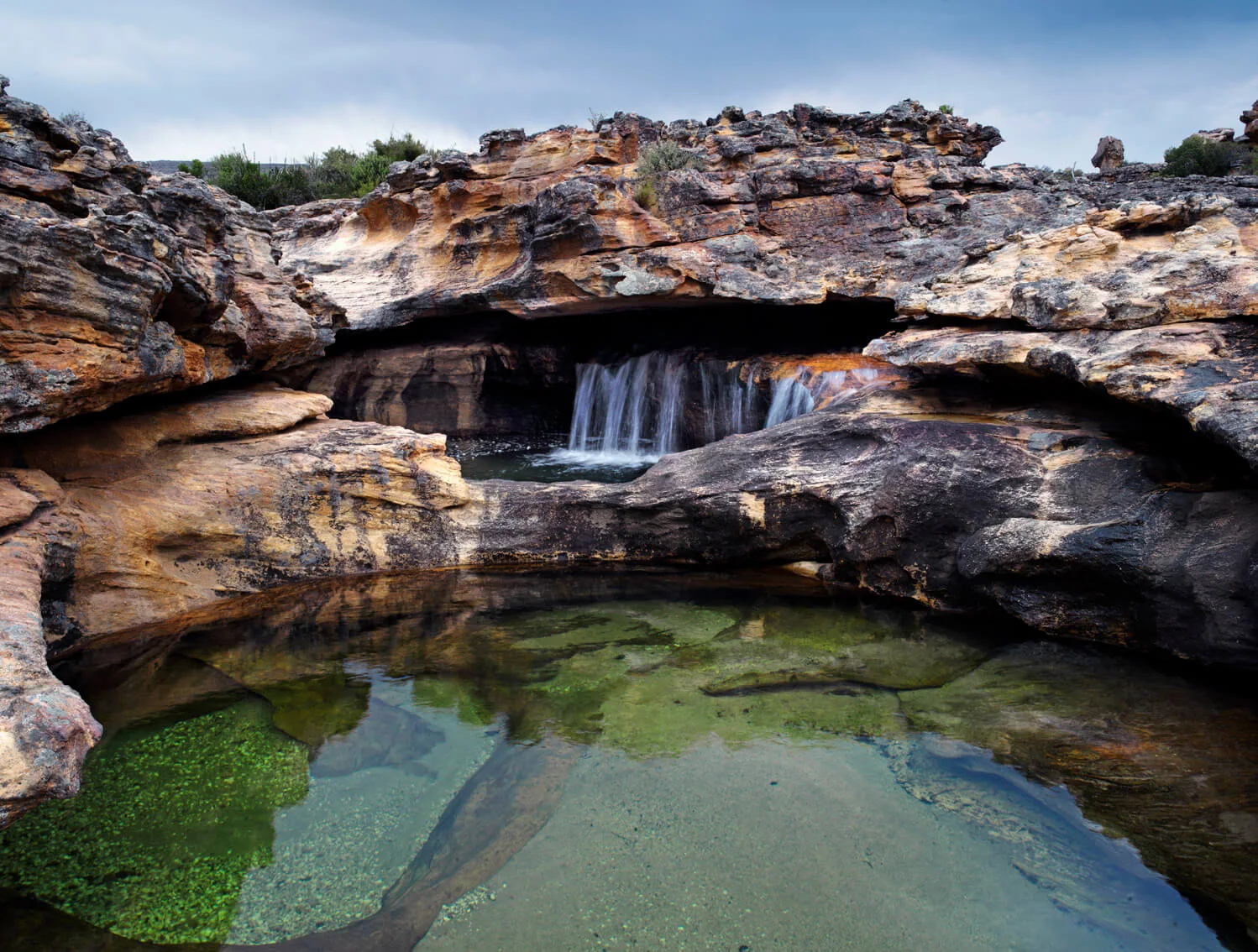
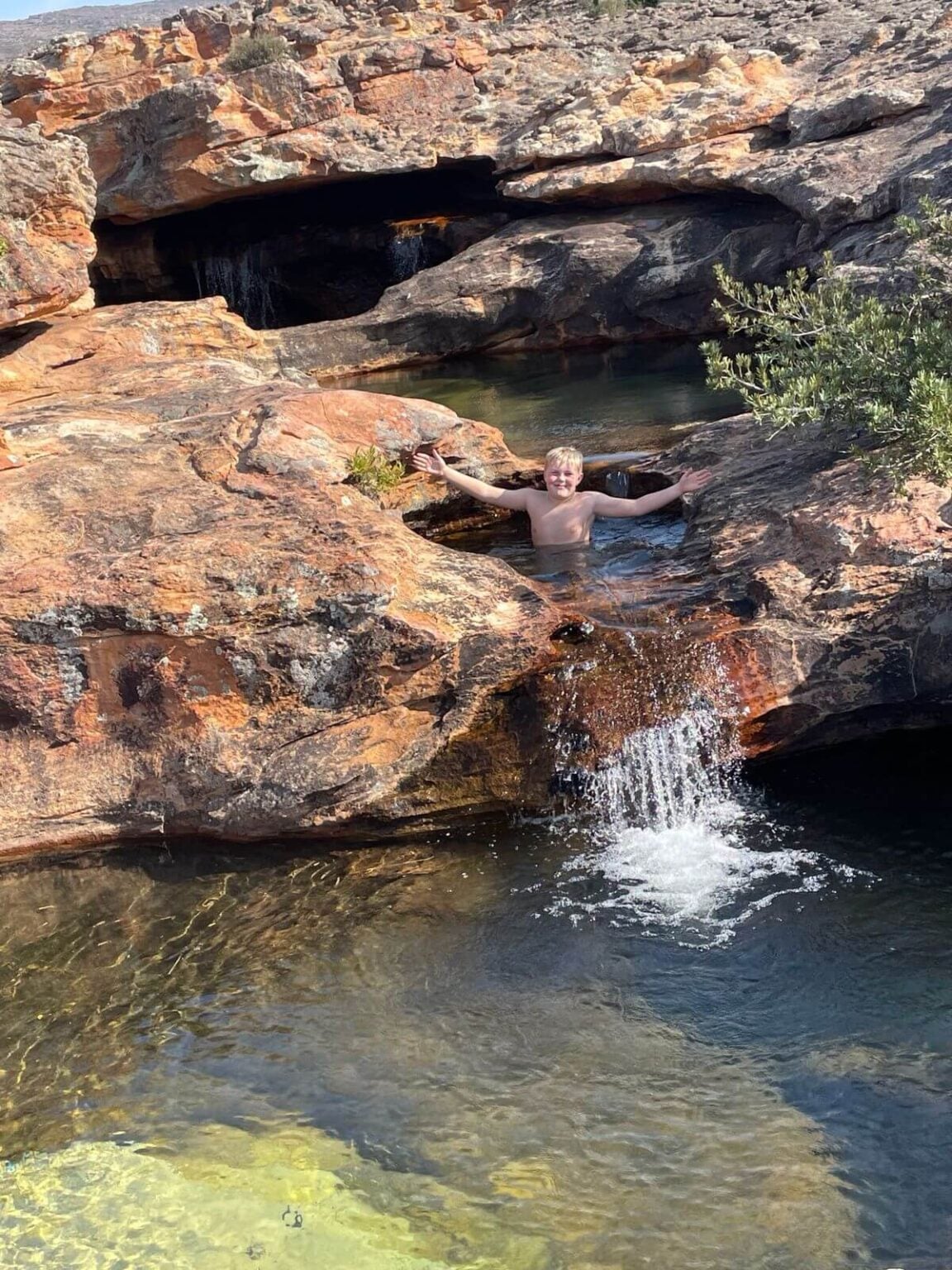
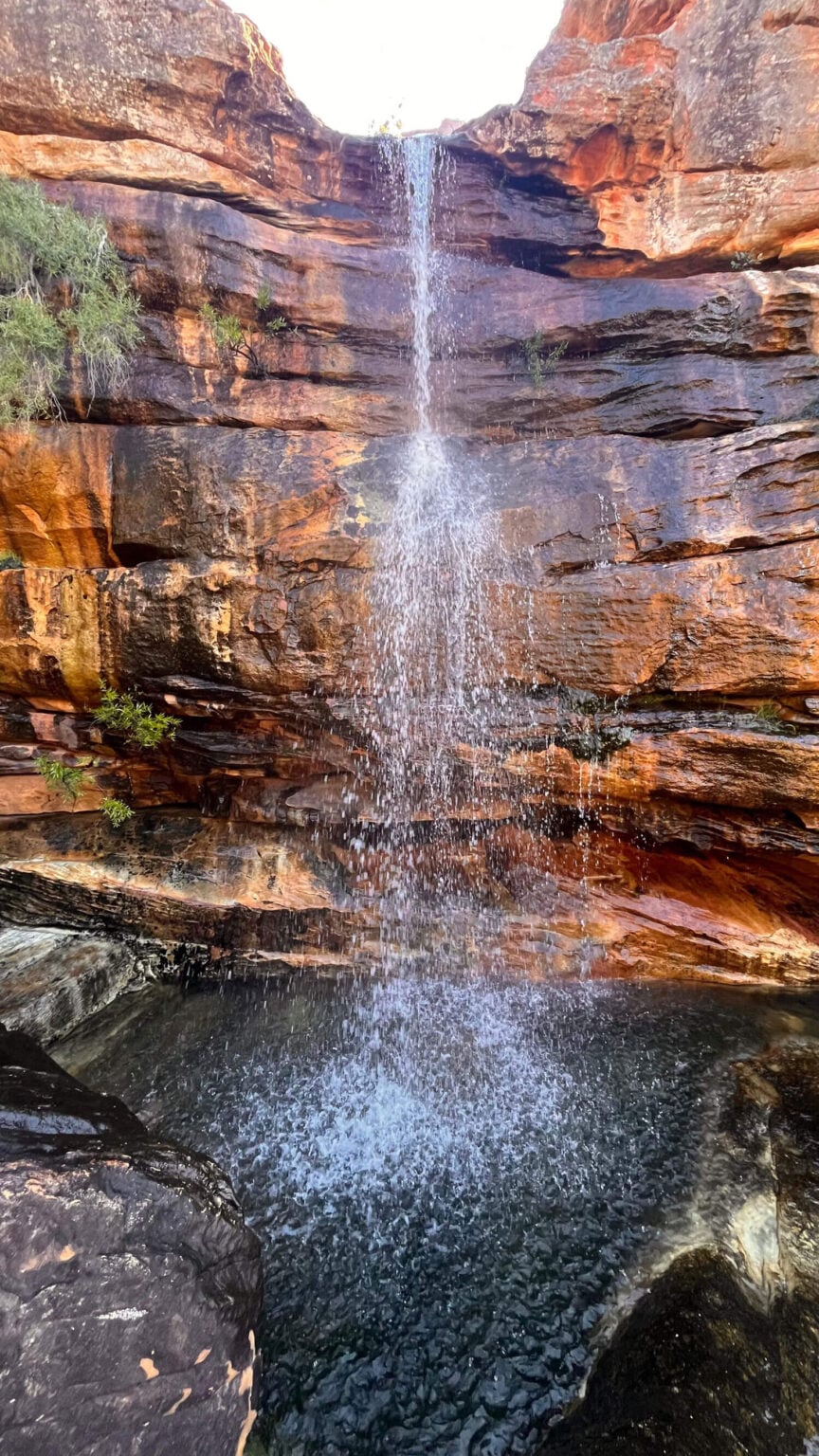
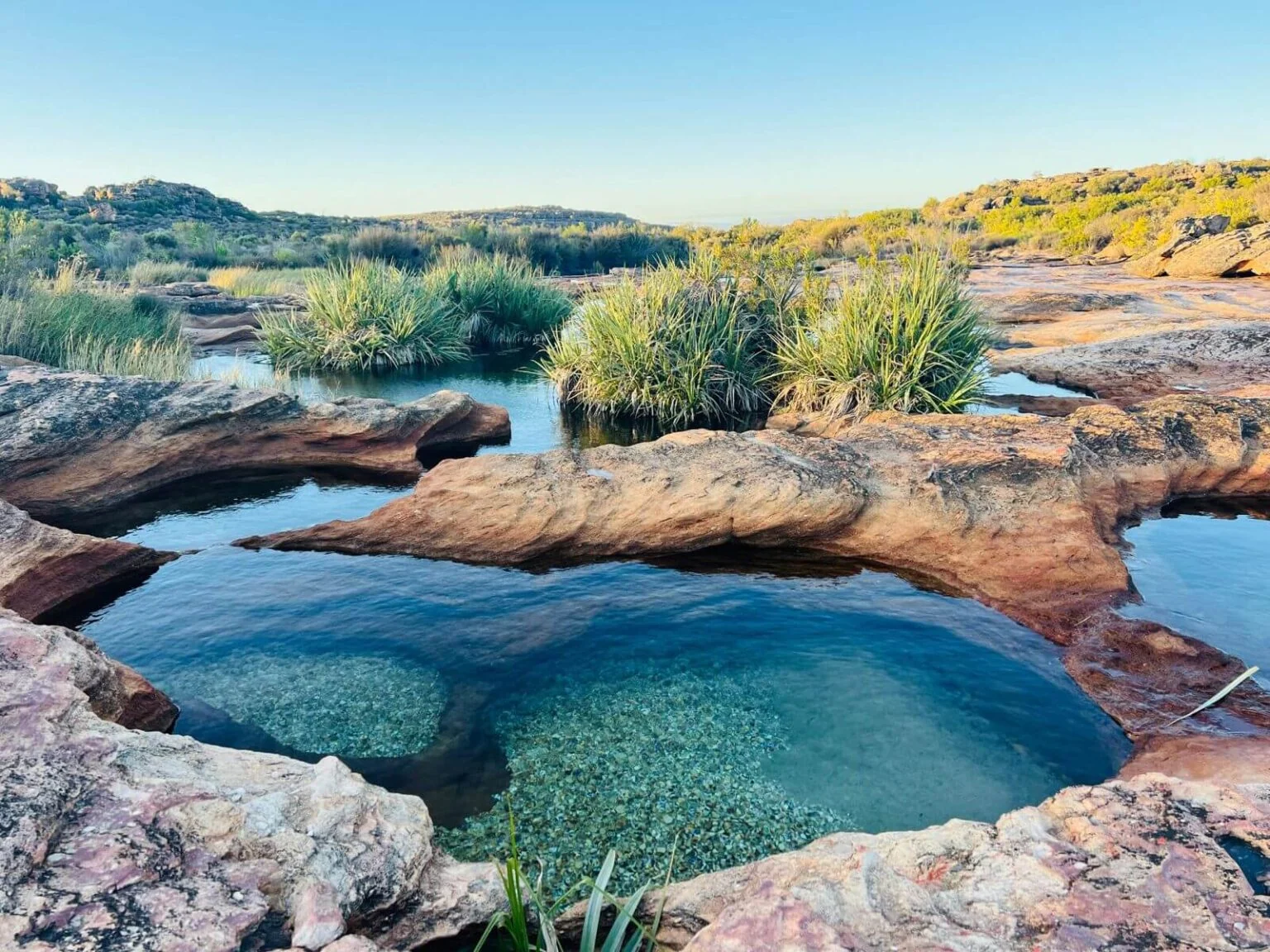
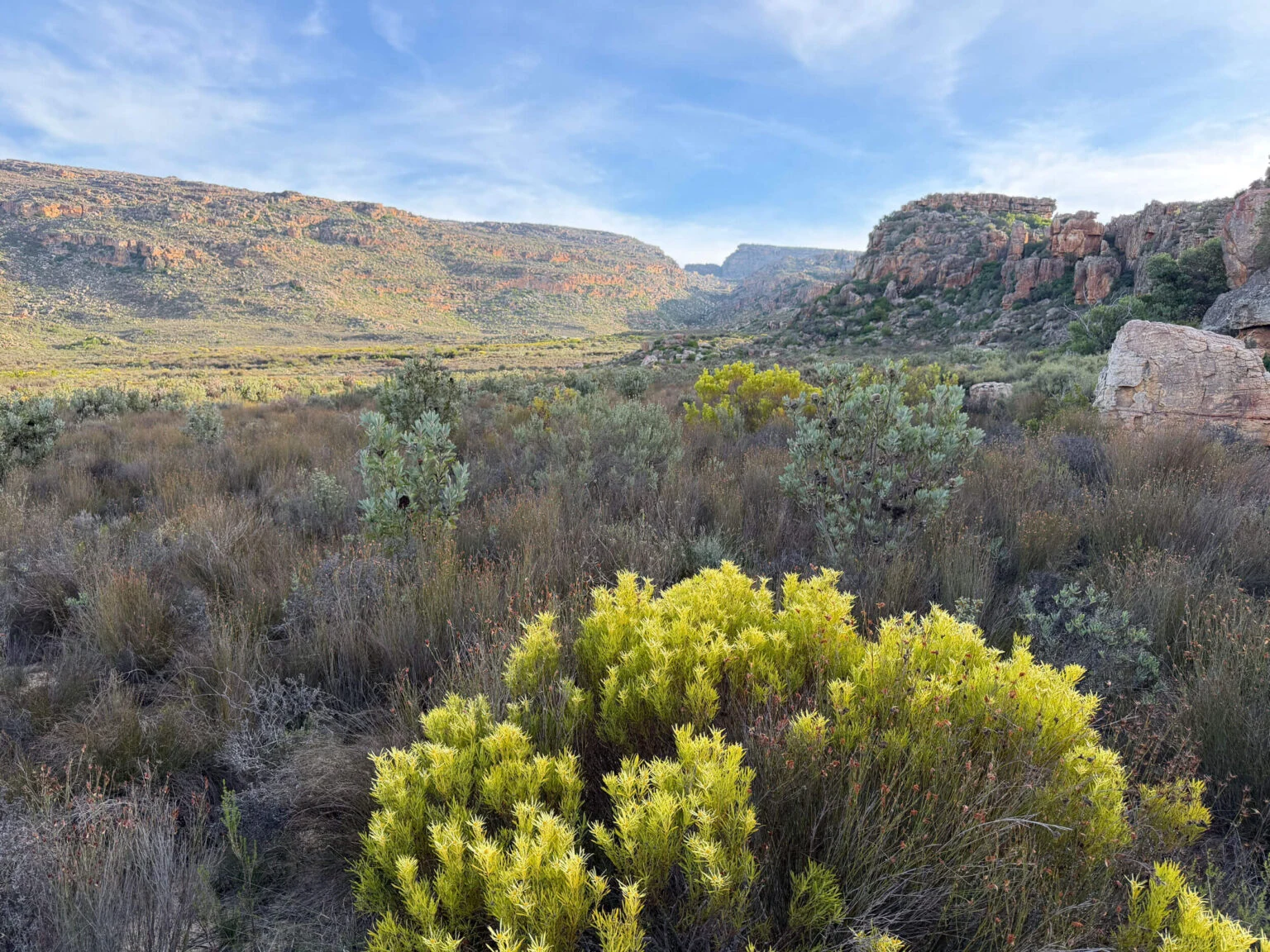
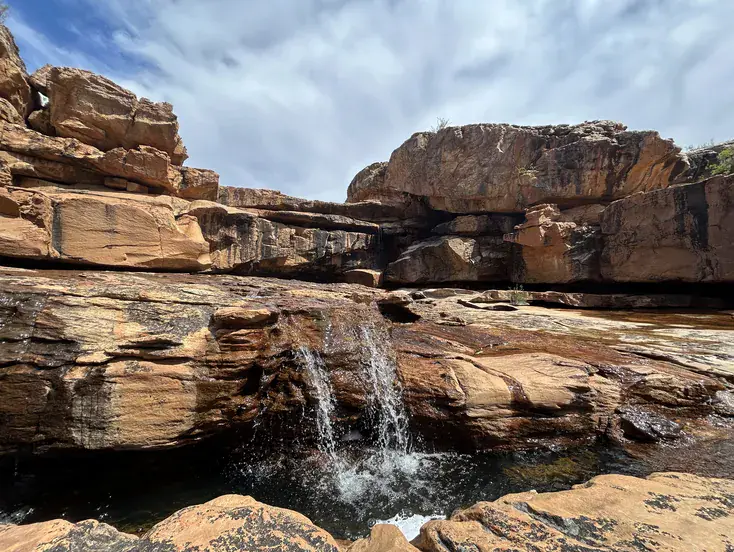
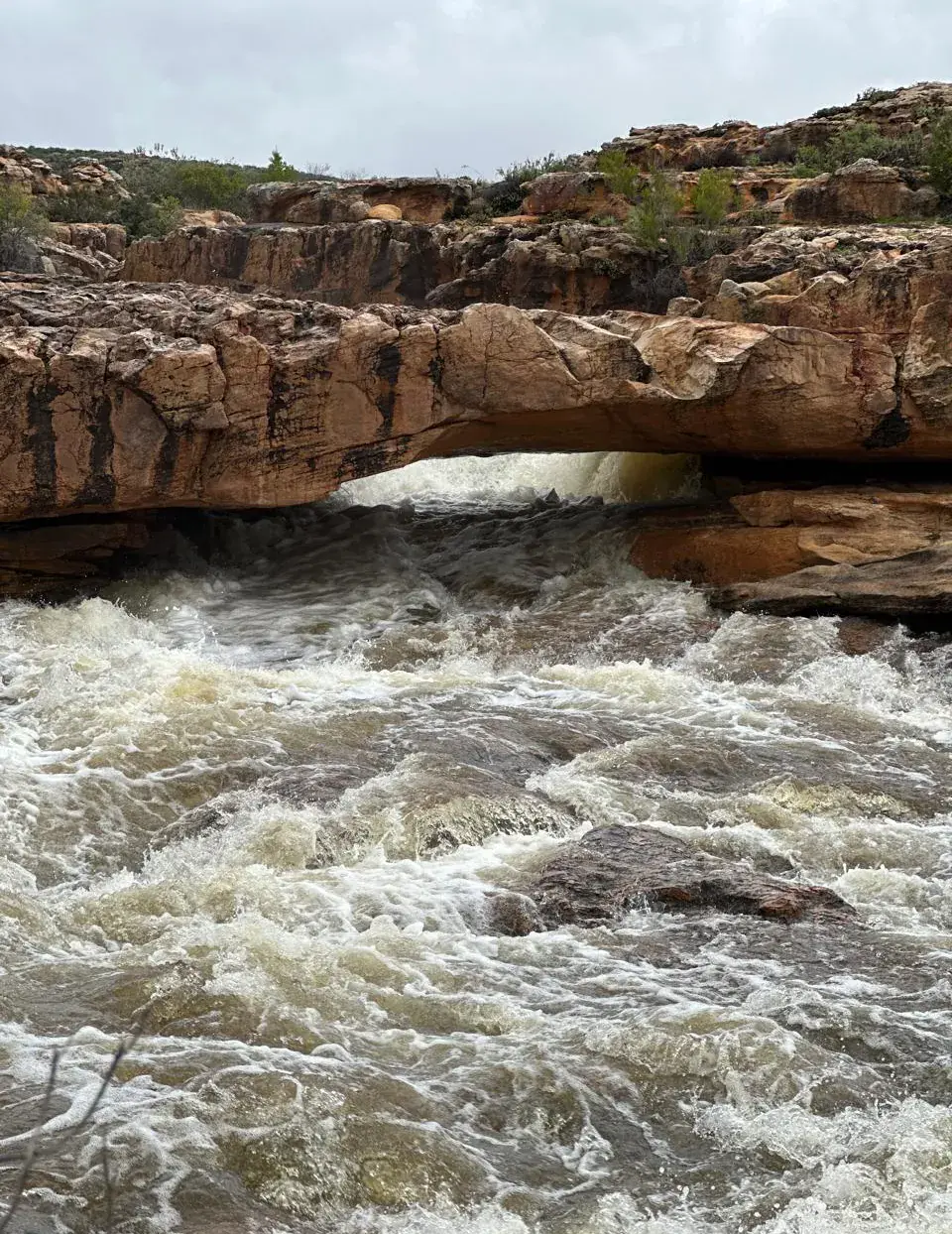
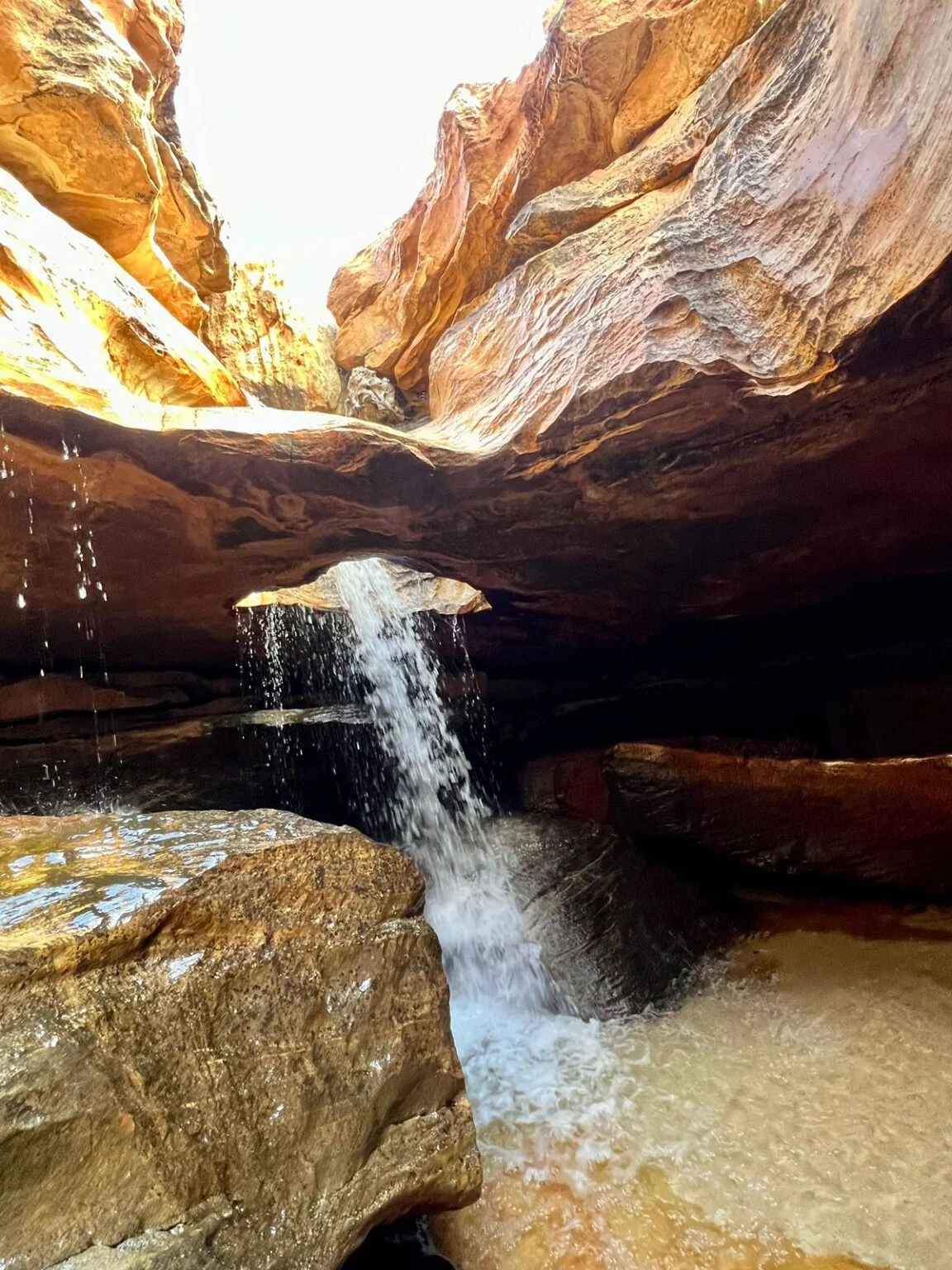
A long, gradual descent through bio-diverse Cederberg mountain fynbos and succulent Karoo flora — a myriad of small, stubborn, beautiful plants — down to the Waterfalls River. During winter and spring when the river runs, you then hike up past beautiful waterfalls, sculpted rock formations and swimming pools you’ll not want to rush, and arrive at Hole in the Roof.
If you start late, or want to walk a shorter route on Day 1, a shortcut of about 8 km (2½ hours walk) gets you to Hole in the Roof camp quicker. But you’ll miss two of the most impressive waterfalls the trail offers.
We recommend you plan to arrive at our Visitors Centre & Parking by 11:00, which will get you walking by 12:00 (after your group’s trail briefing). The first day’s walk should see you arrive at camp around 16:00; a swim or two can push that towards 17:00 to 18:00.
Day 2 • 11km • 4-5 Hours Walk
Hole in the Roof to Die Bassie
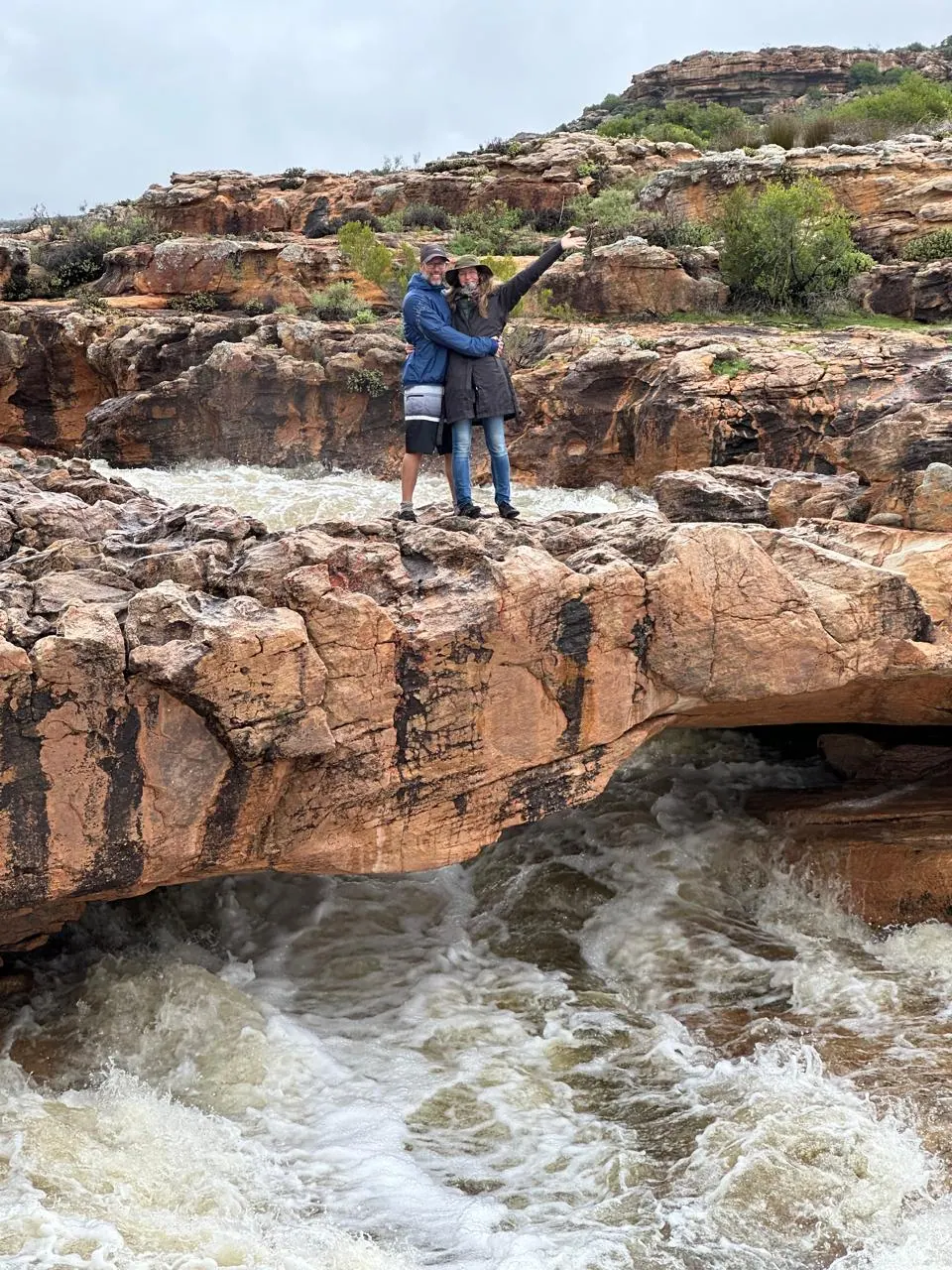
Your day starts south up the Waterfalls River: more falls, potholes, river-bed sculptures, another excuse to get your costume out, when the rivers are running.
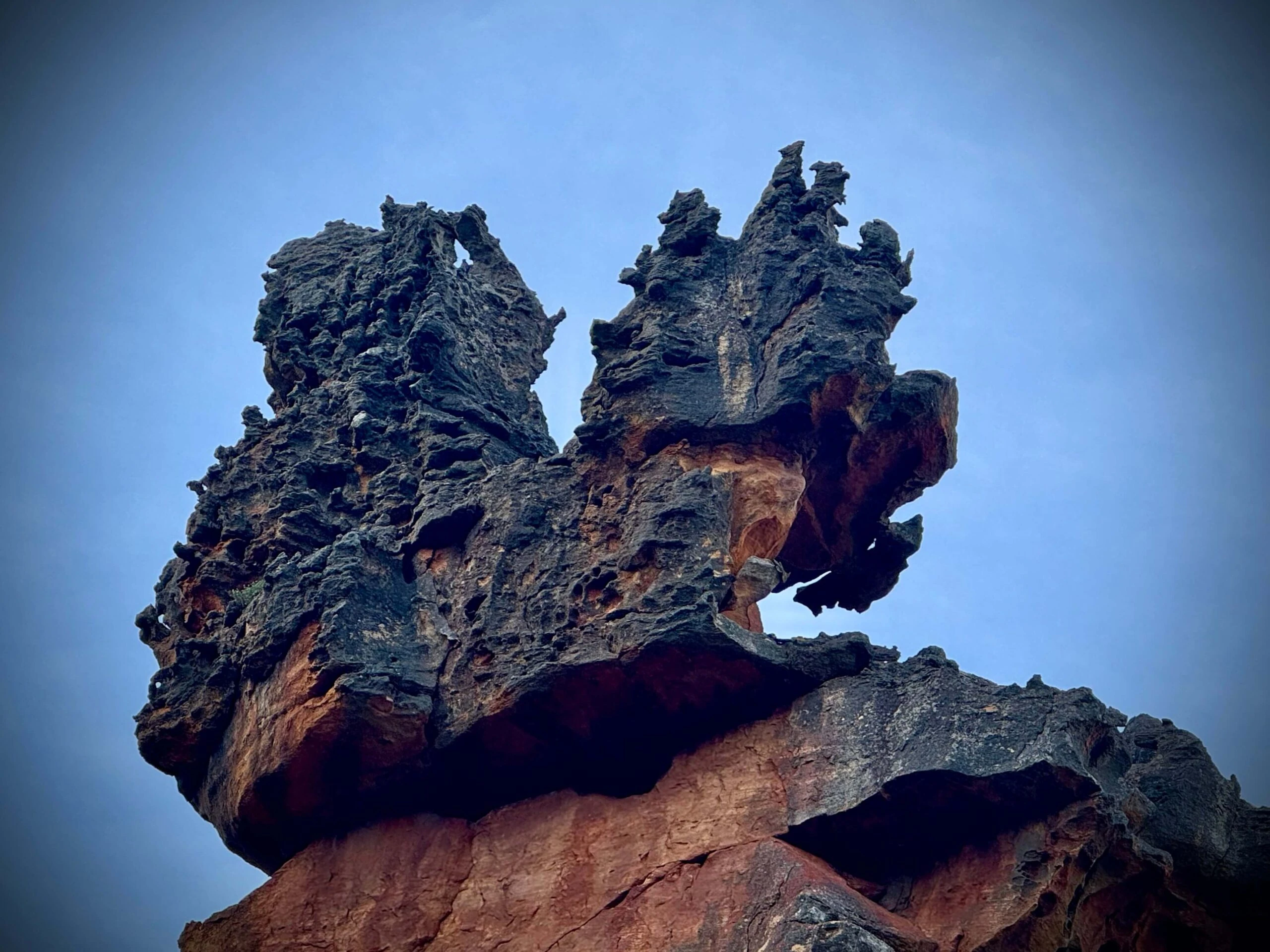
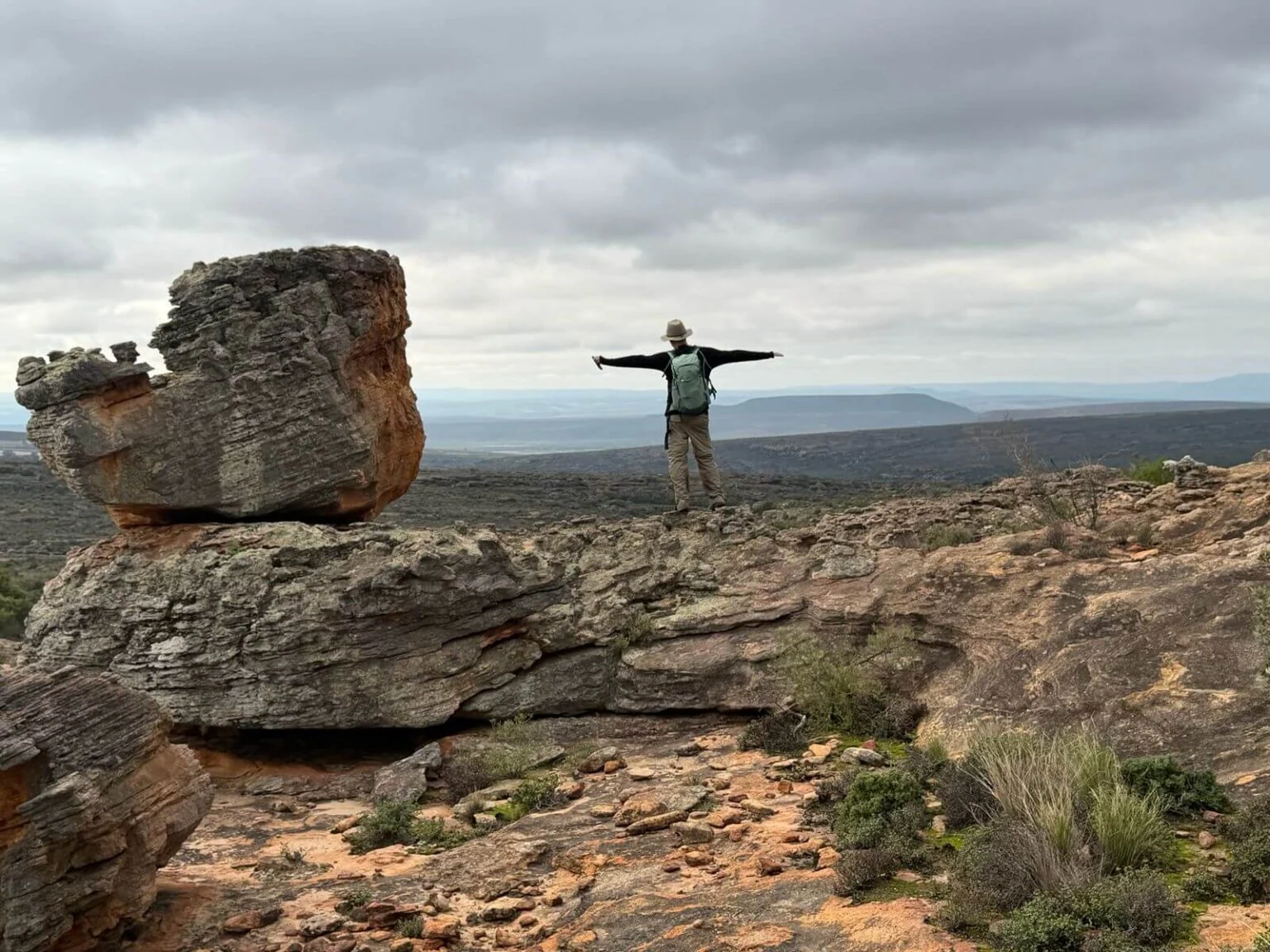
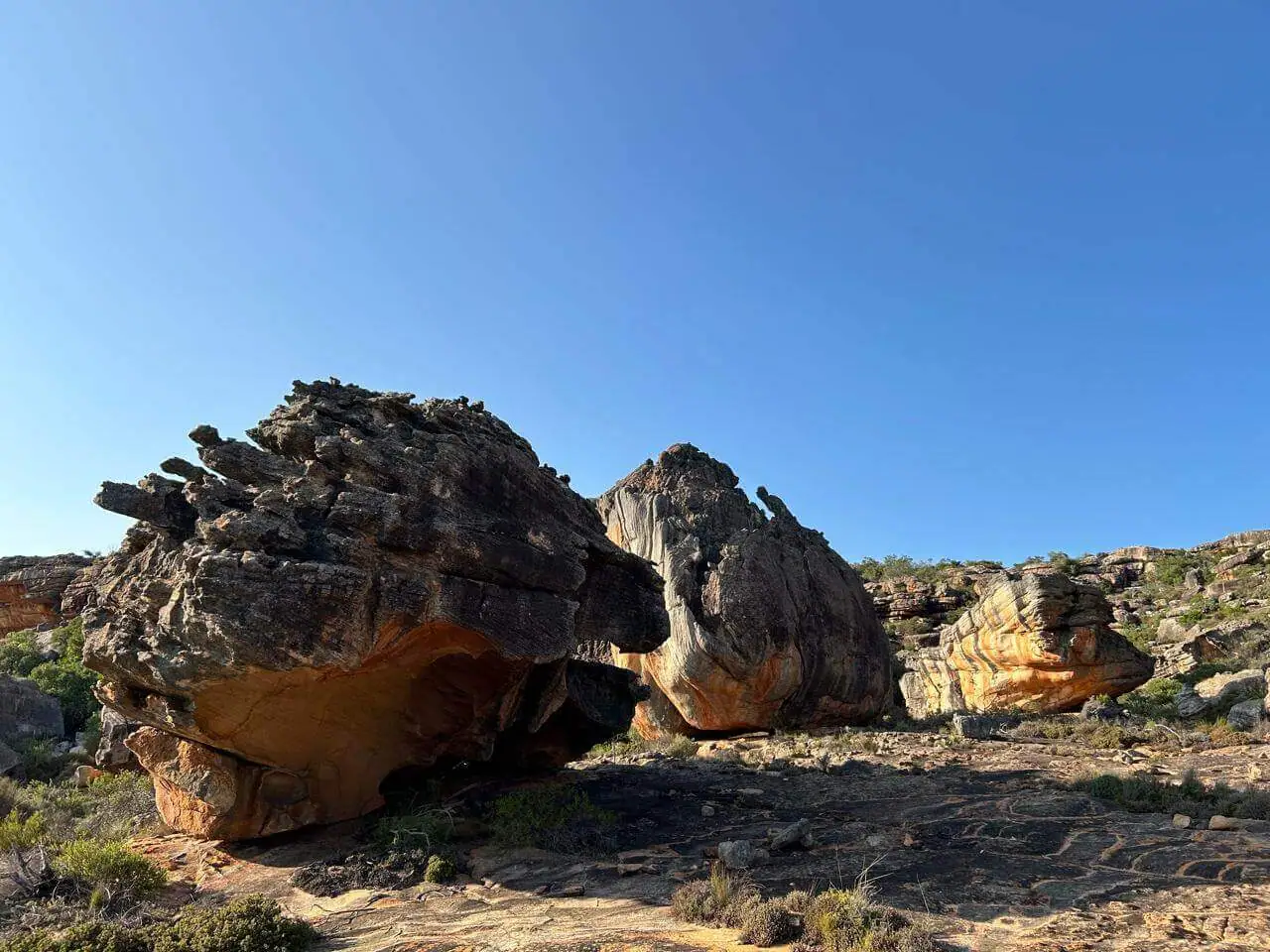
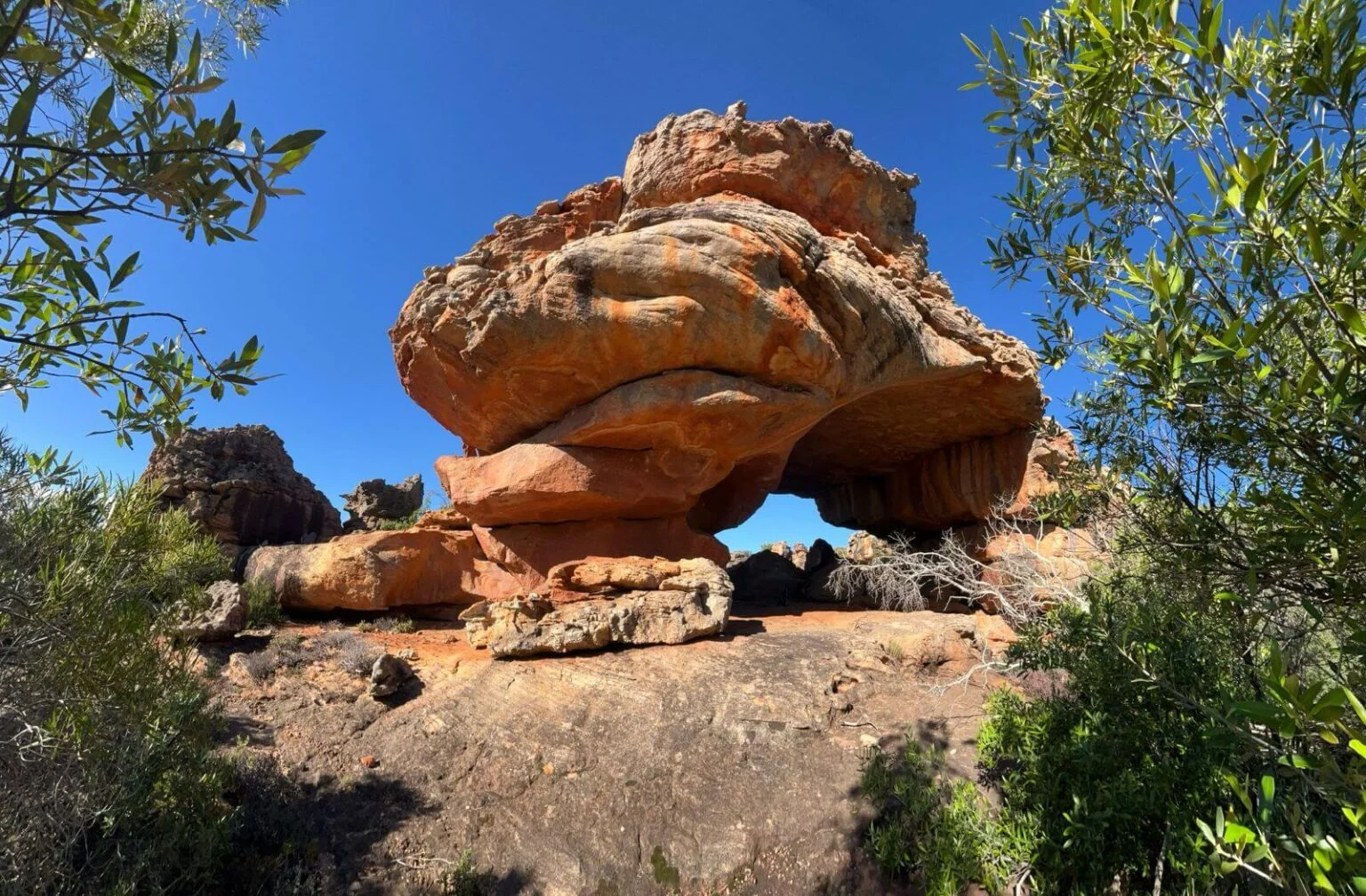
Then the trail turns west over weathered sandstone hilltops — the kind of rock that looks invented — and down onto a tributary of the Klipopmekaar River. Then, again if the rivers are running, it’s magic to spend time at the cascading crystal pebble pools.
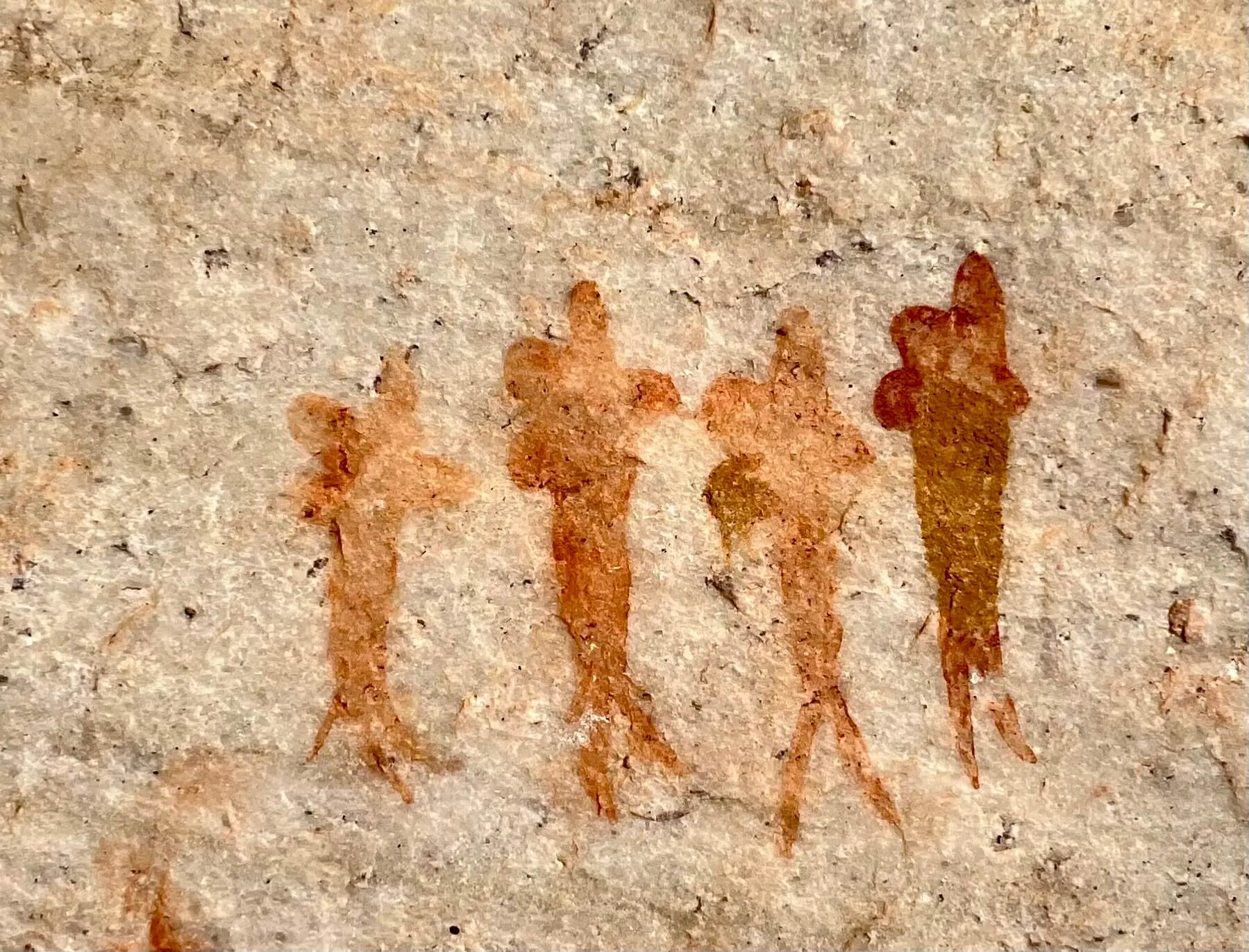
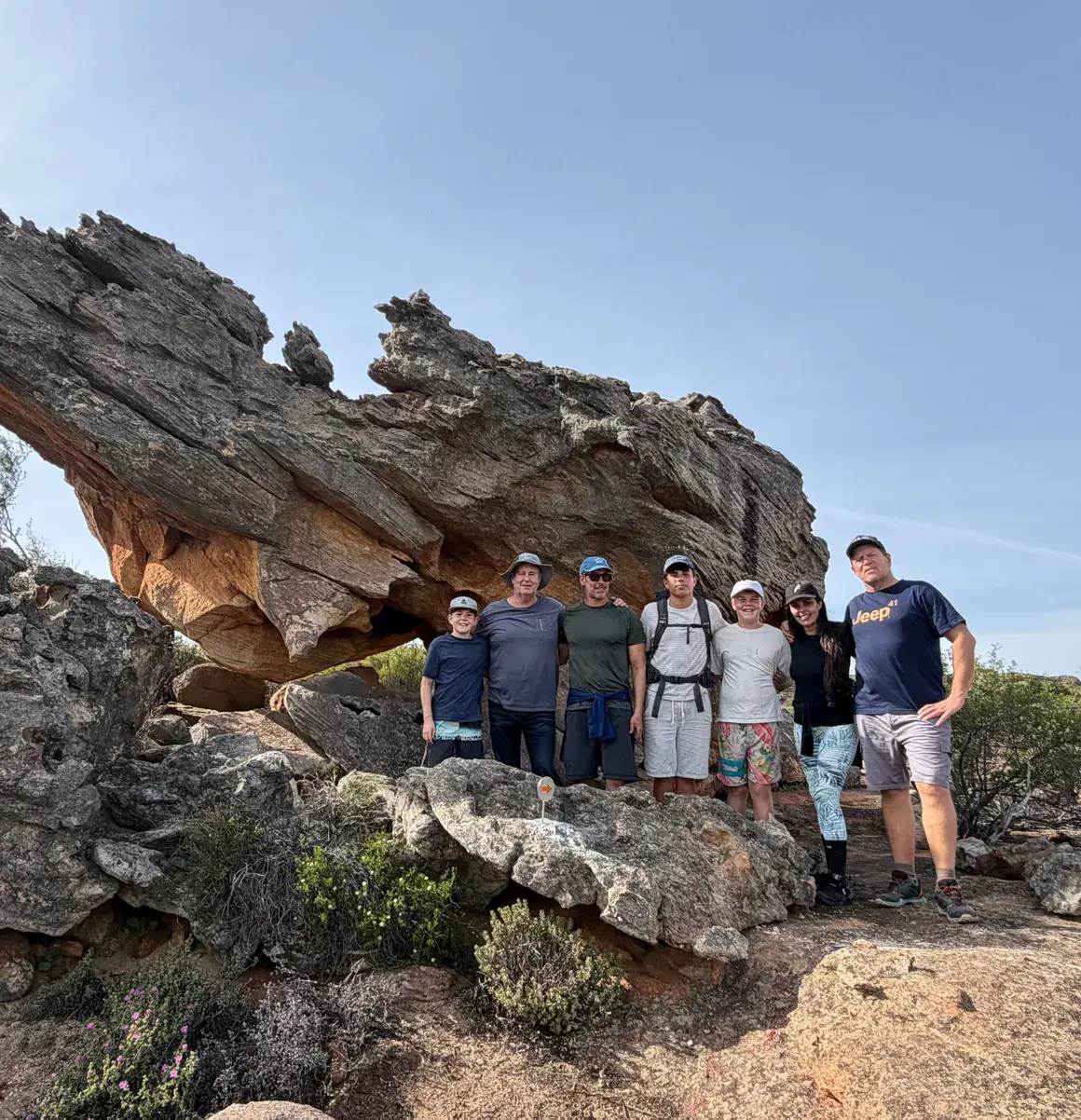
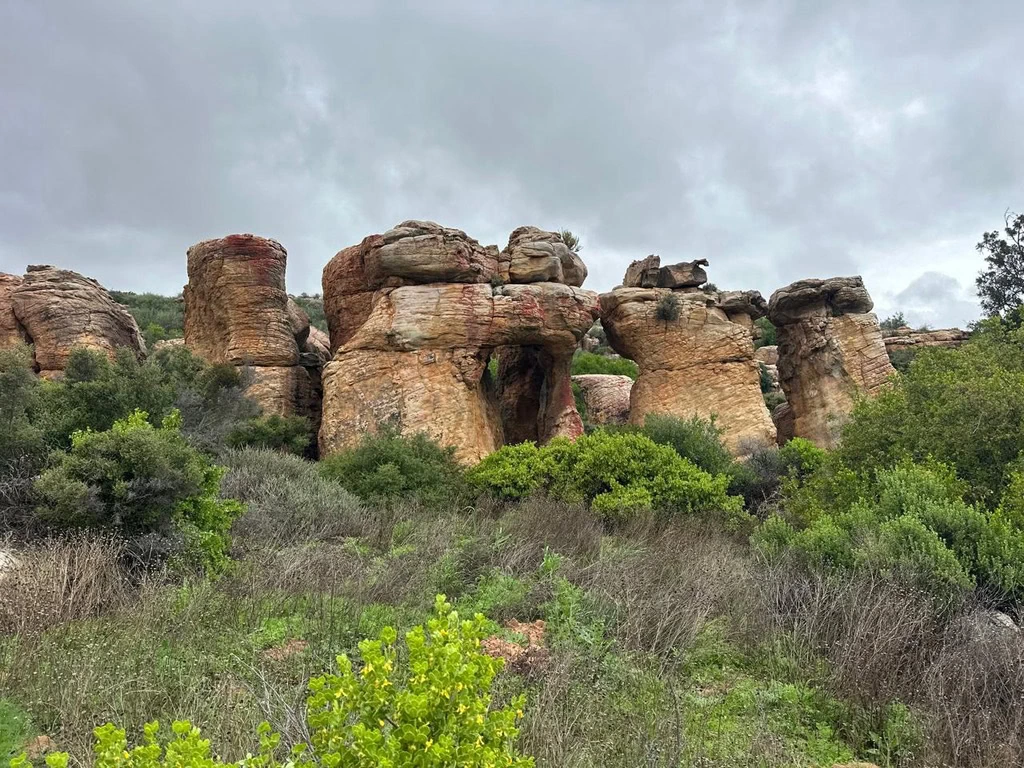
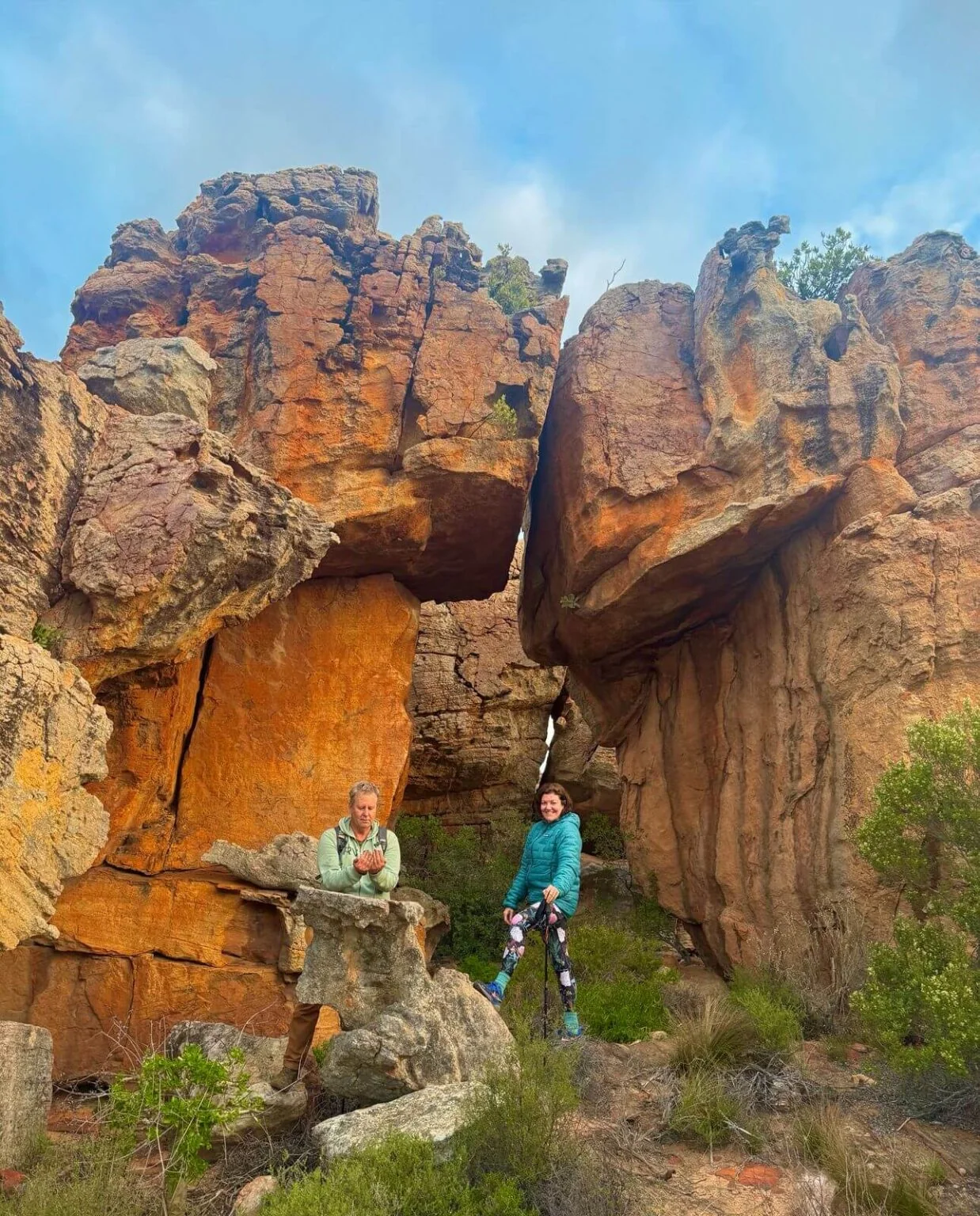
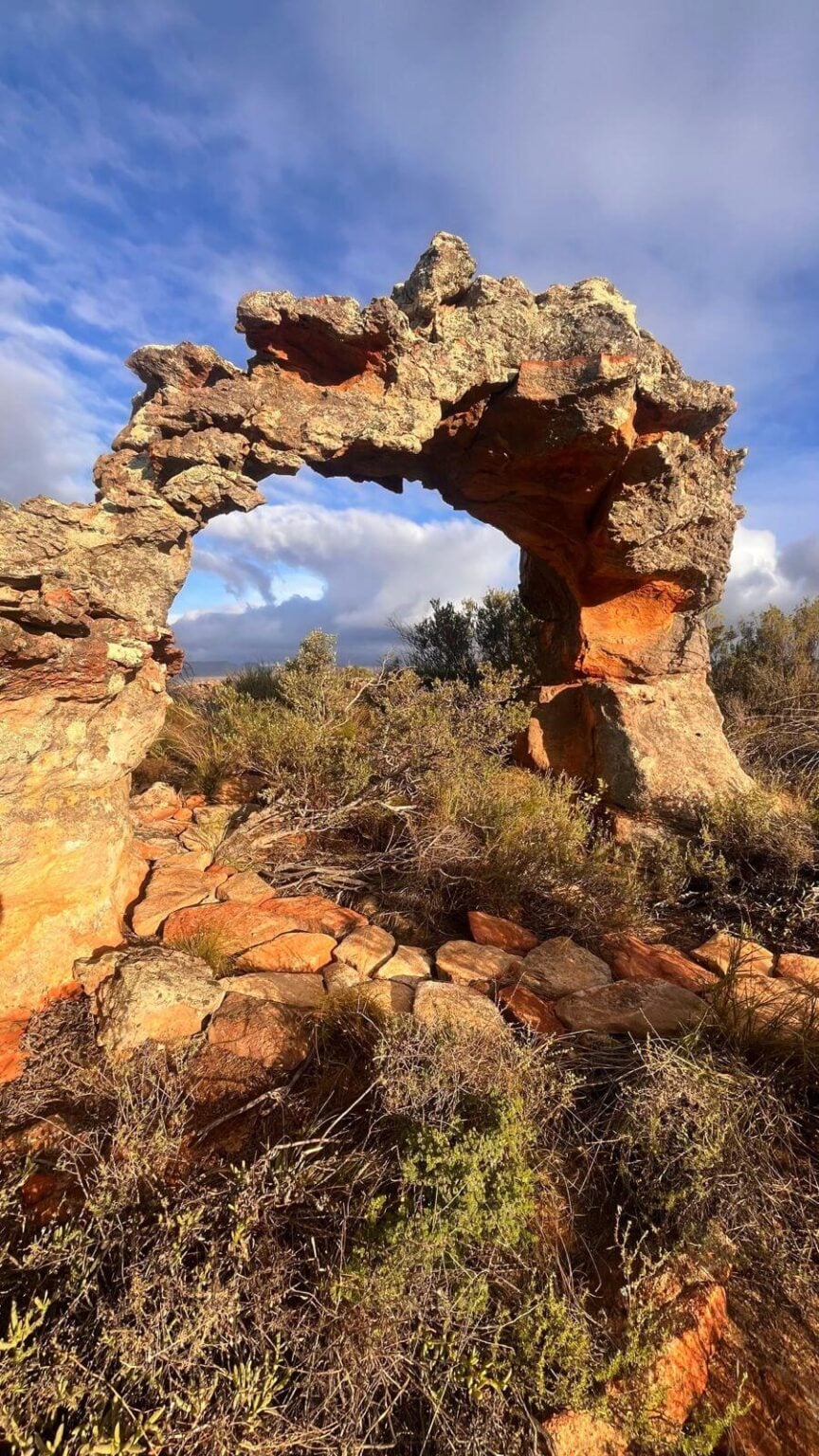
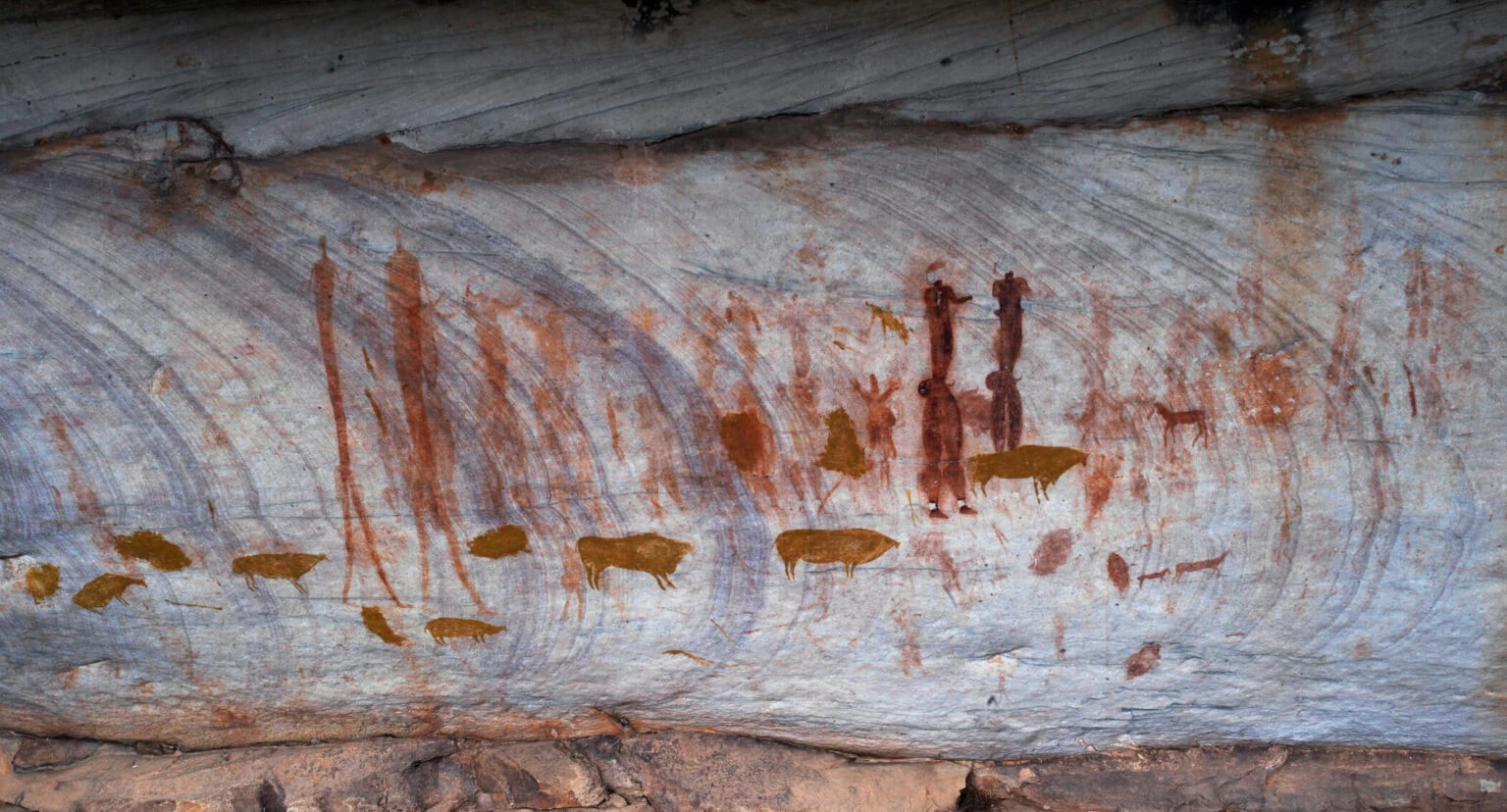
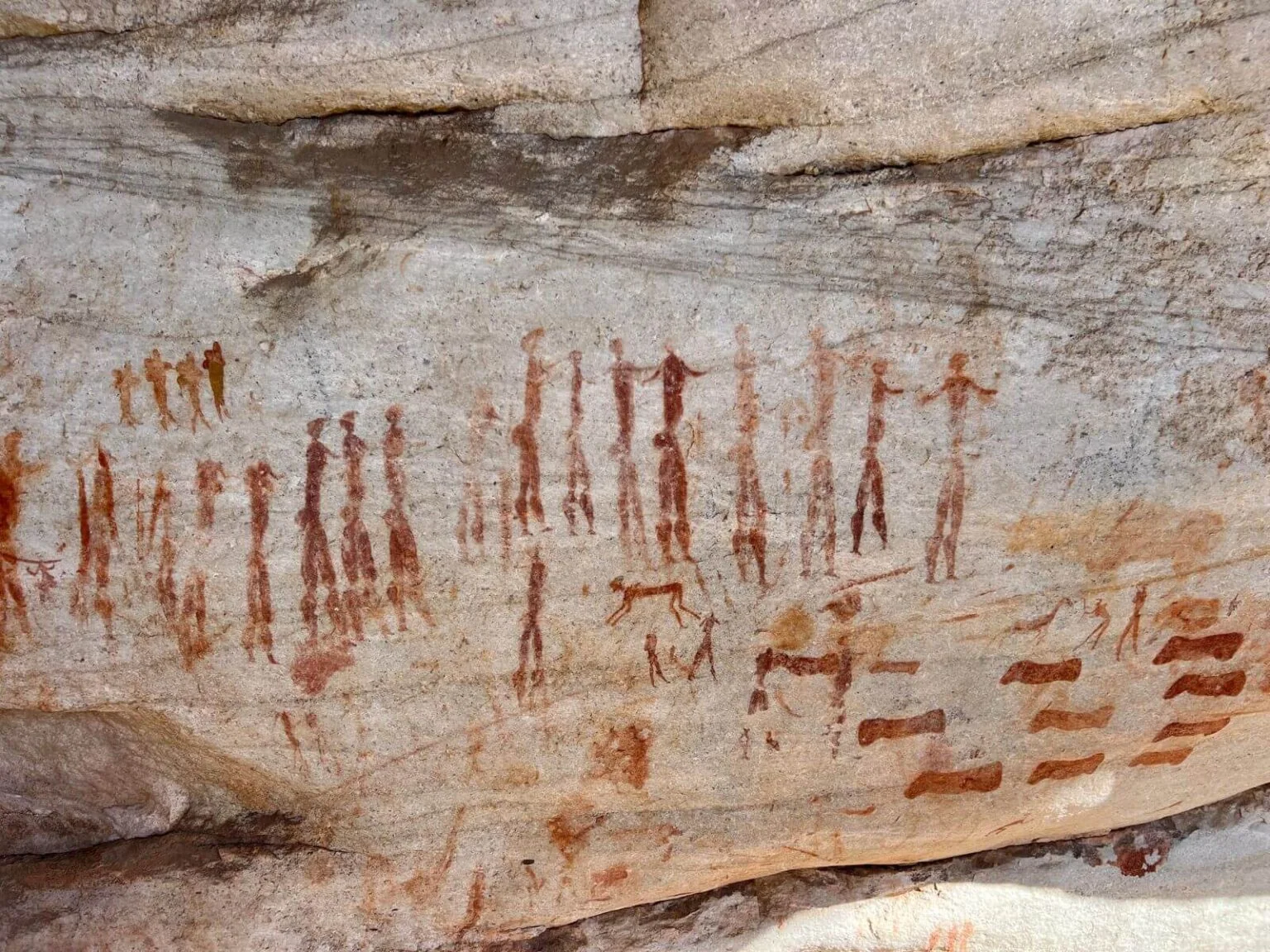
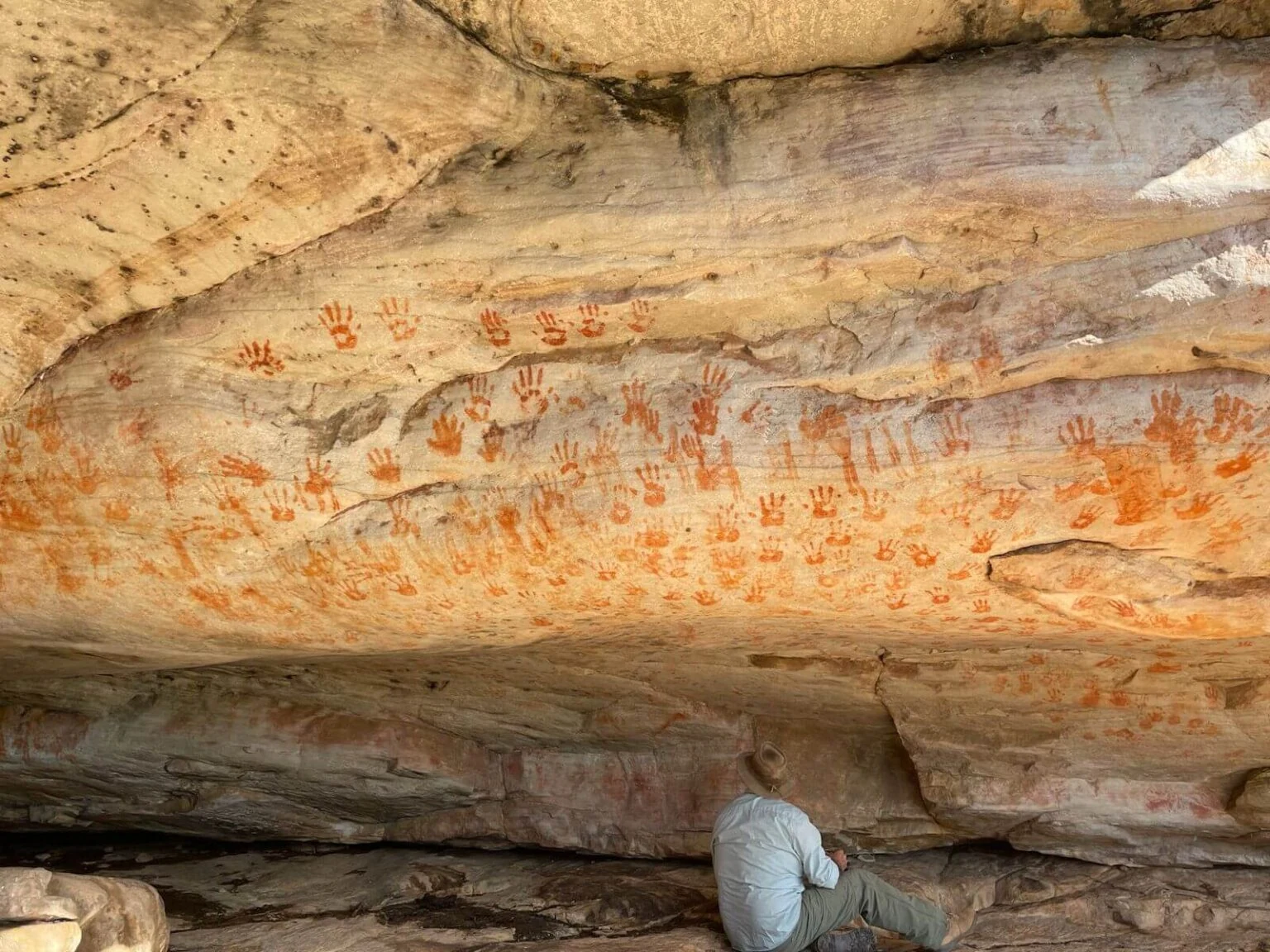
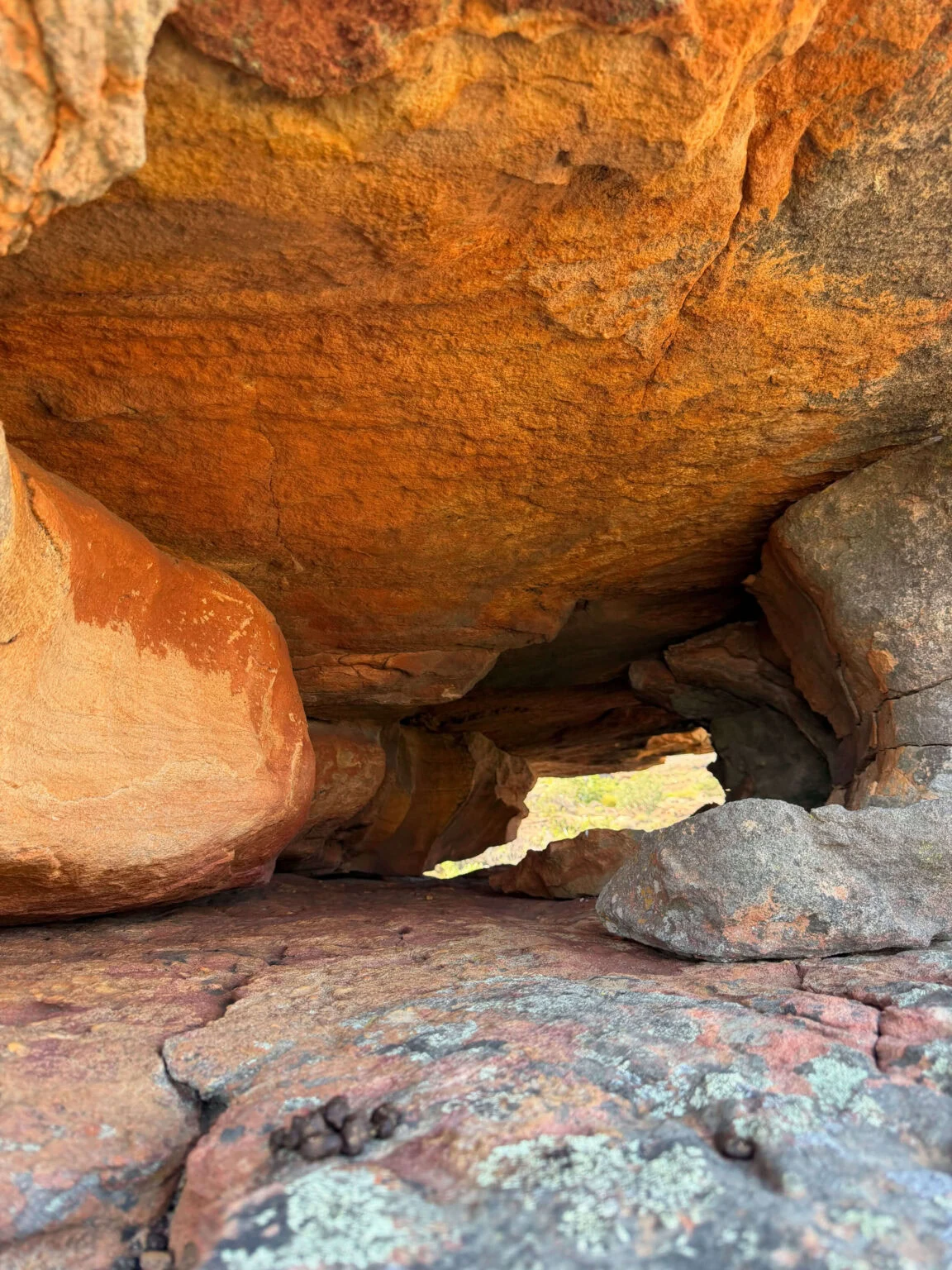
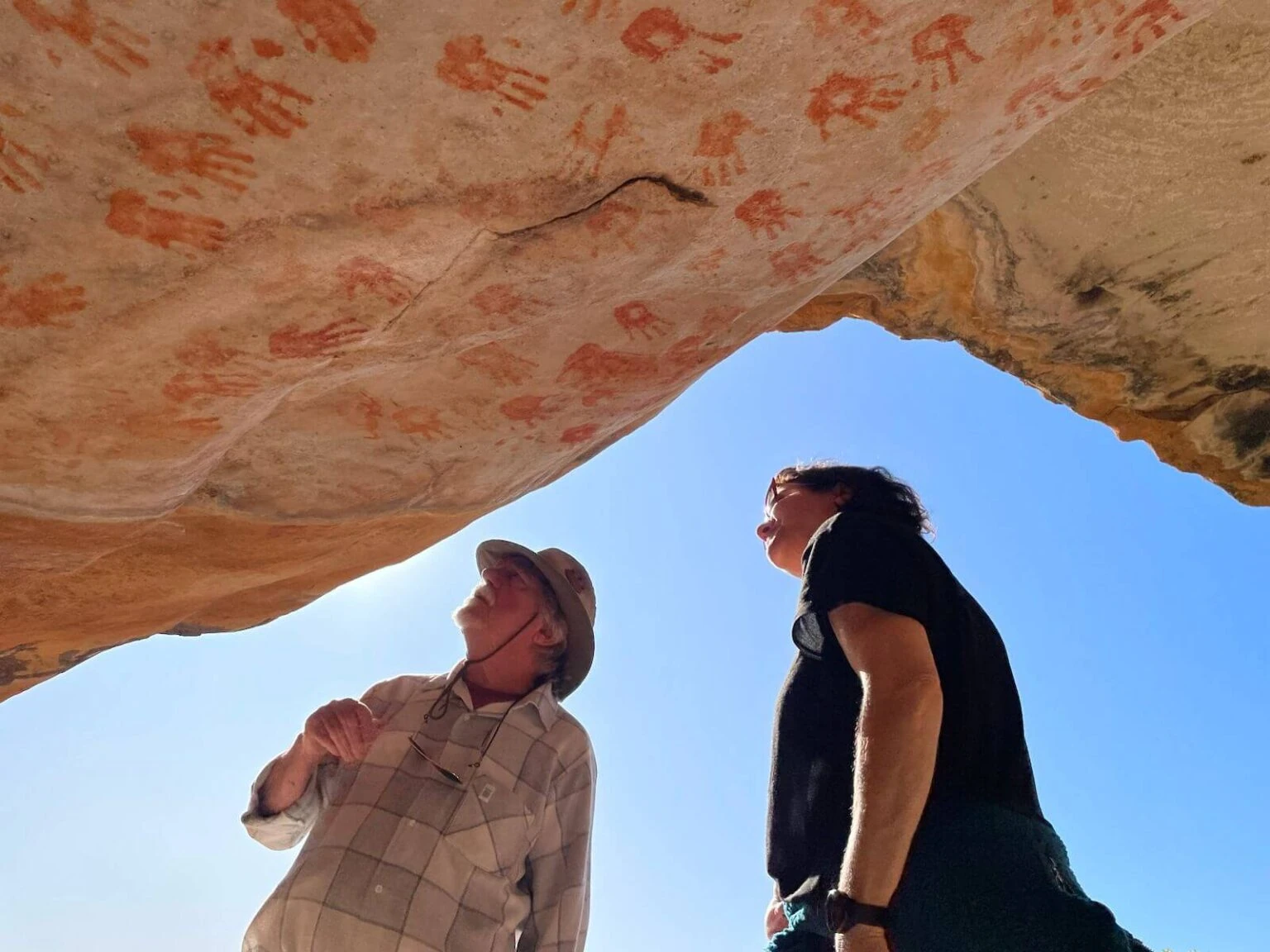
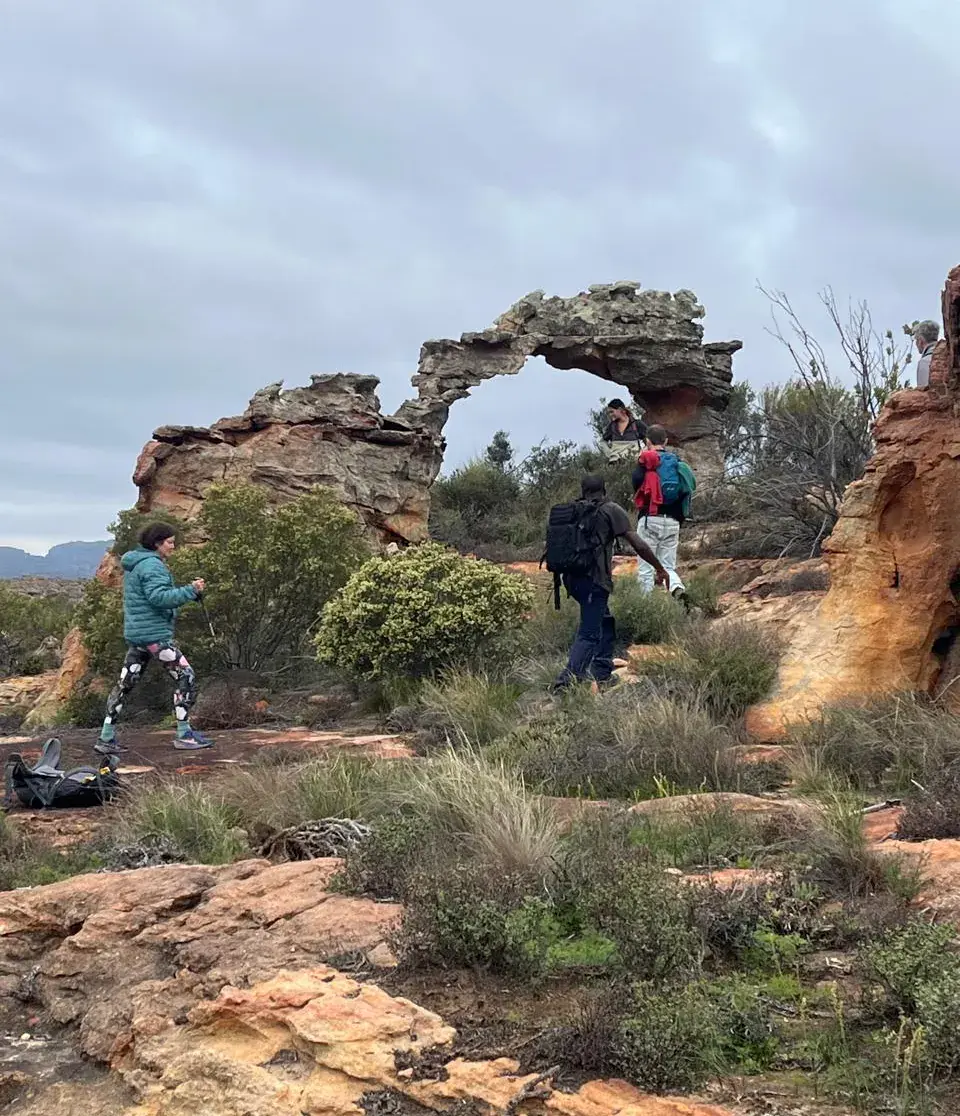
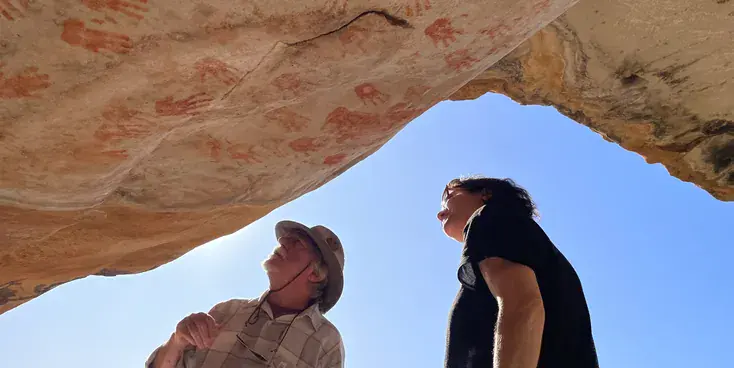
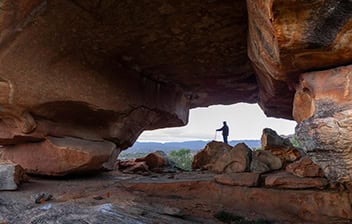
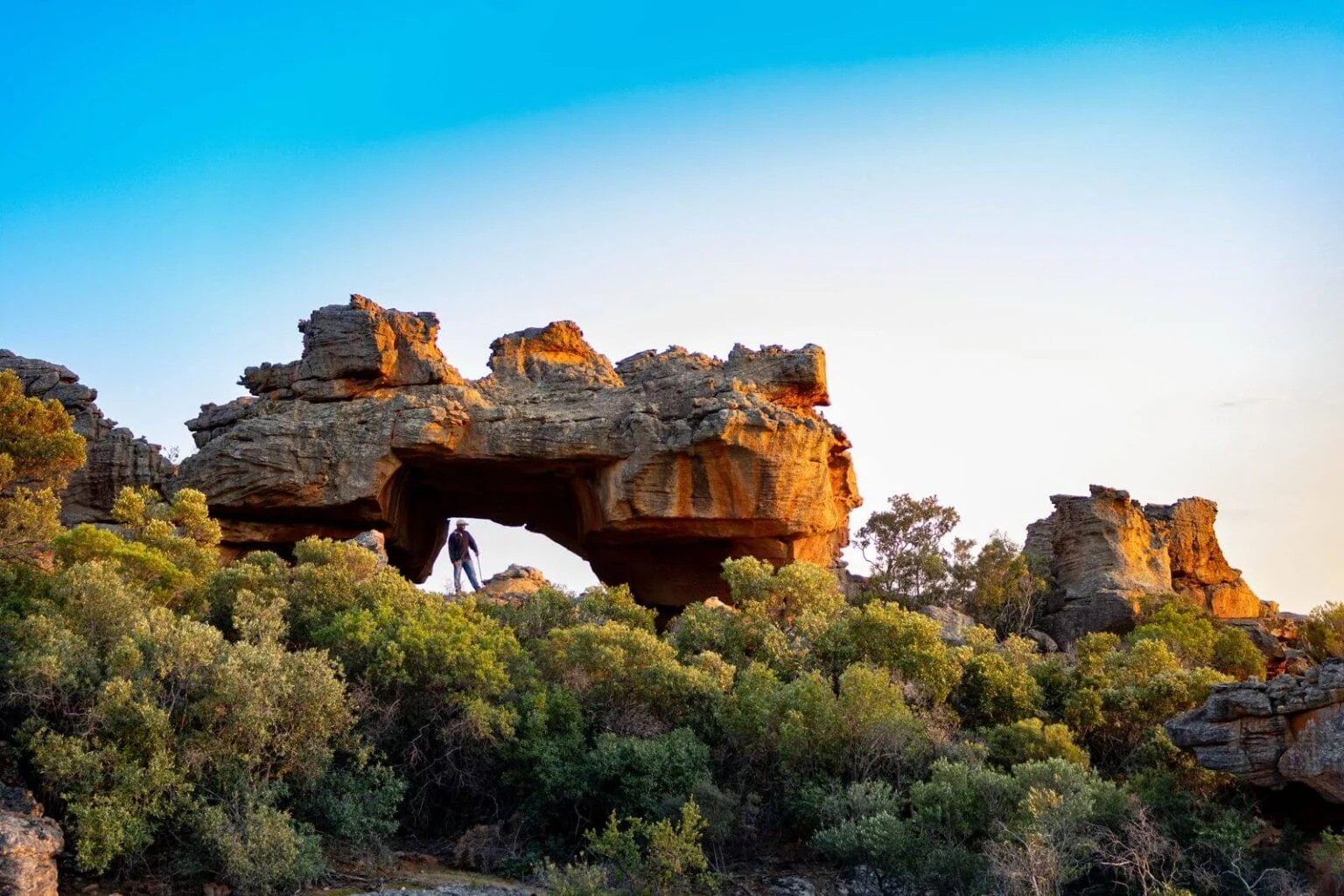
Next you’ll walk under Neill’s arch and through rock passageways. A San rock-painting cave that asks you to go quiet for a minute is a must-see. Then lastly a kind descent to Die Bassie.
Day 3 • 18km • 7-8 Hours Walk • (Shortcut 13km, 6 hours walk)
Die Bassie to Dragon’s Lair
Set your alarm for an earlier start. This is the big, generous day.
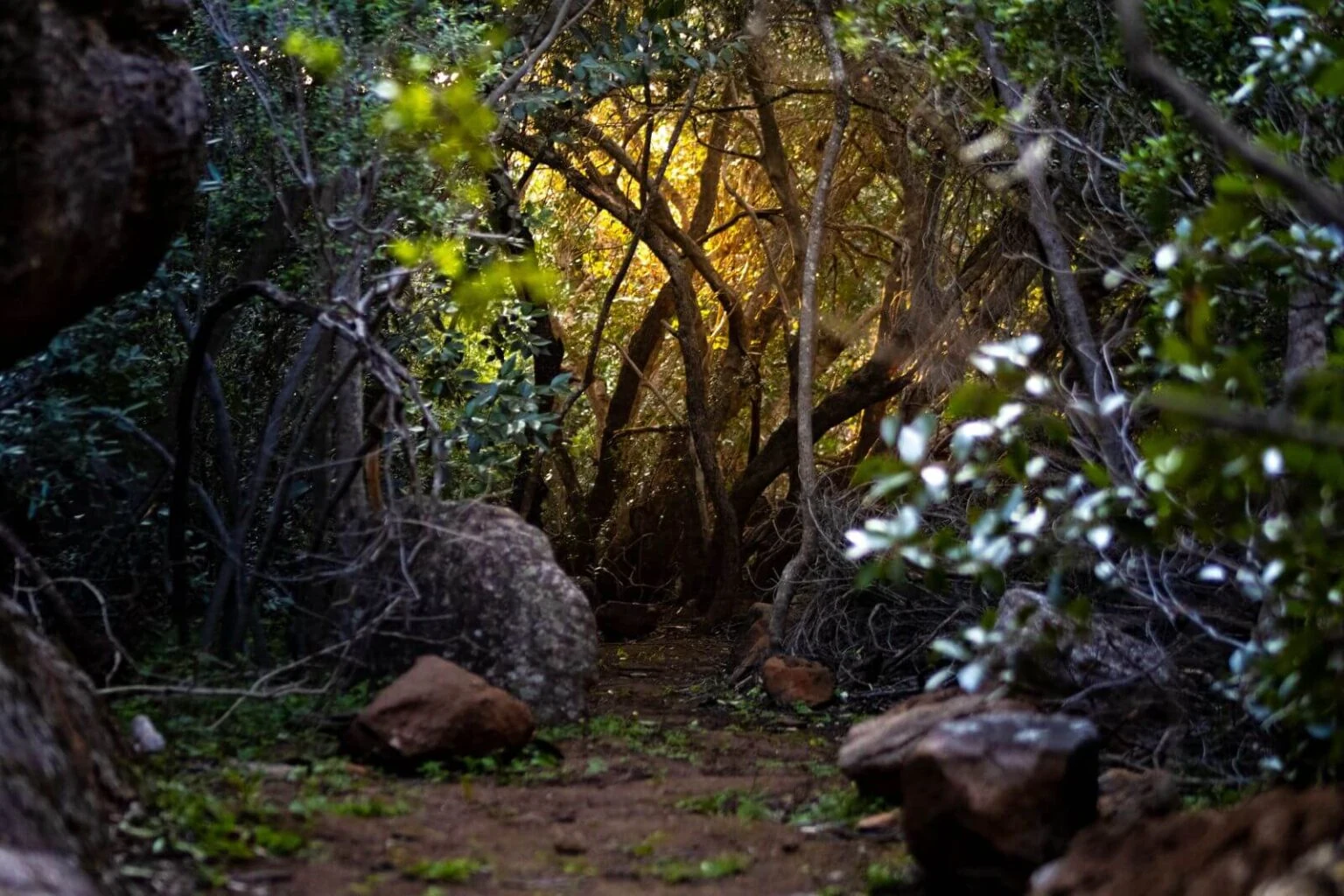
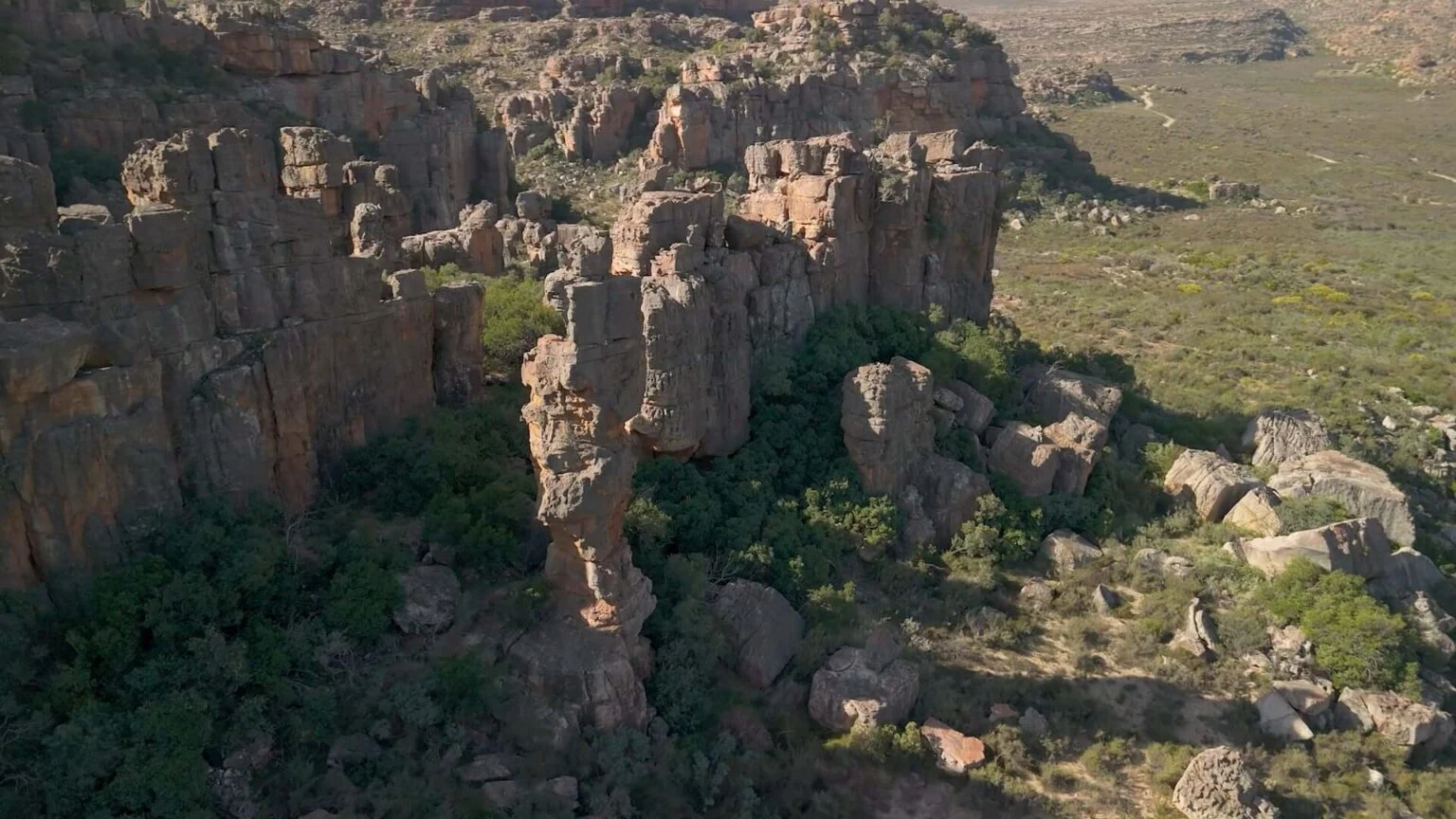
You head south, across the Klipopmekaar River, up towards Karin’s Arch and the Enchanted Forest. A fine San rock-art gallery, and then a long relaxed climb over vast sandstone sculptured plateaus to the Western Gate Valley and Pillars.
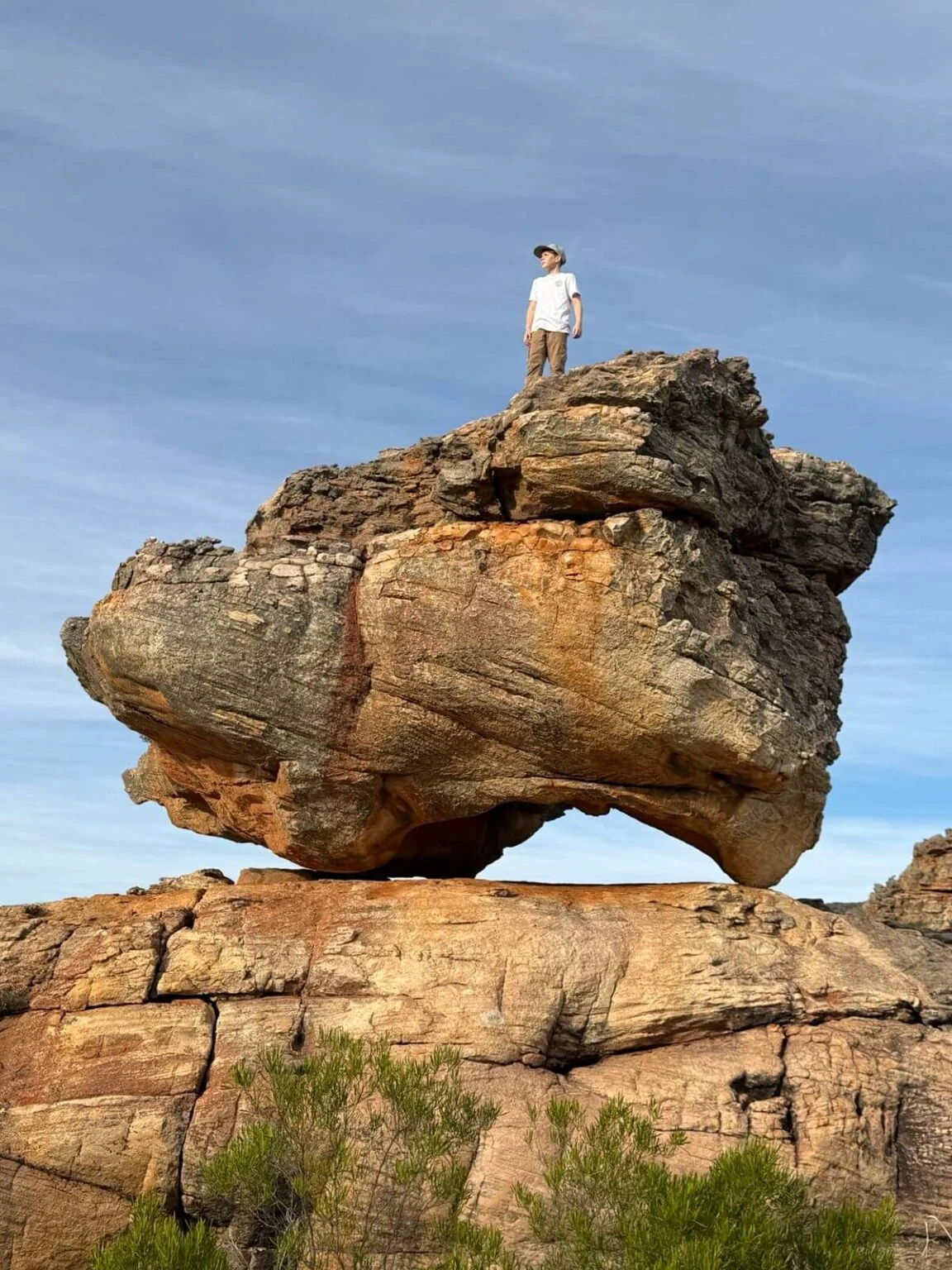
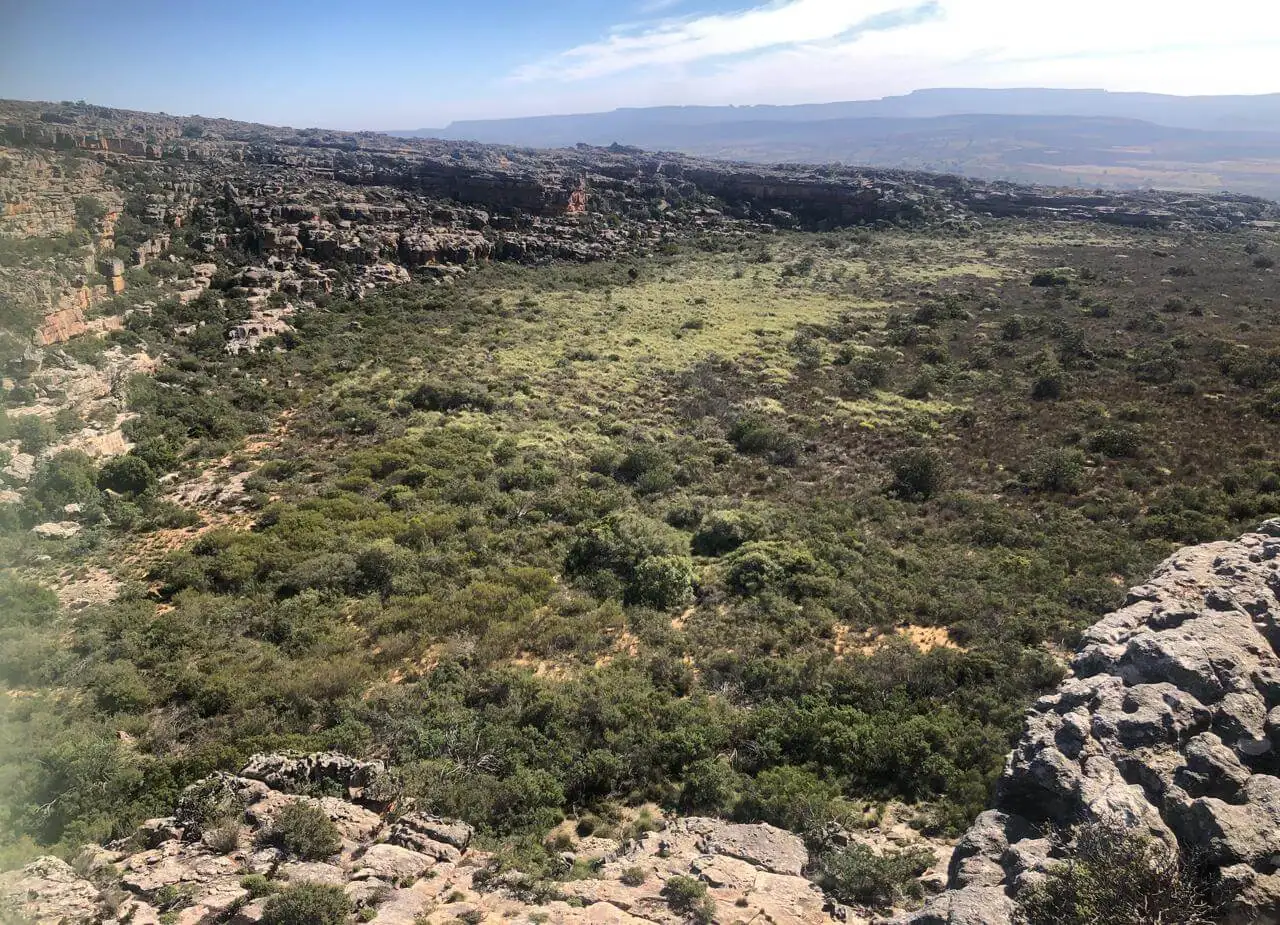
Next is (the optional) ascent and loop hike up and around Noordkrans Peak. This should only be hiked if the weather is fair, the group is fit and has sufficient time to complete. Alternatively you can take the shortcut, which cuts out about 4.5 km (2 hours) – but you will miss the Boulder Garden, Lost Crater, Skyledge, and incredible views of the Cederberg peaks/valleys all around you.
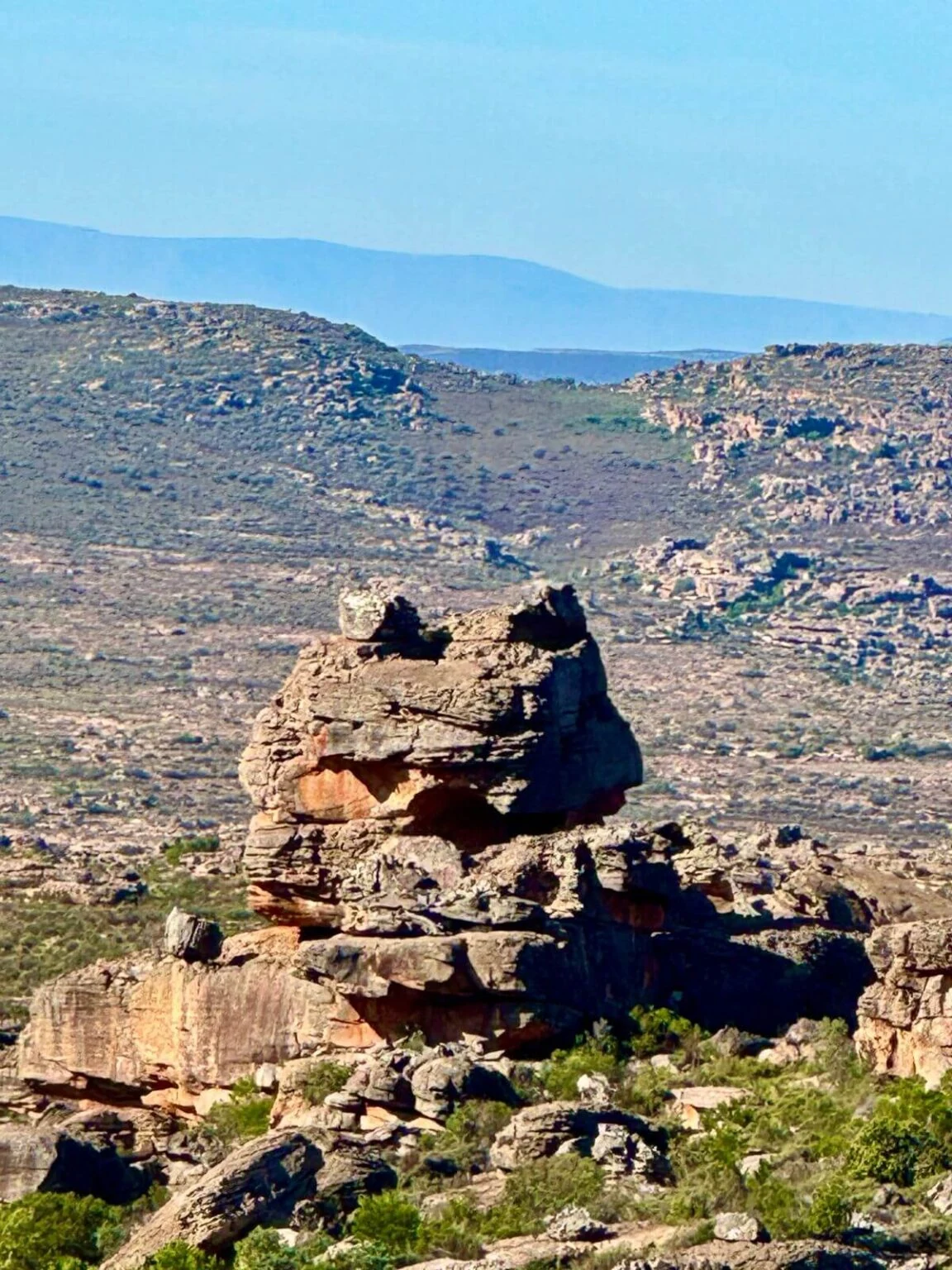
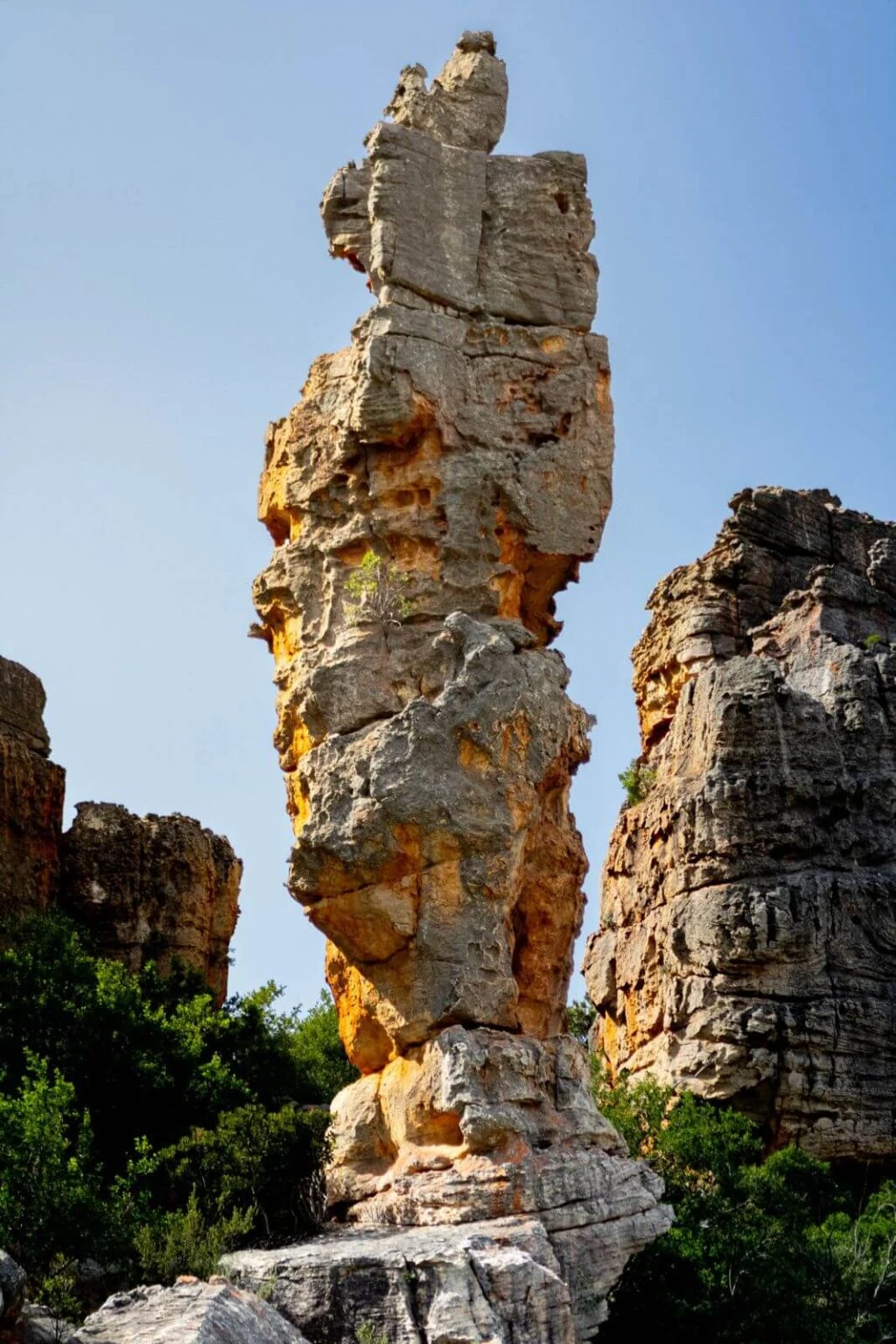
After Noordkrans (both long loop or shortcut) the path drops west into Verkeerde Valley, spotting the Cederberg Dainty Frog formation, past Jack’s Tower and onwards to Dragon’s Lair.

Day 4 • 11 KM • 3-4 HOURS WALK
Dragon’s Lair to Visitors Centre
If you leave by 09:00 you should be back at The Visitors Centre & Parking around 13:00, in good time for your drive home, and the first retelling of the week.
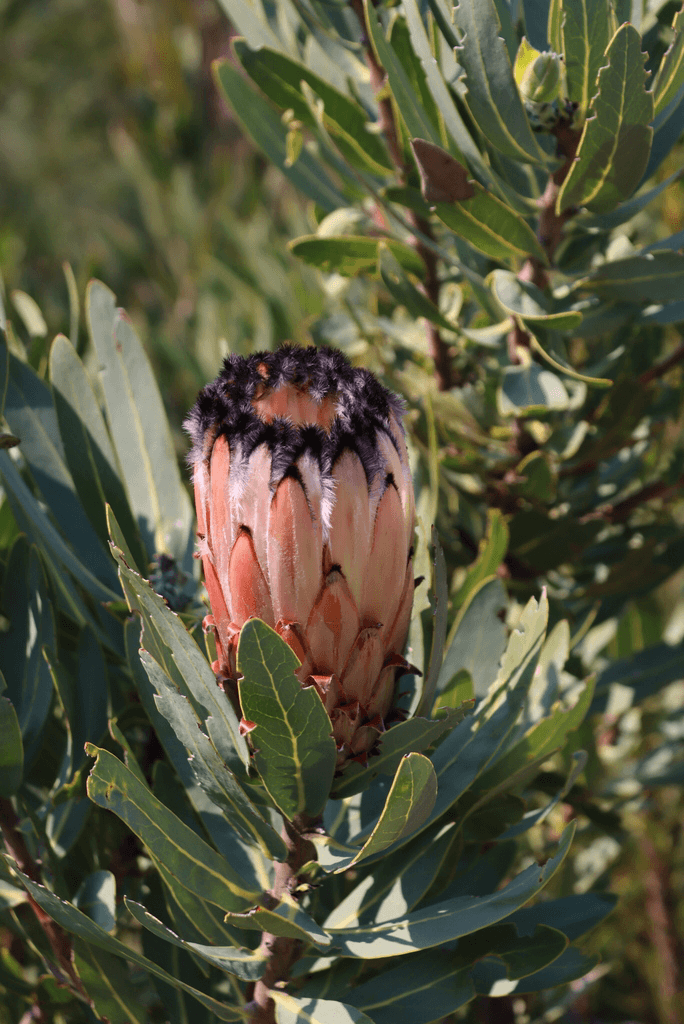
The route starts Eastwards, across the Klipopmekaar River once more, and slowly ascends over more weathered and sculptured sandstone plateaus, then through a Protea forest and onwards up to Suurkop.
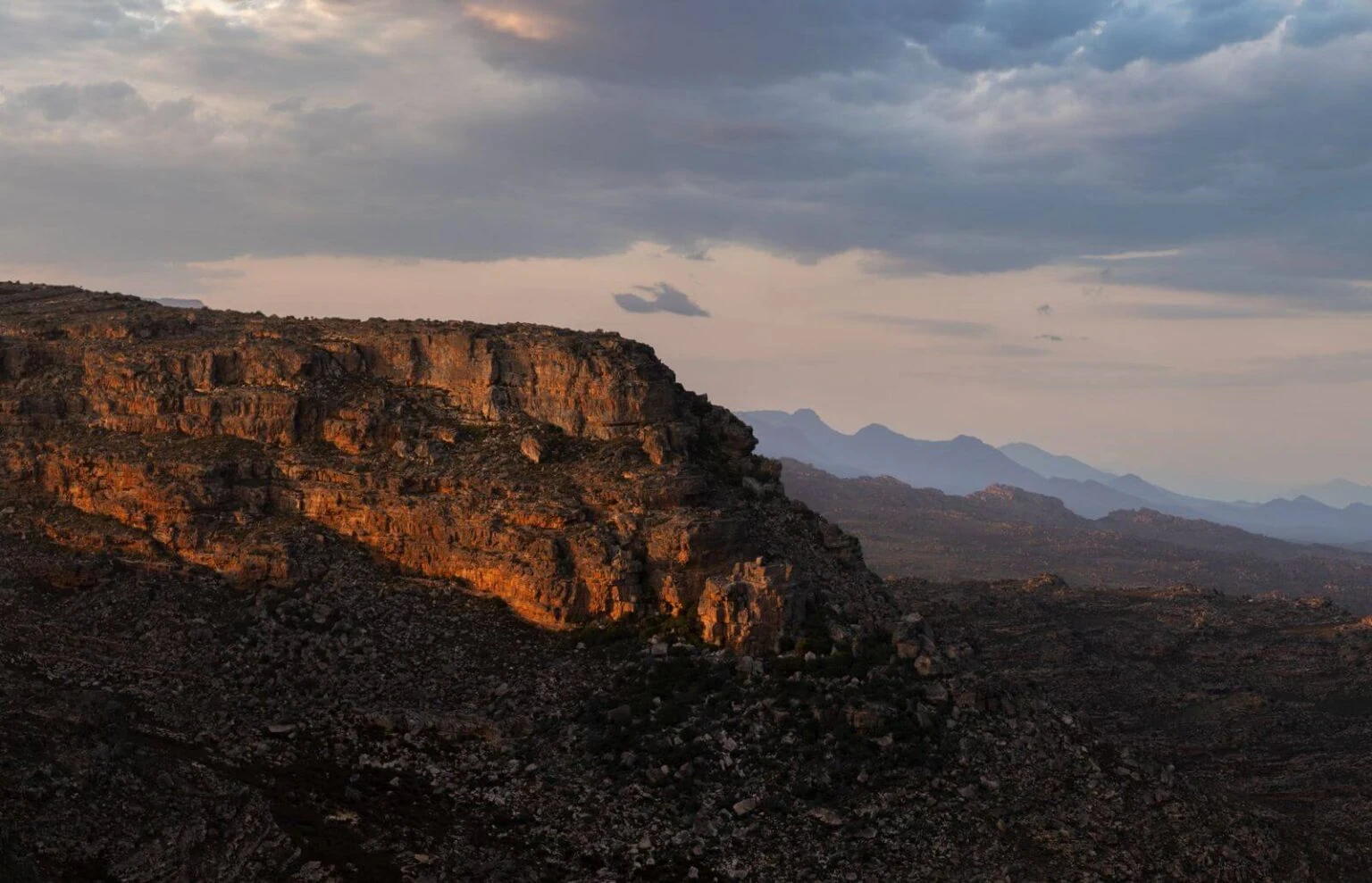
As the trail bends north, the views open up towards: the Doring River region, Tankwa escarpment, the Biedouw, and Tra-Tra mountains above Wupperthal.
One last surprising gallery of San rock paintings and handprints. Then west to the trail end at the Visitors Centre, your undercover-parked cars, and a hot shower before your drive should you wish.
Difficulty
Trail difficulty and fitness required
The full trail is 50 km and is
Moderately Strenuous
Hikers must be in good general health and have reasonably good mountain walking fitness to enjoy the trail.
Hardest day:
Day three (18 km) needs an early start and good hiking fitness. However, if preferred, the Day 3 shortcut removes a strenuous 4.5 km climb and loop around Noordkrans Peak … thus making the day easier.
- Two gentler shortcut options reduce full trail length to 43 km.
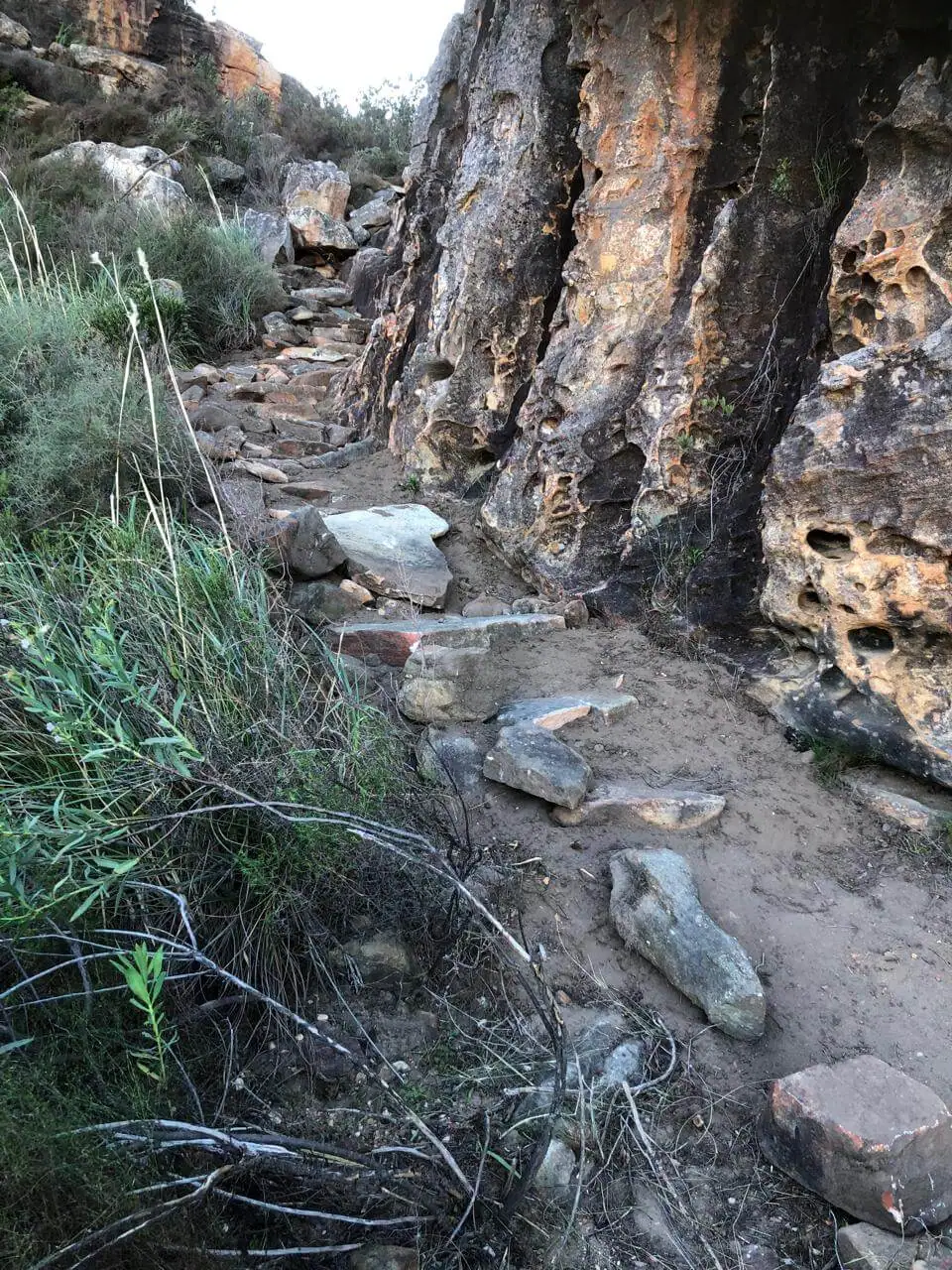
- The trail path is very well built, easy to navigate, and comfortable to walk. There are a few stone staircases and one 6 feet ladder descent … there is no scrambling required along the route.
- We welcome hikers ages 10–70, unless we agree otherwise (in writing) with you.
- All hikers must be able to swim. Walking after rains when rivers are flowing will require you to cross rivers up to a maximum of knee depth; and all overnight camps have pools to swim.
- There is no true cliff-edge walking, and the drop-offs on Noordkrans peak can be avoided. Additional vertigo info below.
Accommodation
Where you sleep and stay
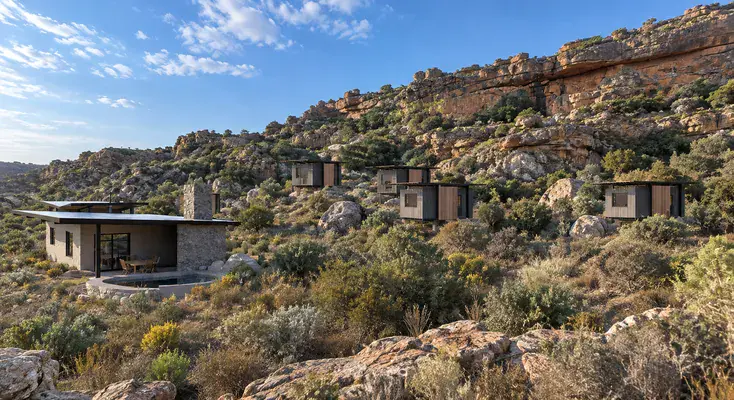
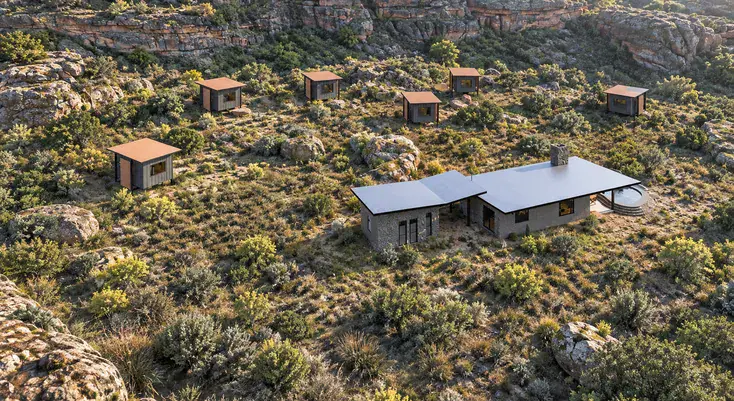
Three custom designed and beautifully built overnight camps:
Hole in the Roof, Die Bassie and Dragon’s Lair.
Night 1
Hole in the Roof
Your POD
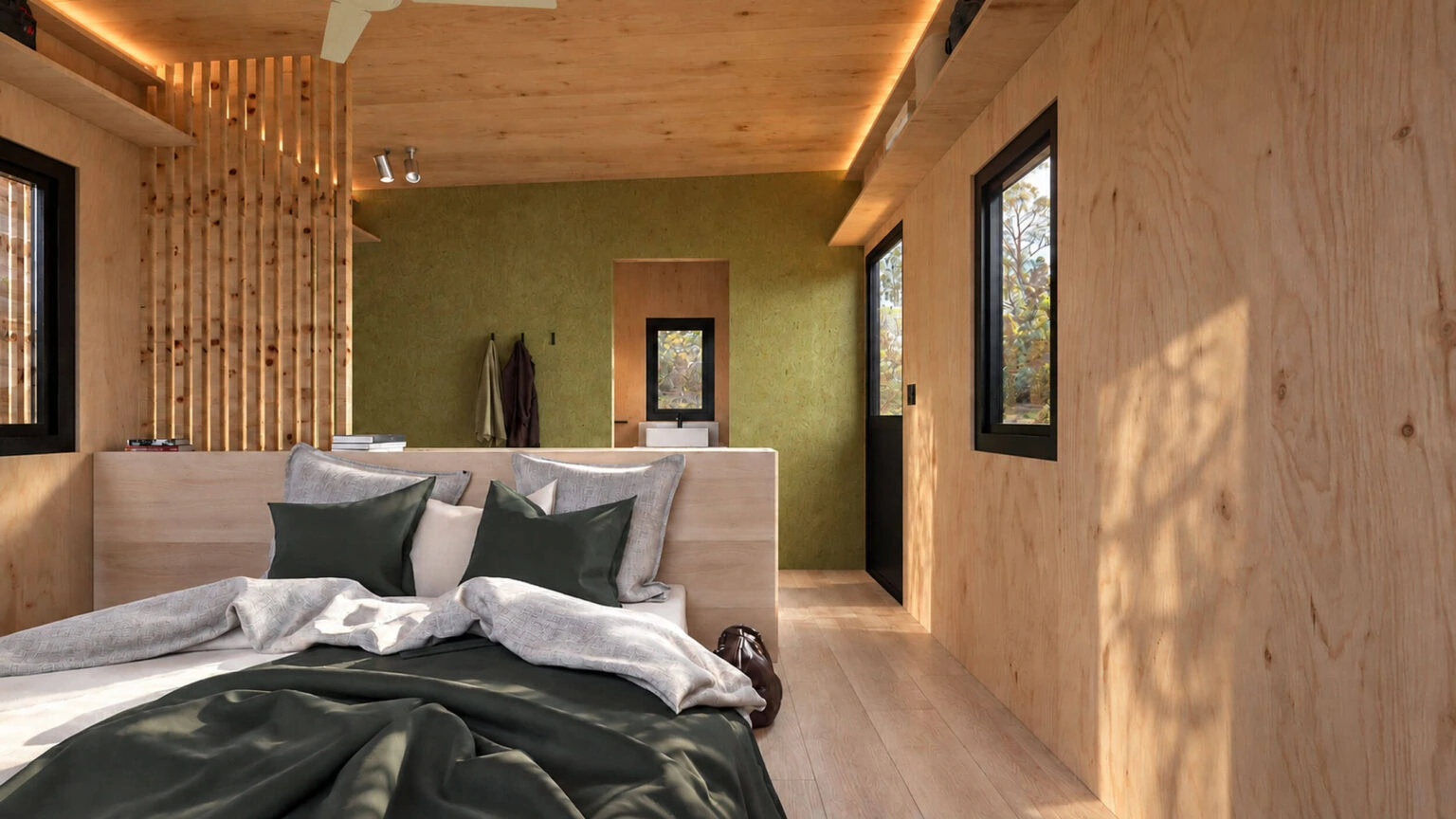
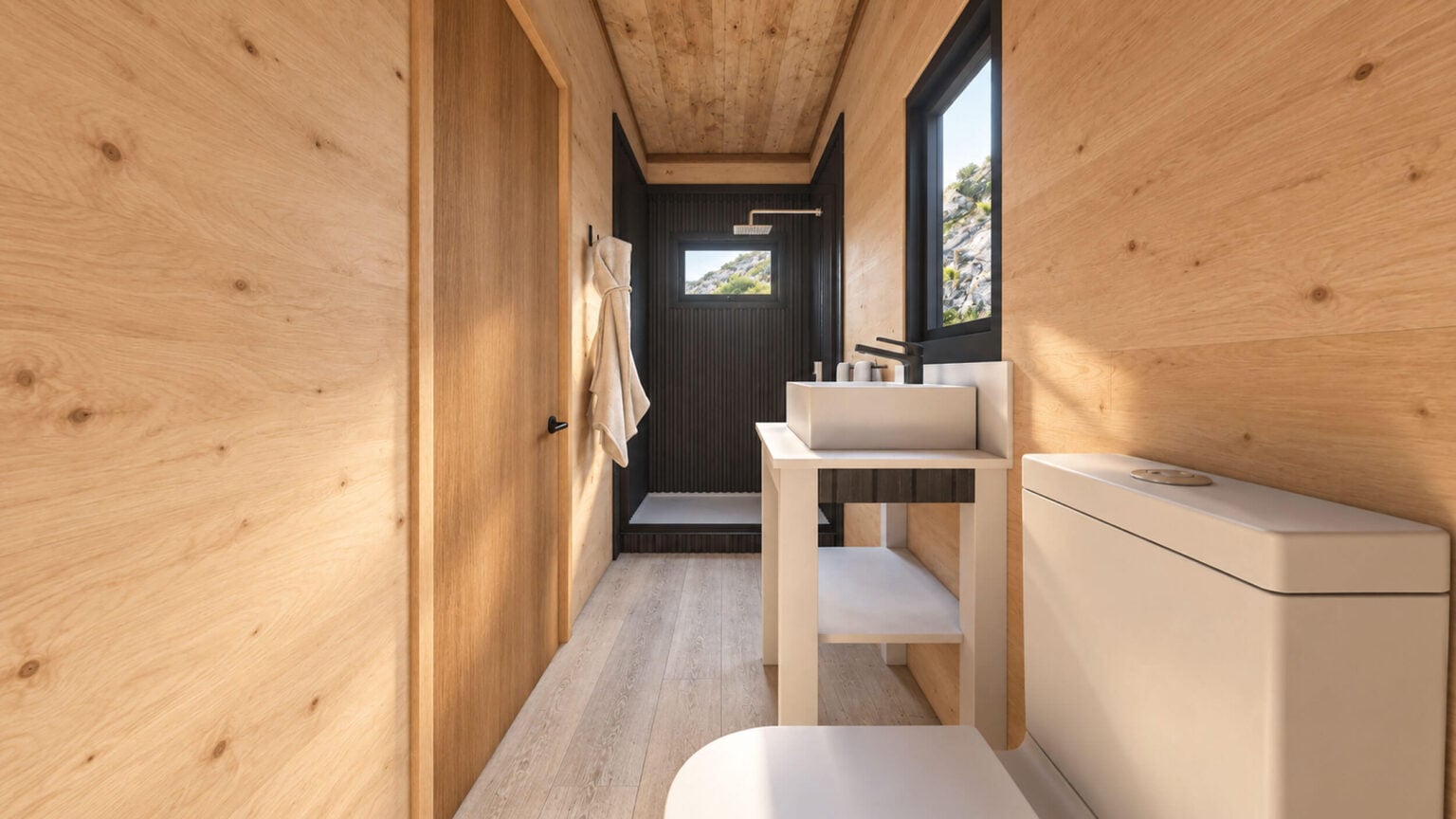
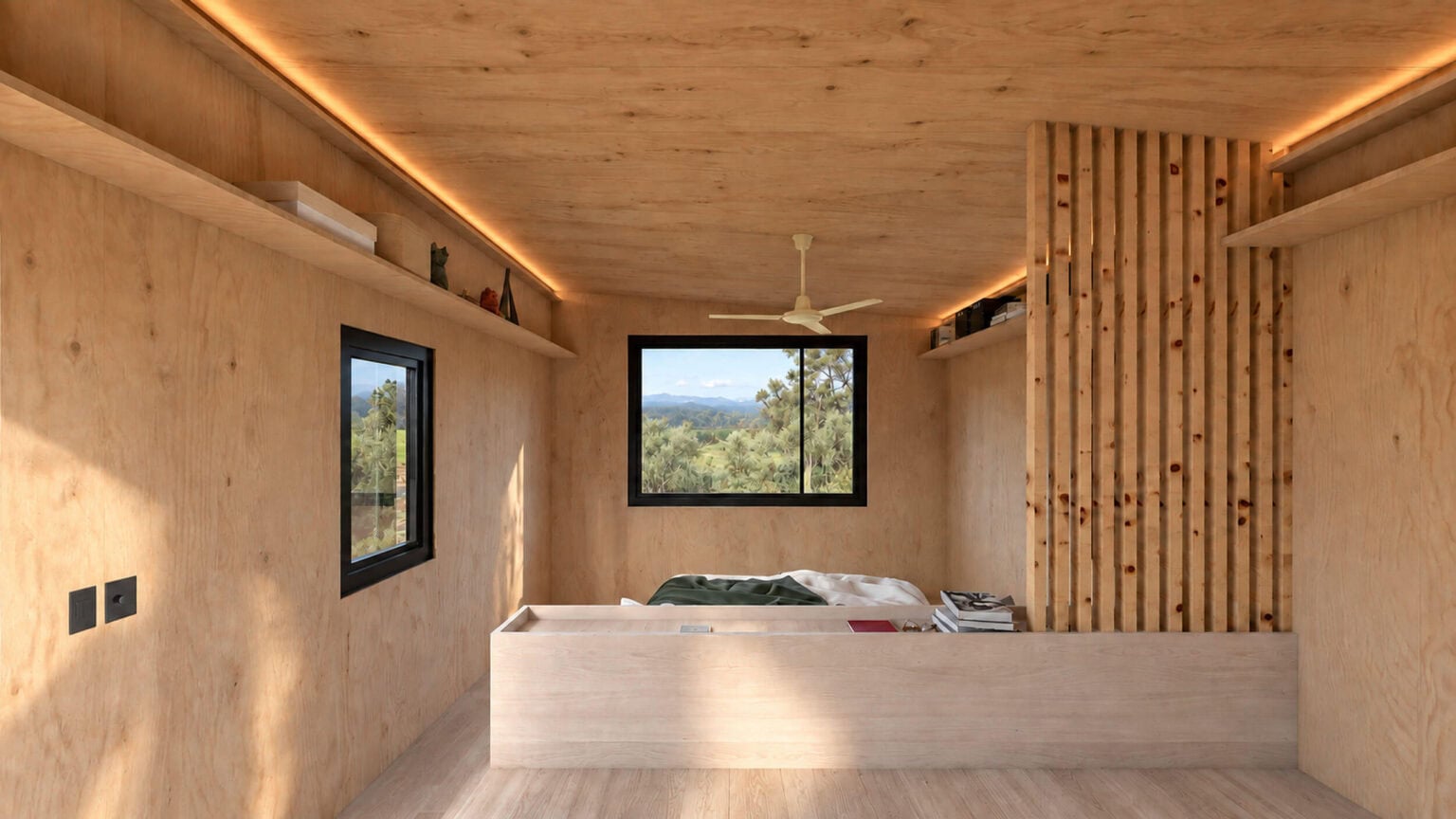
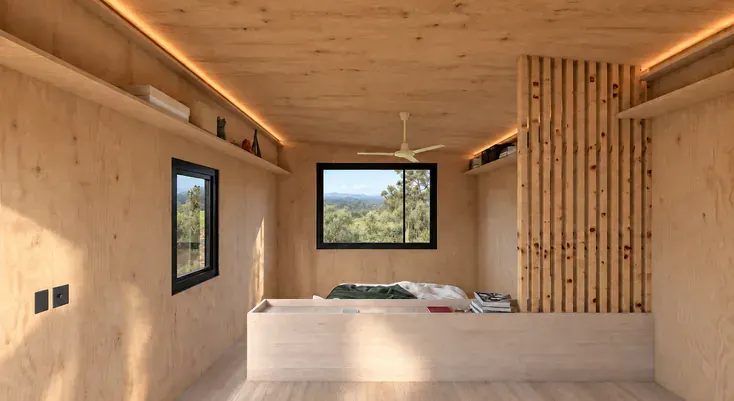
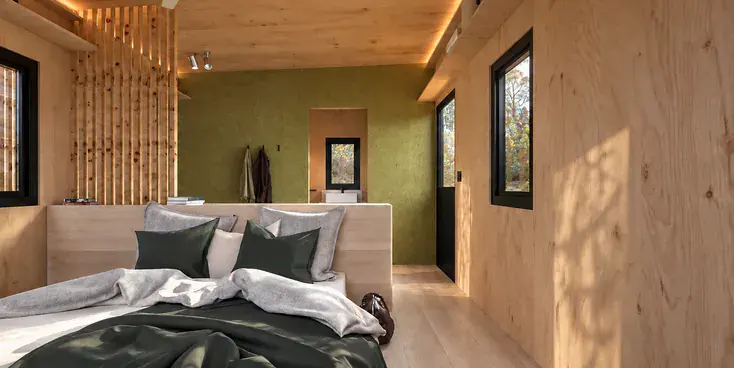
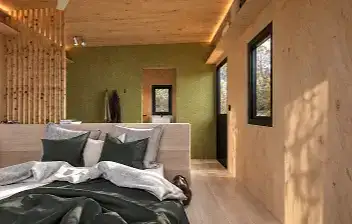
6 private PODs per camp. Each POD has:
- Two single beds that join into a king (separate linen). One set fresh linen provided per hiker.
- Private en-suite hot shower, basin and toilet (toilet paper provided).
- Well insulated and double shaded. Overhead fans for hot nights.
- Benches for duffels, shelving and hooks for gear.
The PODs are well insulated and double shaded. Winter nights are cozy; on hot summer nights overhead fans in all PODs are provided to cool hikers.
Please bring your own towels, enviro-friendly soap and shampoo. We do not provide towels.
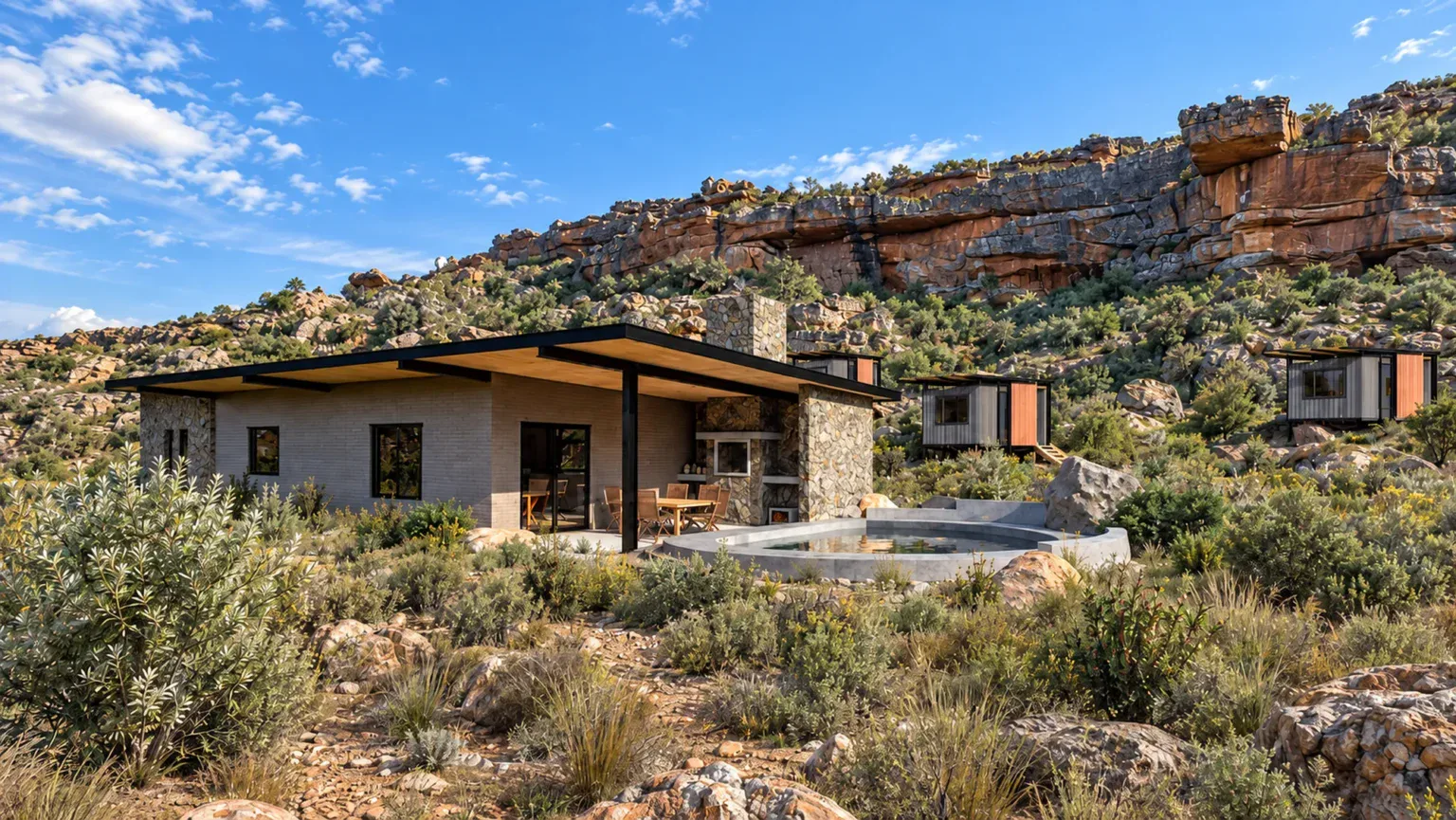
Shared spaces
Generously appointed and made entirely yours each night.
Communal kitchen, lounge, dining table and braai deck.
Wood-burning stoves in the lounges for cold winter nights.
A natural swimming pool for cooling off in summer.
Clean, safe drinking and cooking water.
Power & appliances
Power supply and appliances at the Camps
220 V
All three camps run on reliable off-grid 220 volt solar power, with lithium-ion batteries providing more-than-sufficient power at night.
Unfortunately, hikers are not permitted to bring hairdryers or plug in any power-hungry devices at the camps.
In each POD
- 2 plug points
- Overhead light, ceiling fan
- 2 bedside lamps
Communal Areas
- Lovely overhead designer-lighting, and a standing lamp.
- Plenty 220v plug points for charging phones and cameras.
- Modern full-size separate fridge and freezer.
- Gas stove, oven and 5-plate hob.
- Toaster and microwave.
- Water is boiled using stove-top kettels. Coffee made in stove-top moka pots, so be sure to pack your ground espresso.
Included Features
What’s included
- Your 4-day / 3-night trail, reserved for your group of 8–12 (or 2-7 if you pay the minimum rate for 8 hikers).
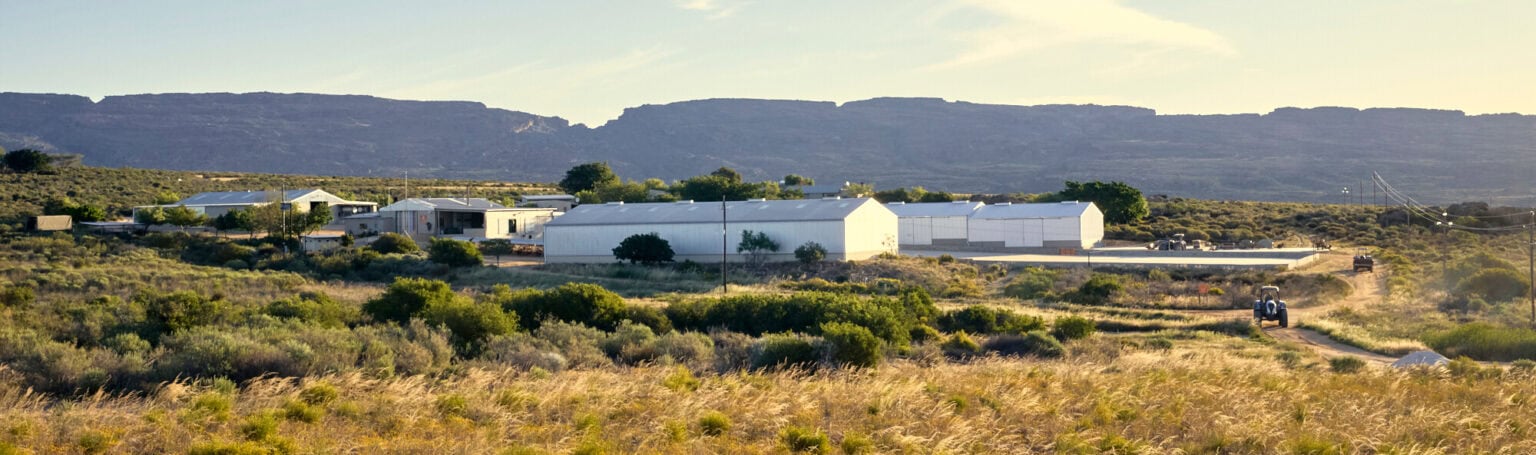
- Under-cover parking at the Visitors Centre for the duration of the trail.
- A comprehensive trail briefing.
- A trail map for every hiker, and one printed trail guidebook to share per group.
- Your duffel bags (1 per person, max 90L), our coolers (1 x 90L well insulated cooler box per 2 people to be packed with fresh/frozen food and cold drinks) and our dry boxes (1 x 35L dry box per 2 people to be packed with ambient food/drinks) moved from camp to camp.
- Three nights in high-end PODs with fresh linen for the trail, and hot en-suite shower, basin and toilet
- Fully equipped communal kitchen, comfy lounge, dining area, braai deck and freshwater swimming pool at all overnight camps
- Clean and safe drinking (and cooking) water at all overnight camps.
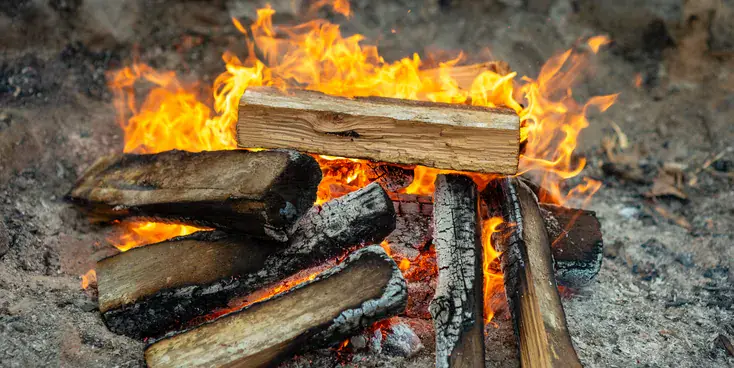
- 20 pieces of firewood provided each night, with firelighters and matches. You can order extra firewood at the Visitors Centre before starting your trail.
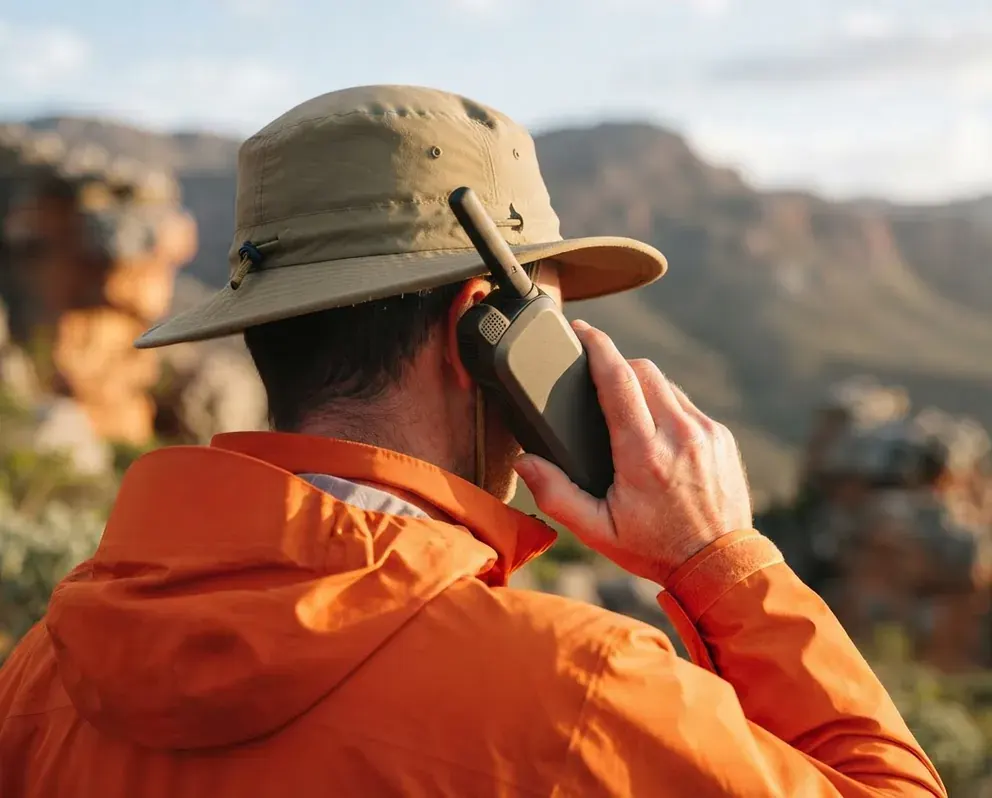
- One Satellite Phone per group for emergencies (only emergency support numbers and trail duty manager available on phone).
- 4 x Ziplock bags (1 per hiker per day) to enclose all used-toilet paper and dispose at camp bins at the end of each day.
Excludes
What’s not included
- For self-guided groups, you must arrange your all own food and beverages for all your meals to arrive with you at Visitors Centre on Day 1. You will then transfer your food and beverages to our cooler boxes and dry boxes for onward transport between camps.
- Please be sure to bring your own towels, biodegradable shampoo and personal toiletries.
Packing Checklist
What to pack
Your daypack. Your duffel bag to be transferred between camps. You will transfer/repack your food and beverages to our coolers and dry boxes at the Visitors Centre before embarking on Day 1.
(20–35 L)
Your daypack
- Water — 2-3 litres minimum as a rule, 4 litres when the weather forecast is hot
- Your lunch and snacks for each day
- Hat, sunglasses, sunscreen
- A light shell for wind and surprise rain
- A warm layer or jacket
- Swimming costume and a small quick-dry towel when the rivers are running
- Head torch in case you are delayed and need to walk in the dark
- Your medication, and small medical kit 9including plasters for blisters).
- Hiking poles if you like them (we do)
- Optional light shoes for the crossings
- Toilet paper and Ziplock bag (for used toilet paper).
(max 90L size)
Duffel Bag for your clothing and personal items
- Well-worn-in trail running shoes or hiking boots (Gor-Tex / waterproof best). Don’t start the trail in brand-new shoes.
- Spare pare of running shoes / trainers.
- Four pairs of walking socks and underwear
- Two pairs of shorts or tights
- Four light t-shirts or collared shirts
- A light fleece
- A warm hiking Jacket (wind and water-proof best)
- A rain jacket. Also rain pants (if rain is forecast for your trail).
- One pair long pants
- Pyjamas / sleepwear
- One pair slip-slops / slides
- Towel or sarong/kikoi (we do not provide towels)
- Toiletries, sunscreen and mosquito repellent
- Your daily prescription and any medication you may require. Don’t forget your contact lenses.
- Small medical kit (including painkillers, anti-inflammatories, antiseptic cream, blister plasters, anti-histamine)
- Rehydration sachets, especially if hot weather is forecast for your trail.
- A plastic bag for the wet clothing
- Head torch (for walking between PODs and Communal areas at night).
- Books / kindle for reading
- Magic Box ☺ … click here to learn more.
Please don’t bring hard suitcases; which are not suited to our transport system or the environment. No extra items may be packed/strapped to your duffel.
Weather
Best time of year and weather forecast
You can book throughout the year
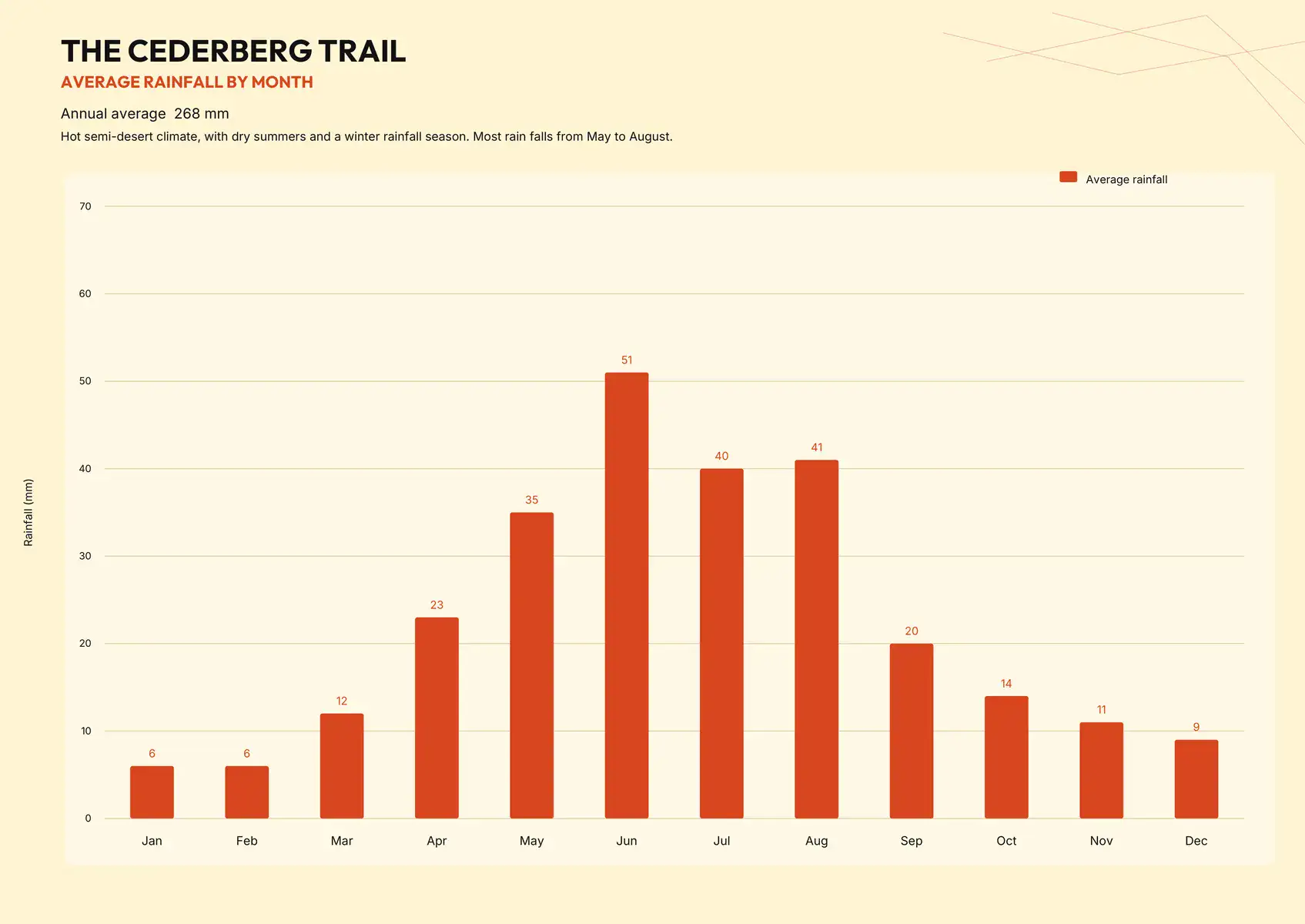
You cannot book the same mountain twice — the seasons and trail experiences keep changing. The Northern Cederberg (altitude 300M to 1100M) is a hot semi-desert with a winter rainfall season; and average annual rainfall of 268mm.
July to November
Wetter and milder, best for swimming
The Cederberg is a winter rainfall region, receiving most of its rainfall between June and August.
The Klipopmekaar and Waterfalls rivers generally start flowing in July with good chance of enjoying the waterfalls and swimming from July to November.
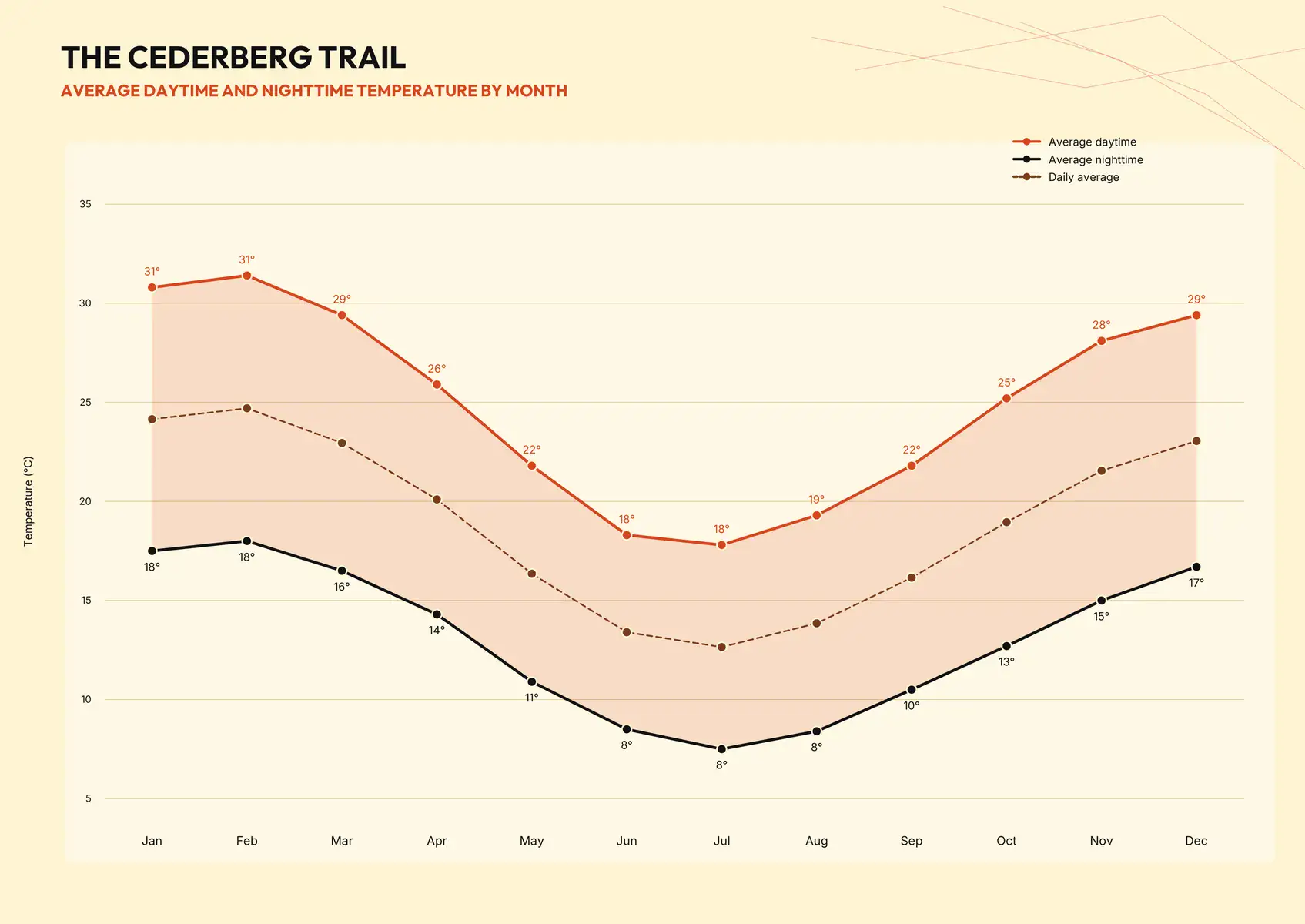
From June to August you can expect cold nights (around 5-15 degrees celcius), and beautiful crisp days. There’s a chance your group may hike in some rainy weather, but oftentimes winter surprises with some lovely, warm days.
December to May
Hotter and drier, good for low chance of rain
Summer brings higher temperatures, extended daylight hours and generally warmer and favourable conditions on the trail.
From January to March, hikers can expect occasional very hot temperatures and and an earlier start is definitely recommended … then you can spend the later afternoons relaxing and swimming at the overnight camps.
Even when seasonal rivers run dry, there are fresh water swimming pools at all three overnight camps.
The striking rock formations along the dry riverbeds remain part of the Cederberg experience.
August
Flower Season
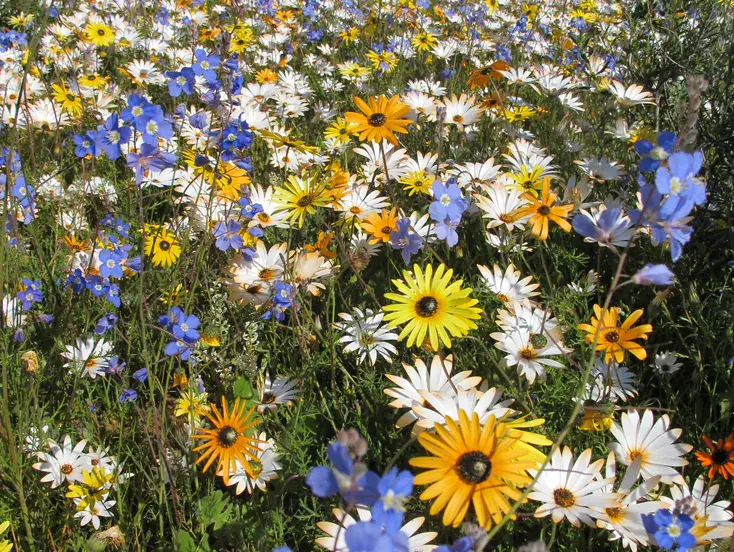
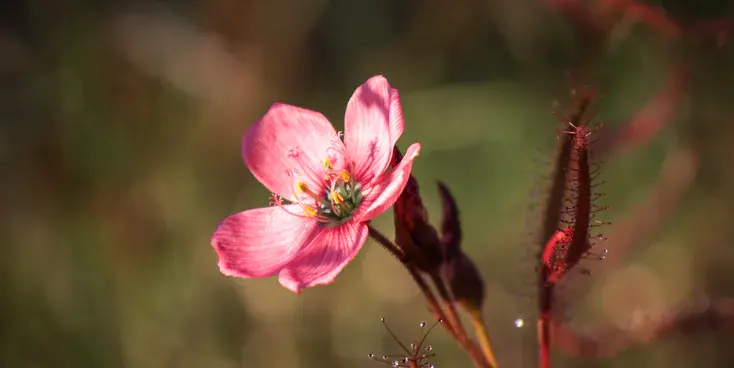
From late-July to mid-September (peaking in August) after winter rains, the Cederberg typically bursts into a multitude colourful wildflowers.
Autumn (April – May) and Spring (Sept – Oct) often provide the kindest walking weather.
Average rainfall by month
Average daytime and nighttime temperature by month
When we may need to
cancel your hike
- A flood forecast — river crossings could be unsafe. Most likely June to August, and only possibly a couple of times a year.
- Dangerous heat — extremely high temperatures can make hiking unsafe. Most likely January to March, cancellation also rare.
Directions
Getting here
- Gravel roads are suitable for ordinary two-wheel-drive vehicles with normal ground clearance, but not for low-clearance sports cars. A 4×4 is not required. Allow a little extra time and drive at a safe speed (under 80 km/h on local gravel roads).
- We recommend leaving Cape Town before 07:00, with the aim of arriving at the Visitors Centre at 11:00.
- Allow about an hour for your briefing, final preparations and packing your cooler boxes and dry boxes before setting off.
- Your vehicle will remain safely parked under cover at the Visitors Centre for the duration of the hike.
- Google PIN, Driving directions, and Klipopmekaar security gate PIN Code will be emailed to hikers six weeks before hike start date.
290 KM
From Cape Town
3 ½ H
From Cape Town to the Cederberg Trail Visitors Centre
17 KM
Final part of the journey on gravel farm roads
WiFi
No WiFi or Cell Reception on the trail
Wi-Fi is available at the Visitors Centre only. There is NO cellular reception or WiFi at any of the overnight camps or on the trail (perhaps with the exception of some cellular on the highest parts of the trail on Day 3 and Day 4).
Safety
Trail safety
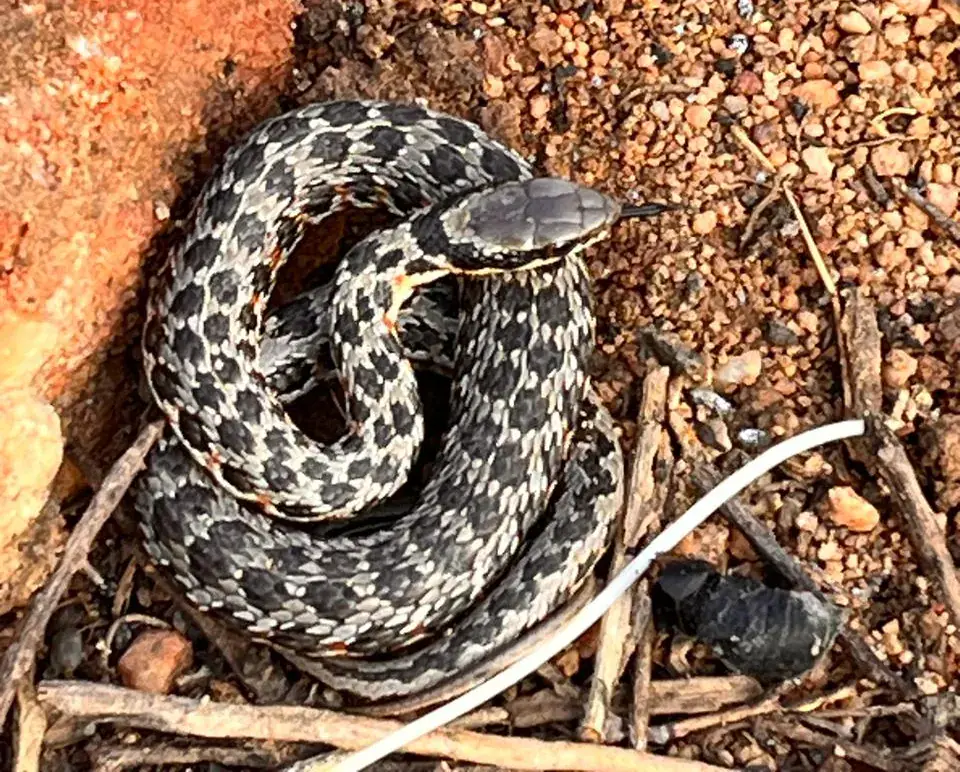
The Cederberg Trail goes through remote wild natural wilderness, with all the associated risks of animals, snakes, spiders, scorpions, insects, weather and walking accidents.
This region is also home to a variety of venomous snakes, including Puffadders and Cape Cobra and hikers should remain alert to their presence.
Hikers should always prepare for all potential weather conditions which can change considerably during any day in the mountains.
Emergencies
Emergency communication
There is no Wi-fi or reliable cellular reception at any of the overnight camps or on the trail.
Each group is provided with one Satellite phone for emergency communication. The phone will work outdoors (with direct exposure to open sky) anywhere on the trail.
The satellite phone is pre-programmed with key emergency numbers and the trail manager on duty. Please note the satellite phone is locked to prevent calling other numbers.
Hiking groups should stay together on the trail to provide each other with support and Satellite phone access in case of an emergency.
Rules
Trail Rules & Leave No Trace
On the trail
- Hiking groups must walk together and stay on the marked trail path at all times.
- Strictly no climbing or bouldering allowed.
- Please respect and take care of all trail infrastructure, including signage, pathways, and the furniture, appliances, artwork and buildings at the overnight camps.
- No firearms or weapons of any kind are allowed on the trail. Pocketknives are fine. No chasing, harming, trapping or snaring of any living creatures is allowed.
Protect nature
- Please leave the trail as you found it. Do not break the sandstone rocks - they are hard but brittle and delicate. Do not pick flowers, collect firewood, move or throw rocks, or disturb the peace. Leave only footprints.
- Leave all living things, plants and animal, entirely alone. Never feed baboons or any other animals.
- Do not contaminate rivers, water tanks, boreholes or any water supply.
San rock paintings
- Only look at the San rock paintings. Please do not touch them at all, or approach closer than 1m.
Fire
- No fires may be lit anywhere whatsoever …other than at overnight camp designated braai places and lounge wood-burning stoves.
- Extinguish all fires thoroughly before going to bed.
Waste
- Please don’t litter. All rubbish, wrappers and even fruit peels/skins must please be kept and disposed of at overnight camps rubbish/recycling bins.
- Go to the toilet at least 20 m off the trail. Zip lock bags will be provided to all hikers to keep used toilet paper and dispose in POD bins nightly. No burying or burning of used paper is permitted.
In camp
- Please leave your PODs and communal living spaces neat and tidy after use.
- All dishes, cutlery, glassware, and cookware must be washed and stacked.
- Please leave the trail and all camps as you found it, or maybe better.
Magic Box
Please bring your Magic Box … what’s that?
You’re invited to pack A magic box. Not a real box, unless you want to bring one. Something of yours to share with your friends when the moment feels right: a song, a poem, a page from a book, a joke, a trick, a toast, a ritual, “a bit of theatre, or a silence only you know how to hold.
Your share can be funny or serious, polishes or sideways. Two minutes on a rock after lunch. After dark around the camp fire. At a waterfall. Wherever the day opens up a gap which feels right for you.
Nobody has to do this. That is the point. But when one of your group does, the trail stops being scenery and also becomes your creation and participation.
Share this page
Self-guided and self-catered, or guided and catered. Either way, the path is marked, the bags move for you, and the wilderness is yours for four days.